Brown ale occupies an odd position in British brewing: a style with genuine history, two distinct regional traditions, near-total commercial collapse, and a survival largely dependent on brewers in another country taking an interest.
The two traditions
Southern brown ale was the older survivor of the two, a dark, sweet, low-strength beer of around three per cent, essentially a bottled relative of mild. It was malty, gentle and lightly hopped, and it was drunk widely in London and the south east through the mid twentieth century.
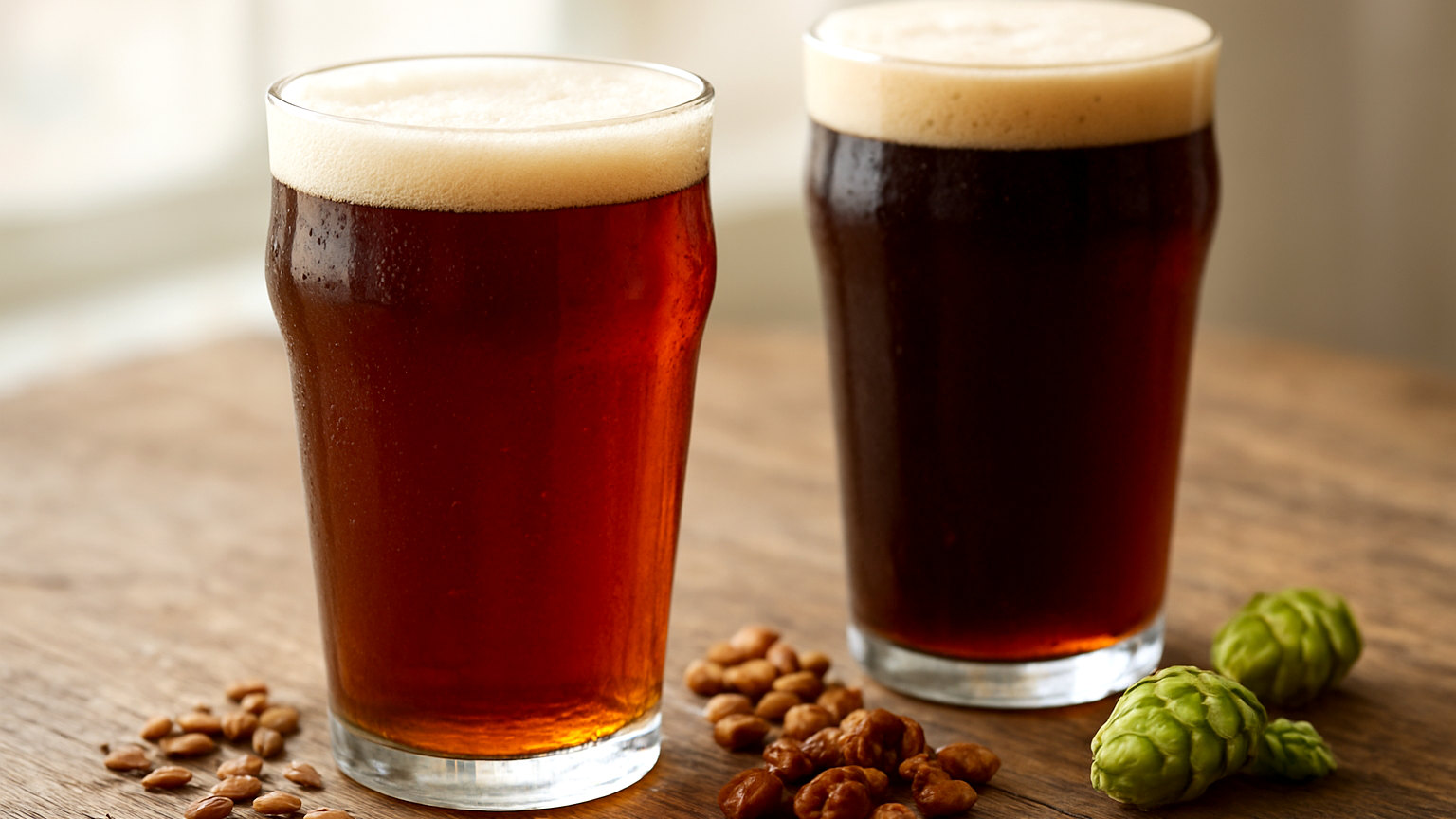
Northern brown ale developed differently. Stronger at around four and a half to five per cent, considerably drier, reddish-brown rather than black, with a nutty, caramel character and a firmer finish. The Newcastle style is the famous example, and for decades it was one of Britain's best known beer exports.
The two are different enough that treating them as one style causes confusion, and the modern use of the term generally means the northern version.
What is in it
Pale malt with a proportion of crystal malt for colour and toffee sweetness, often with a small amount of chocolate or brown malt for depth. Hopping is restrained, typically with English varieties, providing balance rather than aroma.
The northern style is drier because it is attenuated further, meaning more of the sugar is fermented out, leaving less residual sweetness. The southern style stops earlier and retains more.
Neither should taste roasted in the way a porter or stout does. Brown ale sits between bitter and porter, with nut, toffee and bread crust rather than coffee and burnt grain.
Why it declined
The southern style fell with mild, and for the same reasons: it was cheap, associated with an older generation, and had no marketing behind it as drinkers moved to bitter and then lager.
The northern style survived longer on the strength of a single dominant brand, and that turned out to be a vulnerability. When that brand's fortunes shifted, and when its production moved away from the city it was named for, the style had little else supporting it.
Brown ale also suffered from a positioning problem. It was neither the pale beer that people were moving towards nor the dark, dramatic stout that would later attract craft interest. Sitting in the middle, it was easy to overlook.
The American revival
American craft brewers adopted brown ale early and made it a standard part of the repertoire, generally hopping it more assertively with citrus-forward American varieties and building it at around five to six per cent.
The result is a recognisable relative rather than a copy: nuttier malt with a bright hop aroma that a British version would not have. Some of these beers are excellent, and a number of British breweries have since adopted the approach.
This pattern is a familiar one for endangered British styles, and it applies to mild, porter and old ale as well.
Whether it is worth seeking out
Brown ale does something no other style quite manages: malt depth without roast bitterness, moderate strength, and a soft, rounded character that suits cooler weather and a wide range of food.
It is particularly good with roast meat, sausages, mushrooms, hard cheese and anything caramelised, since the malt echoes what browning produces in cooking. Nut brown character sits alongside a cheeseboard as well as most wine does.
If you find one on a shelf, it is usually inexpensive and rarely disappointing. The style's problem was never quality; it was that nobody was arguing for it while everything around it had a marketing budget.
Where it sits among British styles
Brown ale is easiest to place by what surrounds it. It is darker and maltier than a bitter, sweeter and softer than a porter, and stronger and drier than a dark mild.
That position makes it a useful bridge for anyone moving between styles. A bitter drinker curious about darker beer will find brown ale familiar, and a stout drinker looking for something lighter will find it recognisable, which is a reasonable argument for a style that has spent decades being overlooked.