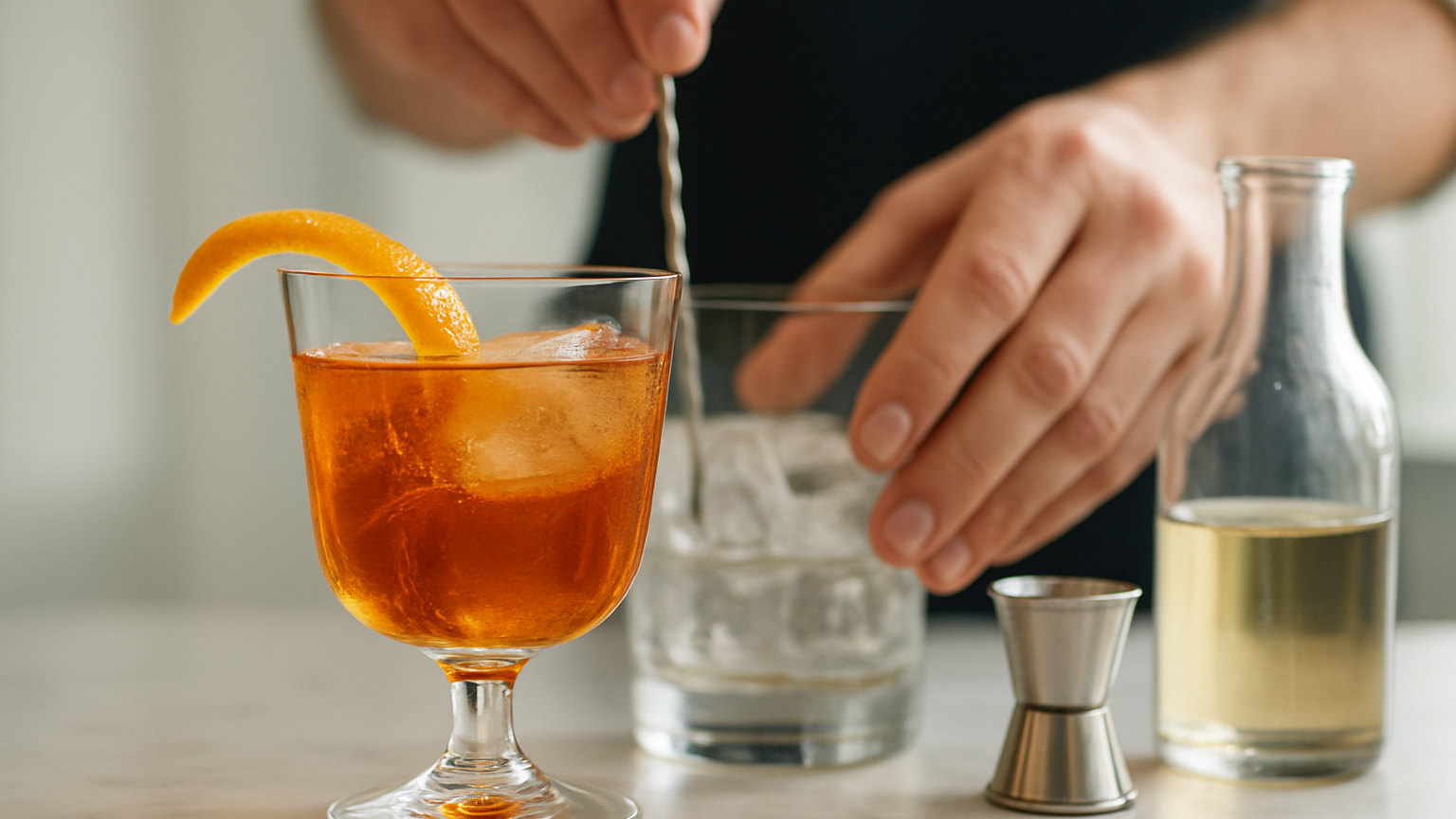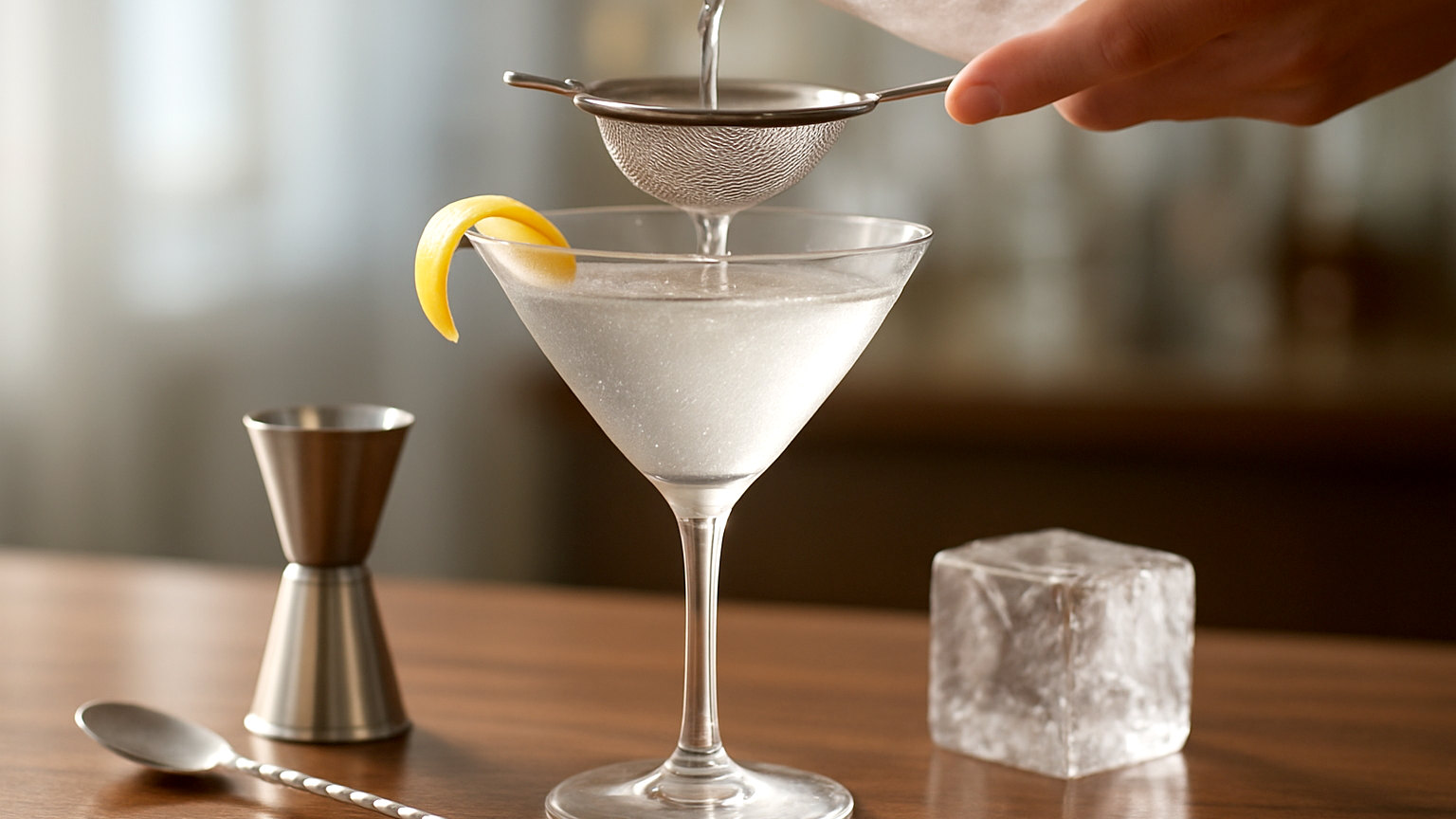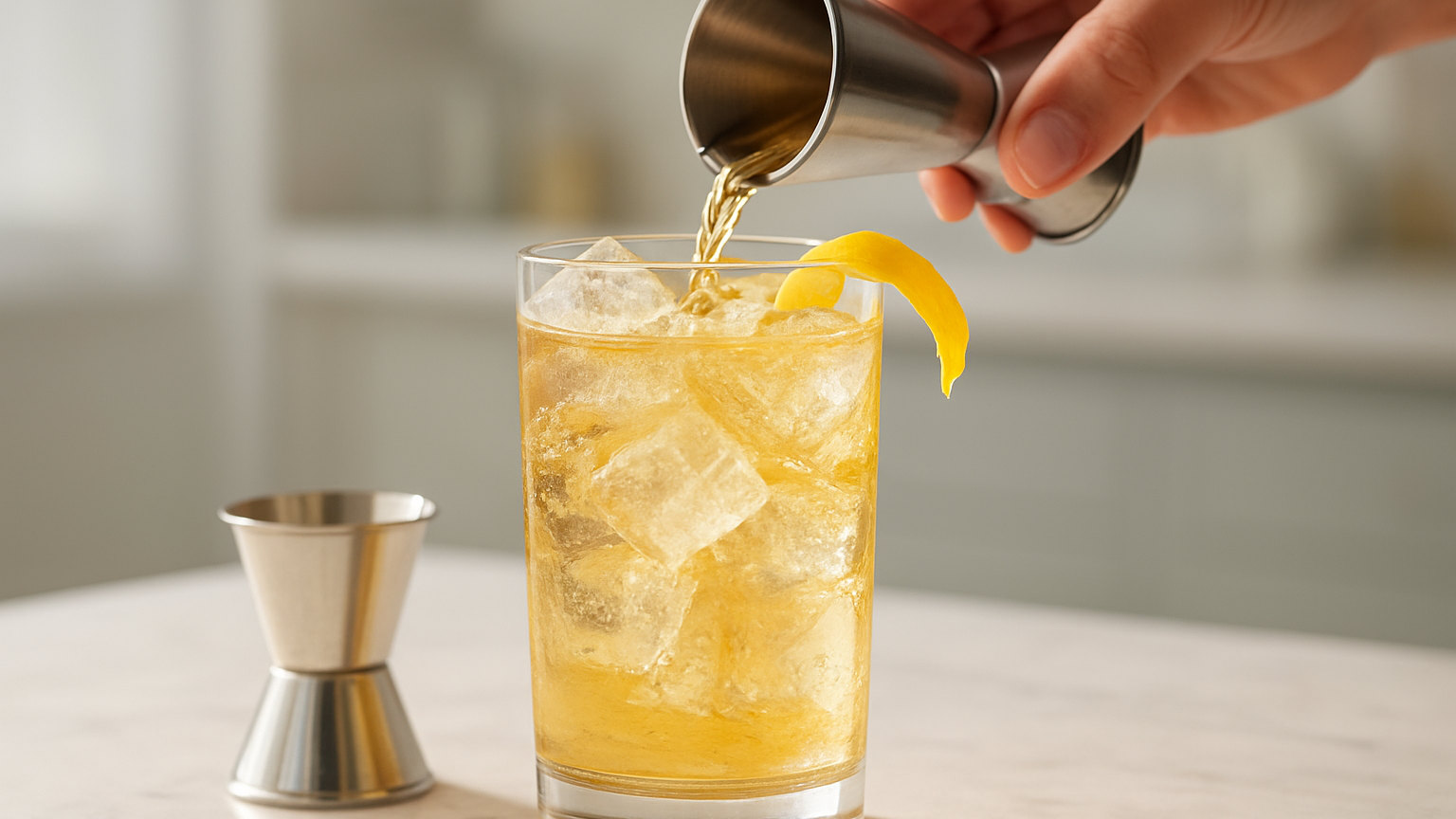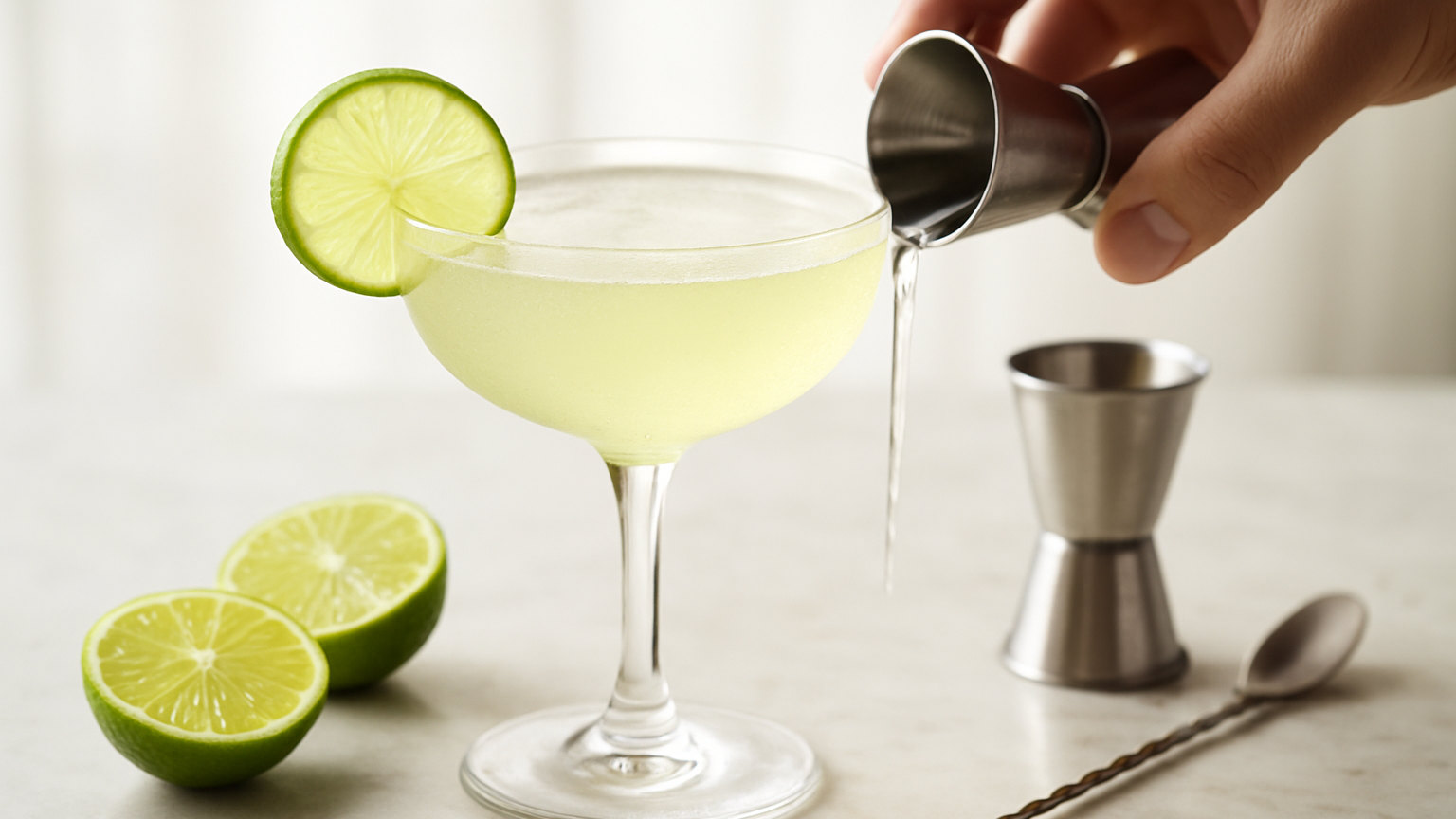
One US fluid ounce is 29.6ml, which everyone rounds to 30. Three quarters of an ounce is 22ml, half an ounce is 15ml, and a quarter ounce is 7ml. Because a cocktail is a ratio, rounding consistently matters far more than being exact.
The conversions you need
- 1/4 oz = 7ml
- 1/3 oz = 10ml
- 1/2 oz = 15ml
- 3/4 oz = 22ml
- 1 oz = 30ml
- 1 1/4 oz = 37ml
- 1 1/2 oz = 45ml
- 2 oz = 60ml
- 2 1/2 oz = 75ml
- 3 oz = 90ml
American recipes are written in ounces and British ones in millilitres, which is why so many recipes need converting.
Why the ratio matters more than the number
A sour written as 2 oz spirit, 1 oz citrus and 3/4 oz syrup converts to 60ml, 30ml and 22ml.
It works equally well at 50ml, 25ml and 18ml, which is a smaller drink with identical balance.
So if your jigger is marked 25 and 50, you can scale the whole recipe to those measures rather than hunting for 22ml. What matters is that you scale every ingredient by the same factor.
This is genuinely useful, because British jiggers are frequently marked 25 and 50 to match the legal pub measures, while recipes assume 30 and 60.
UK pub measures
Spirits sold in licensed premises in the UK must be served in prescribed measures: 25ml or 35ml for a single, and multiples of those. Venues must display which they use.
Wine is commonly served in 125ml, 175ml and 250ml measures.
This matters at home because a free-poured measure is almost always larger than a pub one, which is part of why home drinks are frequently stronger than people realise. Our units and ABV guides cover the arithmetic.
The measures that are not on a jigger
Two appear constantly in recipes and neither is precise.
A barspoon is roughly 5ml, equivalent to a teaspoon, though it varies by design. Worth checking yours against a measuring spoon once.
A dash from a standard bitters bottle is roughly 0.8ml, and it varies with how the bottle is held. Two dashes is around 1.5ml.
Neither needs to be exact, because both are seasoning rather than structure.
Other vague terms: a splash is around 10 to 15ml, a top-up is whatever fills the glass, and a rinse is a small amount swirled round and discarded.
Kitchen equivalents
If you have no jigger, kitchen measuring spoons cover most of it.
- 1 teaspoon = 5ml
- 1 tablespoon = 15ml, which is half an ounce
- 2 tablespoons = 30ml, which is one ounce
- 4 tablespoons = 60ml, which is two ounces
A kitchen scale is more accurate still, since most cocktail ingredients are close enough to water in density that millilitres and grams are effectively interchangeable.
Which jigger to buy
A Japanese-style jigger, which is taller and narrower with internal graduation lines, is considerably more useful than a plain double cone.
A common configuration is 30 and 60ml with lines at 15, 20, 22 and 45, which covers almost every recipe without any conversion at all.
A tall narrow shape is also more accurate than a wide shallow one, because a small error in fill level translates to a smaller error in volume.
Fill to the brim rather than to somewhere near it. A jigger filled to just below holds noticeably less, and the error is invisible. Our bar equipment guides cover the rest of the kit.
Scaling a recipe up
For batching, weighing beats measuring by volume. Set a container on a scale, tare it, and add each ingredient in turn. It is faster, more accurate and involves washing up one item rather than several.
Make one drink first, note the exact measures, then multiply. Scaling an untested recipe to twenty servings is how people end up with two litres of something not quite right.
Record the batch by weight, which makes it reproducible without further arithmetic.
The measure people forget
Water.
A drink made to order gains twenty to thirty per cent of its volume in water from the ice. A batched cocktail has no ice contact during preparation, so that water has to be added deliberately.
Twenty to twenty five per cent of the total volume for a stirred drink, twenty five to thirty for a shaken one. Our punches and batching guides cover the method.
Other units you will meet
A UK fluid ounce is 28.4ml rather than 29.6, but virtually all cocktail recipes use the US ounce, so 30ml is the safe assumption.
A pony is one ounce and a jigger as a measure is one and a half, both from older American recipes.
A part is any unit you choose, provided you use the same one throughout, which is what makes equal-parts drinks so easy.
Wine and beer measures
Worth knowing alongside spirits, since recipes and menus mix them freely.
- A UK pint is 568ml; a US pint is 473ml.
- A standard wine bottle is 750ml, which is six 125ml glasses or roughly four 175ml glasses.
- Common wine measures are 125ml, 175ml and 250ml.
- Beer cans are commonly 330ml or 440ml.
A note on accuracy
Fill a jigger to the brim rather than to somewhere near it, and pour in one movement rather than dribbling, which leaves liquid clinging to the sides.
Work in order of cost, cheapest first, so a misjudged measure is syrup rather than spirit.
And measure everything, including the syrup. A few seconds is the difference between a drink you can repeat and one you cannot.