For much of the first half of the twentieth century, mild was the beer Britain drank. It outsold everything else, it was what a working man ordered without specifying, and breweries across the country built their volumes on it.
By the 1970s it had become difficult to find in much of the country, and today a pub serving it is unusual enough to be worth noting. Few styles have collapsed so completely from so dominant a position.
What it actually is
Mild is a lightly hopped, malt-forward ale, typically around three to three and a half per cent. The name refers to the hopping rather than to the strength or the flavour: mild meant not aggressively hopped, in contrast to the bitter beers sold alongside it.
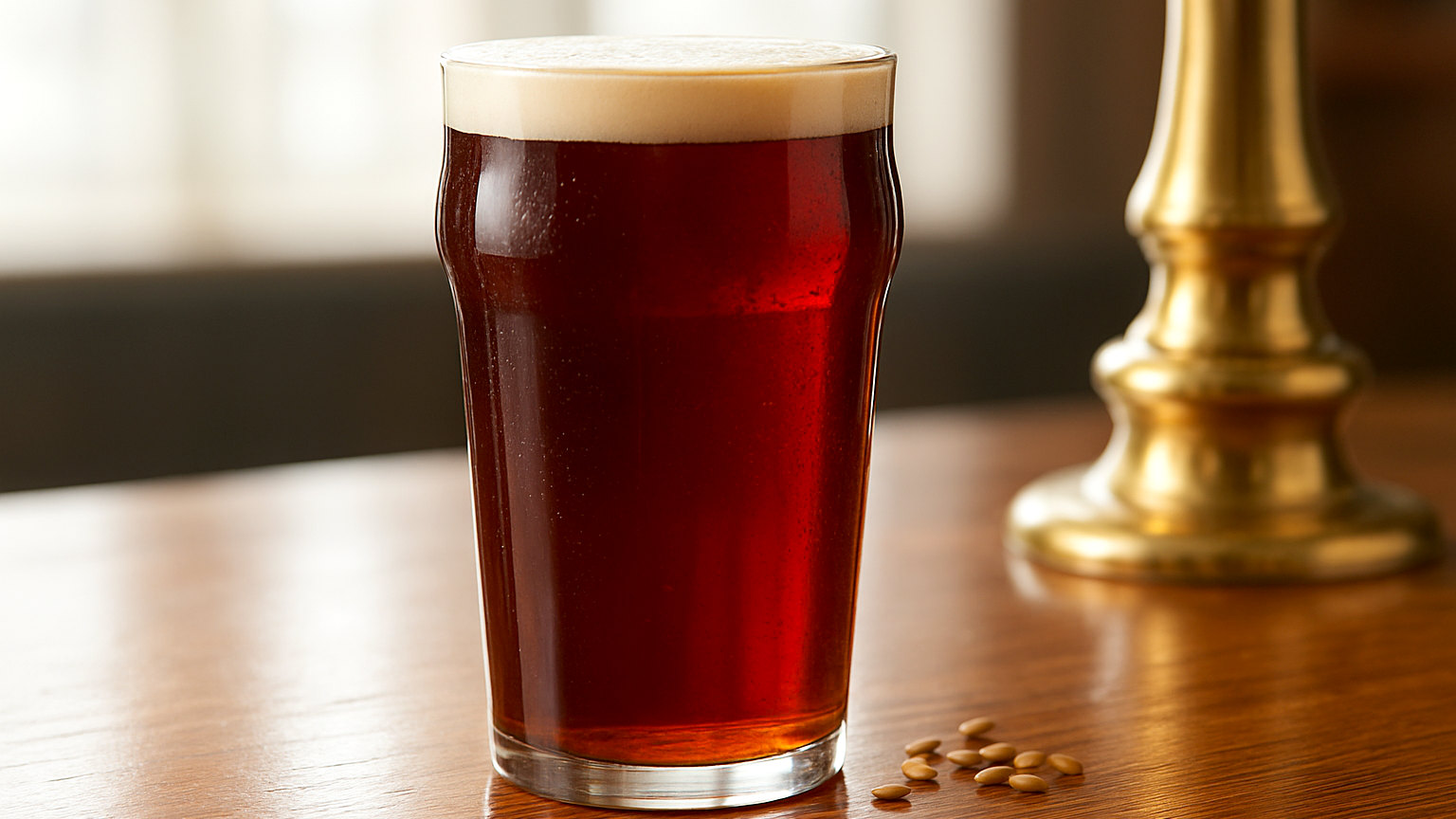
Most modern examples are dark, ranging from deep amber to near black, with the colour coming from a small proportion of dark malts or from caramel. Expect chocolate, caramel, nuts, dried fruit and a soft, rounded sweetness, with just enough bitterness to prevent it cloying.
Pale mild exists and is even rarer, essentially the same beer without the dark malts, and it is closer to a light bitter with the hops turned down.
Crucially, mild is not weak beer in the sense of watery. A well made dark mild at three and a half per cent has more flavour per unit of alcohol than almost anything else brewed, which is the whole point of the style.
Why it dominated
Mild suited the conditions it was made for. It was cheap, it was drunk young without long conditioning, and its low strength allowed several pints over an evening after physical work.
It was also forgiving. The malt sweetness and the darker colour masked minor imperfections in a way a pale beer could not, which mattered when cellar practice and brewing consistency were less reliable than they are now.
Why it collapsed
Several things happened at once. Post-war prosperity meant drinkers could afford stronger, more prestigious beer, and mild carried an association with cheapness and with heavy industry that became unfashionable as those industries declined.
Bitter was marketed as the aspirational choice, and lager arrived shortly afterwards with an even stronger modern image. Mild had no marketing behind it because it was the cheap beer, and cheap beers do not get advertising budgets.
Its perishability contributed too. As a low-alcohol, lightly hopped beer sold in large volumes, mild deteriorated fast, and as sales fell the beer sat longer in cellars and quality dropped, which accelerated the decline further.
By the time interest revived, most breweries had stopped making it and the pubs had removed the handpumps.
Where it survives
Pockets remain, principally in the West Midlands, the North West and parts of Wales, where a handful of breweries have made mild continuously and never stopped.
Campaigning organisations promote a mild month in May specifically to encourage pubs to stock it, and a number of modern breweries produce seasonal versions, sometimes describing them as dark session ales to avoid the name's associations.
American craft brewers have taken an interest too, which is a familiar pattern for endangered British styles.
Why it deserves another look
The case for mild is stronger now than it has been for decades. Drinkers are increasingly interested in lower-strength beer, and mild is the original session beer: three and a half per cent, full of flavour, and designed to be drunk in quantity without consequence.
It also fills a genuine gap. There is very little else at that strength with real malt character, since most low-alcohol beer aims at lightness and crispness rather than at depth.
Served properly at cellar temperature from a cask that is moving, a good dark mild is a considerably more interesting drink than its reputation and its price suggest. If you see one on a handpump, it is worth the half pint to find out.
Mild and porter
One point of confusion is worth clearing up. Dark mild and porter can look identical in the glass and are quite different beers.
Porter derives its colour and flavour from roasted malt, giving coffee, burnt grain and a dry roasted bitterness. Mild usually gets its colour from crystal malt or caramel, giving toffee and dried fruit with no roast character at all. Tasted side by side the difference is immediate, and it explains why mild is so much softer than its appearance suggests.