
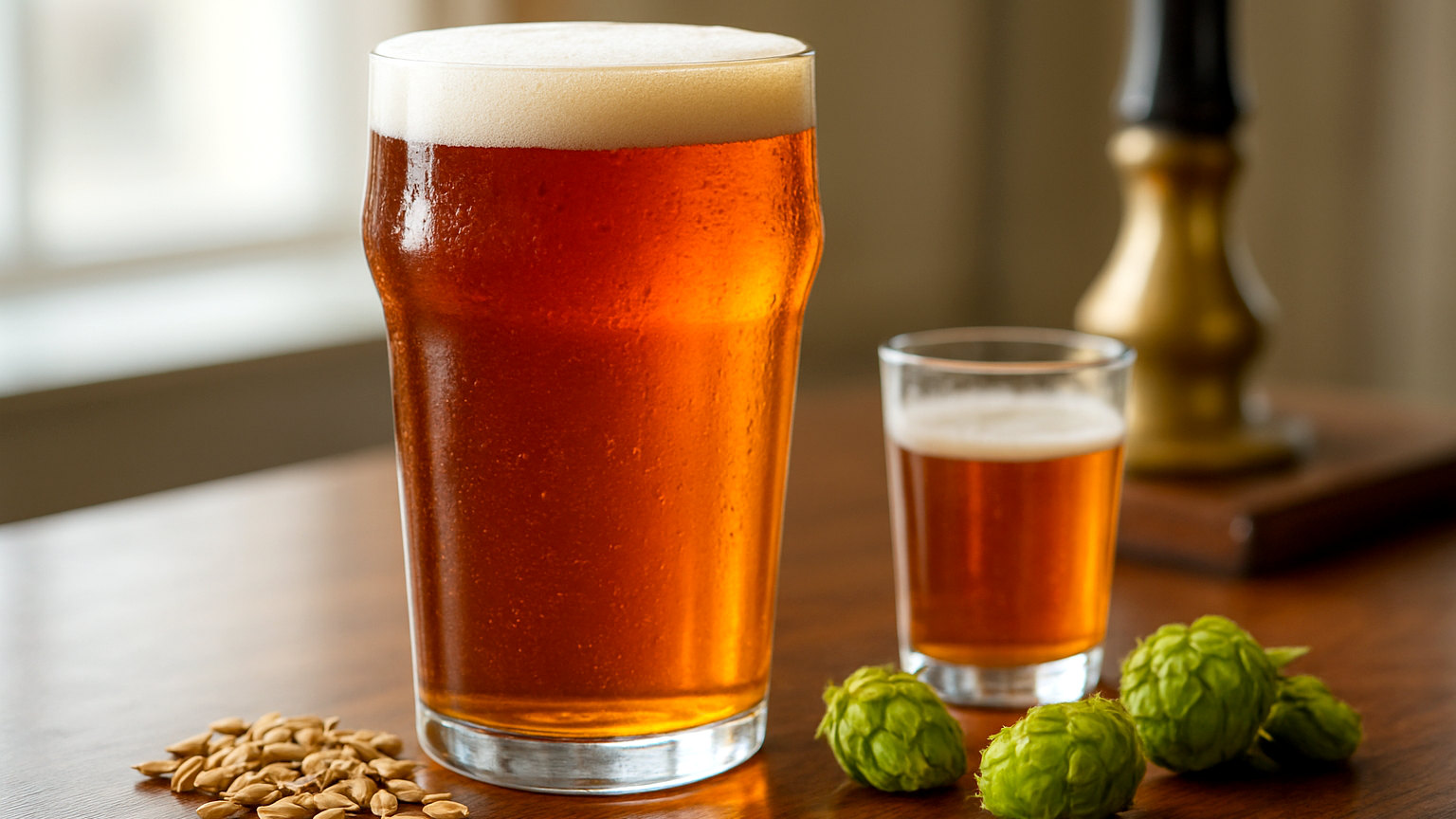
A pint of British bitter at three point eight per cent seems weak alongside a five per cent lager or a six per cent American pale ale, and drinkers arriving from those traditions frequently describe it as watery before they have got used to it. The strengths are deliberate, and they are the product of both policy and culture.
The wartime origin
British beer was considerably stronger before 1914. The First World War changed that permanently, through a combination of grain shortages, restrictions on brewing and, most importantly, a duty system based on the original gravity of the beer.
Taxing by gravity meant that stronger beer cost more to produce, since duty rose with the sugar content of the wort. Brewers responded by reducing gravities, and average strengths fell sharply during the war.
What is notable is that they never fully recovered. Post-war economics, further restrictions during the Second World War, and a duty structure that continued to penalise strength meant British brewing settled at strengths well below its pre-war norm and stayed there.
Duty is now calculated on alcohol content rather than gravity, and reduced rates apply to lower-strength beer, which continues to make session-strength brewing commercially attractive.
The pub culture argument
The other half of the explanation is social. British drinking developed around the pub as a place to spend an evening in company, with beer bought in pints and consumed over hours.
Several pints of a beer at three and a half per cent is a manageable evening. The same number at six per cent is a different proposition entirely, and the pub session as an institution depends on the beer supporting it.
The word session entered beer vocabulary from this, and session strength is now used internationally to describe beers brewed deliberately below about four and a half per cent so that more than one can be drunk.
Why it is difficult to do well
Low-strength brewing is harder than it looks. Alcohol contributes body, sweetness and mouthfeel, and removing it leaves a beer that can taste thin and hollow unless the brewer compensates.
The techniques involved include mashing at higher temperatures to leave more unfermentable sugar, using crystal and other specialty malts for body and flavour, choosing yeast strains that leave more residual sweetness, and hopping carefully so bitterness does not dominate a light body.
Brewers from countries with no session tradition frequently identify a well made three point eight per cent bitter as the most technically impressive British beer, precisely because there is nowhere to hide.
The modern position
British strengths have crept up over recent decades, partly through the influence of imported styles and partly because premium beers command higher prices. A modern craft pale ale at five and a half per cent would have been unusual in a British pub forty years ago.
At the same time, interest in lower-strength beer has grown for health and moderation reasons, and brewers worldwide have taken up session brewing as a deliberate discipline. Beers marketed as session IPA and similar are, in effect, the tradition being rediscovered by people who did not know it existed.
How to approach it
The adjustment is one of expectation. A session bitter is not attempting to make an impression; it is attempting to be worth drinking three of, which is a different and arguably harder objective.
Judged on that basis, the qualities to look for are balance, a clean finish and whether you want another one immediately. Intensity is not the point, and a beer engineered to be memorable in a single glass is generally poor company over an evening.
Units, briefly
The arithmetic is worth knowing. A pint is 568 millilitres, so a pint at four per cent contains roughly two point three units and one at five and a half contains around three point one.
United Kingdom Chief Medical Officers' guidance is that both men and women should not regularly exceed fourteen units a week, spread over three or more days. How that applies to any individual is a matter for them and their doctor, and the figures above simply convert what is on the pump clip into something comparable.


