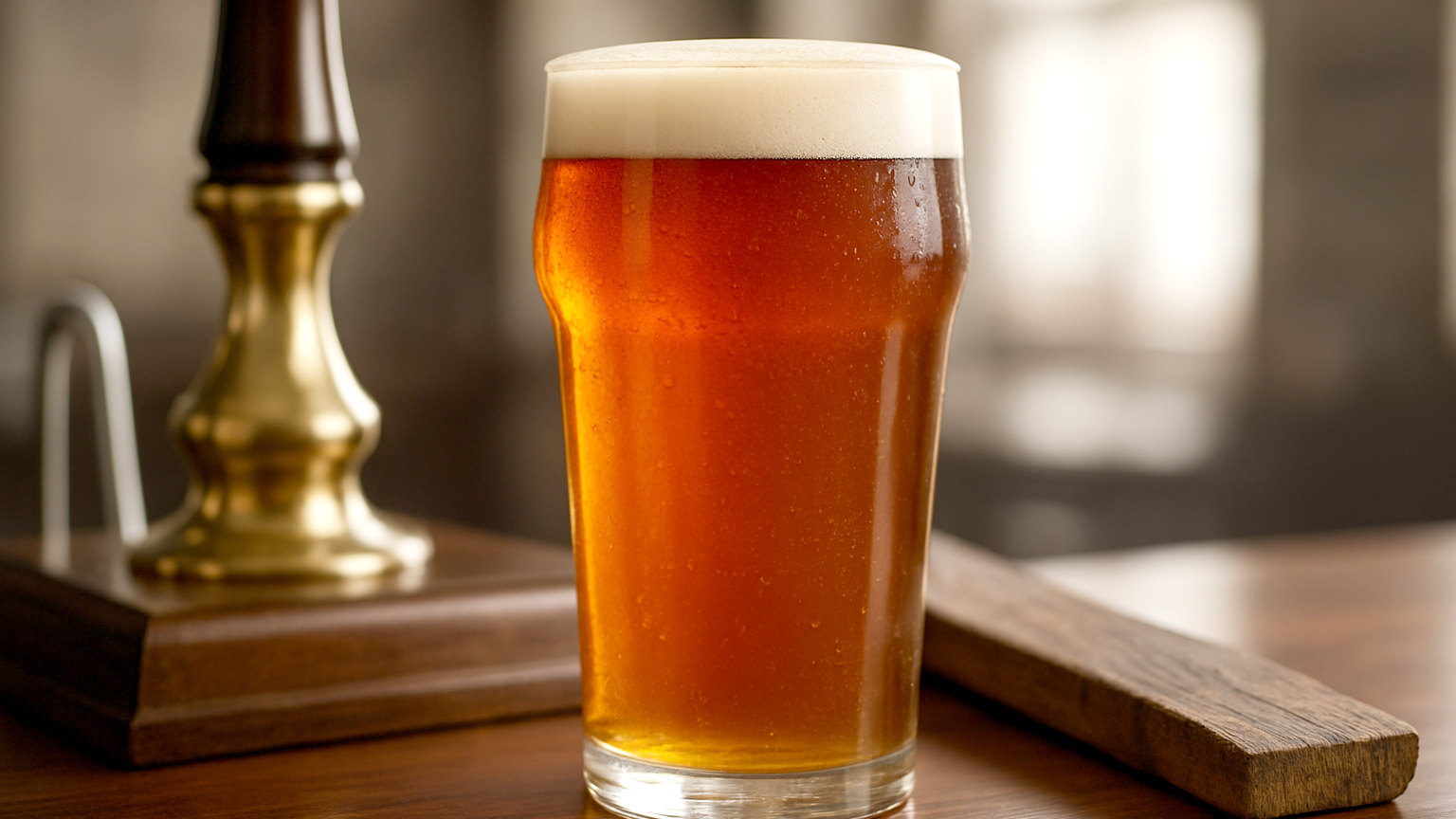
The complaint that British beer is warm is one of the most persistent international observations about it, and it rests on a comparison rather than a measurement. Cask ale is served at around eleven to thirteen degrees. Room temperature in a heated pub is closer to twenty, and a fridge is around four.
Cellar temperature sits between the two and is a great deal cooler than most people assume when they use the word warm.
What the temperature does
Aromatic compounds are volatile, meaning they evaporate from the surface of a liquid and reach the nose, and volatility falls with temperature. A beer served very cold gives off less aroma, and since most of what we call flavour is smell, it tastes of less.
Cold also suppresses the perception of sweetness while sharpening bitterness and carbonation, which is why an ice-cold lager reads as crisp and clean.
Cask ale is built on malt character, gentle hop aroma and yeast-derived fruitiness, all of which are subtle and all of which disappear when the beer is too cold. Served at four degrees, a good bitter tastes thin and largely anonymous.
Carbonation is the other half
Gas solubility rises as temperature falls, so a cold beer holds more carbon dioxide in solution. Cask ale is deliberately lightly carbonated, at roughly half the level of keg beer, because the softer texture suits the style.
Serve that beer very cold and it would seem flat rather than crisp, since there is not enough dissolved gas to provide the prickle a cold drink normally has. The lower carbonation and the higher serving temperature are designed together.
This also explains why the two traditions differ. Highly carbonated lager needs to be cold or it becomes gassy and cloying. Lightly carbonated ale needs to be warmer or it becomes flat and mute.
Where the convention came from
Practicality first. Before refrigeration, a beer cellar was the coolest stable space in a building, and eleven to thirteen degrees is roughly what a below-ground cellar in Britain naturally holds.
The style developed to suit those conditions rather than the other way round, and when refrigeration arrived there was no reason to change a beer that already worked.
Modern pub cellars are refrigerated to hold that range deliberately, and a well run cellar is temperature controlled with as much care as any other part of the operation.
When it goes wrong
Cask ale served genuinely warm, at seventeen or eighteen degrees, is a fault rather than a tradition. It tastes soupy and alcoholic, the malt turns cloying and the beer goes flat in the glass.
This happens when a cellar cooling system fails, when a pub has poor cellar management, or in hot weather when a beer line runs through a warm building. It is one of the more common reasons for a disappointing pint, and it is worth mentioning to the bar.
The opposite failure exists too. Some pubs, responding to customers who expect cold beer, chill cask ale down towards keg temperatures, which strips out the character the style depends on.
Adjusting the expectation
If you drink cold lager habitually, the first mouthful of properly kept cask ale will seem warm, and that impression usually fades within a pint as the palate recalibrates.
The comparison worth making is with red wine, which nobody expects to be chilled and which is served at a similar temperature. Cask ale sits at the cool end of the range that suits red wine, and the reasoning is identical: enough warmth for the aromatics to work, not so much that the alcohol dominates.
In hot weather the argument shifts, and a cold beer genuinely is more refreshing. That is a reasonable preference rather than a failure of taste, and it is a large part of why lager sells as it does.
At home
Bottled and canned ale follows the same logic. A traditional bitter or brown ale served straight from a fridge at four degrees will show a fraction of what it has, and twenty minutes on a worktop makes a considerable difference.
The practical approach is to keep ale in a cool cupboard rather than the fridge and to chill it briefly if the weather demands it, which lands the beer somewhere close to the temperature a cellar would have provided.