
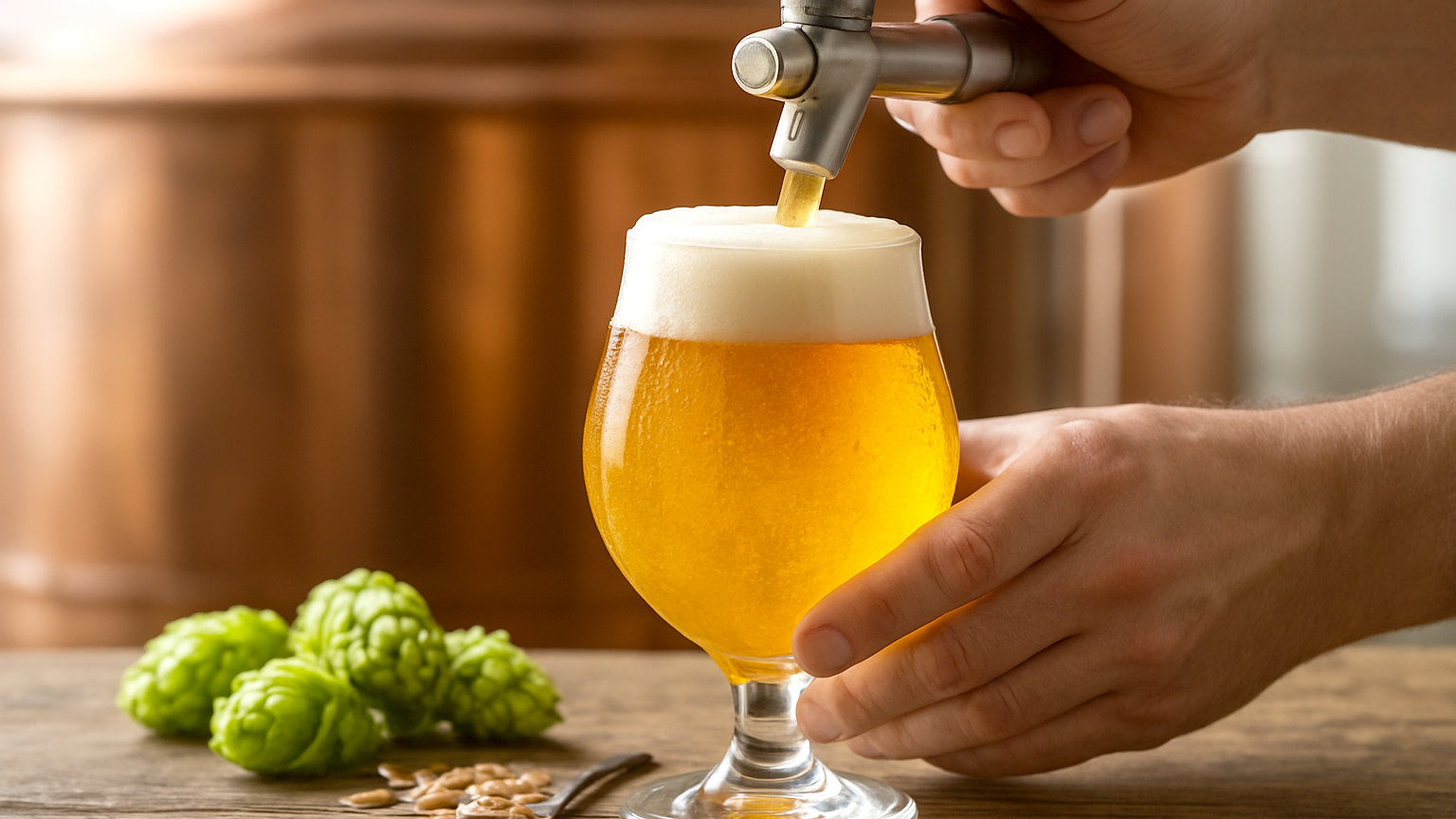
Brewery tours range from polished visitor attractions at large plants to a brewer showing four people around a railway arch on a Saturday afternoon. The second kind is usually more interesting, and both follow the same sequence, since the beer does.
What you will be shown
The tour generally follows the process in order.
Raw materials come first: malt you can taste, which is worth doing, since crystal malt tastes of toffee and roasted barley tastes of coffee, and hops you can smell, which explains a good deal about what a beer will be like.
Then the mill and the mash tun, where crushed grain meets hot water and starch converts to sugar. Then the kettle, where the wort is boiled and hops are added.
Then fermentation, usually a room of tall conical tanks, where yeast is pitched and the beer actually becomes beer. This is where a good guide will explain temperature control and why it matters.
Then conditioning, packaging and the cold store, and finally the bar.
What to expect physically
Breweries are working industrial spaces. Floors are wet, there are hoses, and it is loud near pumps and packaging lines.
Closed shoes are usually required and frequently mandatory. Long hair may need tying back, and some sites ask visitors to avoid strong perfume, since it interferes with assessing beer.
Expect warmth near the kettle and cold in the conditioning area. Photography is usually fine and worth checking.
Tours generally last an hour to ninety minutes and end with tasting, which is the part most people come for.
Questions worth asking
A brewer will answer almost anything, and the good questions are specific.
What is the house yeast and how long have you used it. Where does your water come from and do you treat it. What is your fermentation temperature for this beer. How long does the lager condition. What is the most difficult beer you make.
Asking what went wrong recently is frequently the most productive question of all, since brewers are unusually candid about their failures and the answers explain more about the process than any polished description.
Avoid asking for the recipe, which is the one thing likely to produce a polite deflection.
Large versus small
Big-plant tours are well organised, run to a schedule and include impressive scale, automation and heritage. They are genuinely worth seeing and the commentary is scripted.
Small-brewery tours are informal, sometimes chaotic, and led by someone who made the beer. The information is less polished and considerably more useful, and you can ask anything.
Many small breweries do not run formal tours at all but will show people around if asked on a quiet afternoon, which is worth trying.
Getting the most from it
Go with some knowledge of the process, since a tour is far more interesting when you already know roughly what a mash tun does and can spend the time asking about their specific choices.
Taste the malt when offered and smell the hops properly, cupping them in your hands and rubbing them to release the oils.
Buy beer at the end, which is fresh and supports the brewery directly, and note which beers you liked while you can still ask about them.
And be aware you will be drinking. Tours typically include several samples, so plan how you are getting home before you arrive rather than afterwards.
Booking and cost
Most tours need booking, and small breweries frequently run them only on particular weekends with limited places.
Prices generally include the samples and sometimes a glass or a can to take away, which makes the effective cost modest. Some breweries refund the fee against purchases at the end.
Ask about accessibility if it matters, since brewery floors involve steps, hoses and uneven surfaces, and not every site can accommodate everyone. Larger visitor centres are generally well equipped; a railway arch may not be, and it is better to establish that in advance than on arrival.


