Ask three brewers where pale ale ends and IPA begins and you will get three answers, all of them reasonable. There is no legal definition of either term, and the boundary between them is a matter of convention that has shifted noticeably as the market has changed.
The practical distinction
Two variables do most of the work: strength and hop intensity.
American pale ale generally sits between about four and a half and six per cent, with clear hop character but a balance that keeps the malt audible. It is designed to be drinkable in more than one glass.
IPA generally sits between about five and a half and seven and a half per cent, with hop aroma and bitterness pushed further forward and the malt playing a supporting role. It is designed to make an impression.
The ranges overlap, which is the honest position. A six per cent beer could reasonably be called either, and what it says on the can is a decision made by the brewery's marketing rather than by any external standard.
How the boundary moved
The reference point for American pale ale was established in 1980, when a Californian brewery released a beer using Cascade hops that defined the category for a generation. It sat at around five and a half per cent with a bitterness that seemed startling at the time and now reads as moderate.
As drinkers acclimatised to hop intensity, the scale drifted upwards. Beers that would have been considered aggressively hopped in 1990 became ordinary, and brewers responded by pushing further. IPA became stronger and more bitter, and pale ale followed it up the scale.
The result is that a modern pale ale is frequently hoppier than an IPA of thirty years ago, and the category boundary is defined relative to current expectations rather than to any fixed measurement.
The British complication
British pale ale is a separate tradition and adds to the confusion. Traditionally it means the bottled version of what is sold on cask as bitter, typically three and a half to five per cent, hopped with English varieties and considerably more restrained than anything American.
A British pale ale and an American pale ale share almost nothing beyond the words, and picking one up expecting the other is a common source of disappointment in both directions.
Modern British breweries make both, and the label usually indicates which tradition is intended by naming the hops or the style.
What the difference means in the glass
Assume that a pale ale will let you taste the malt and that an IPA will not, or at least not much. That is the most reliable practical guide.
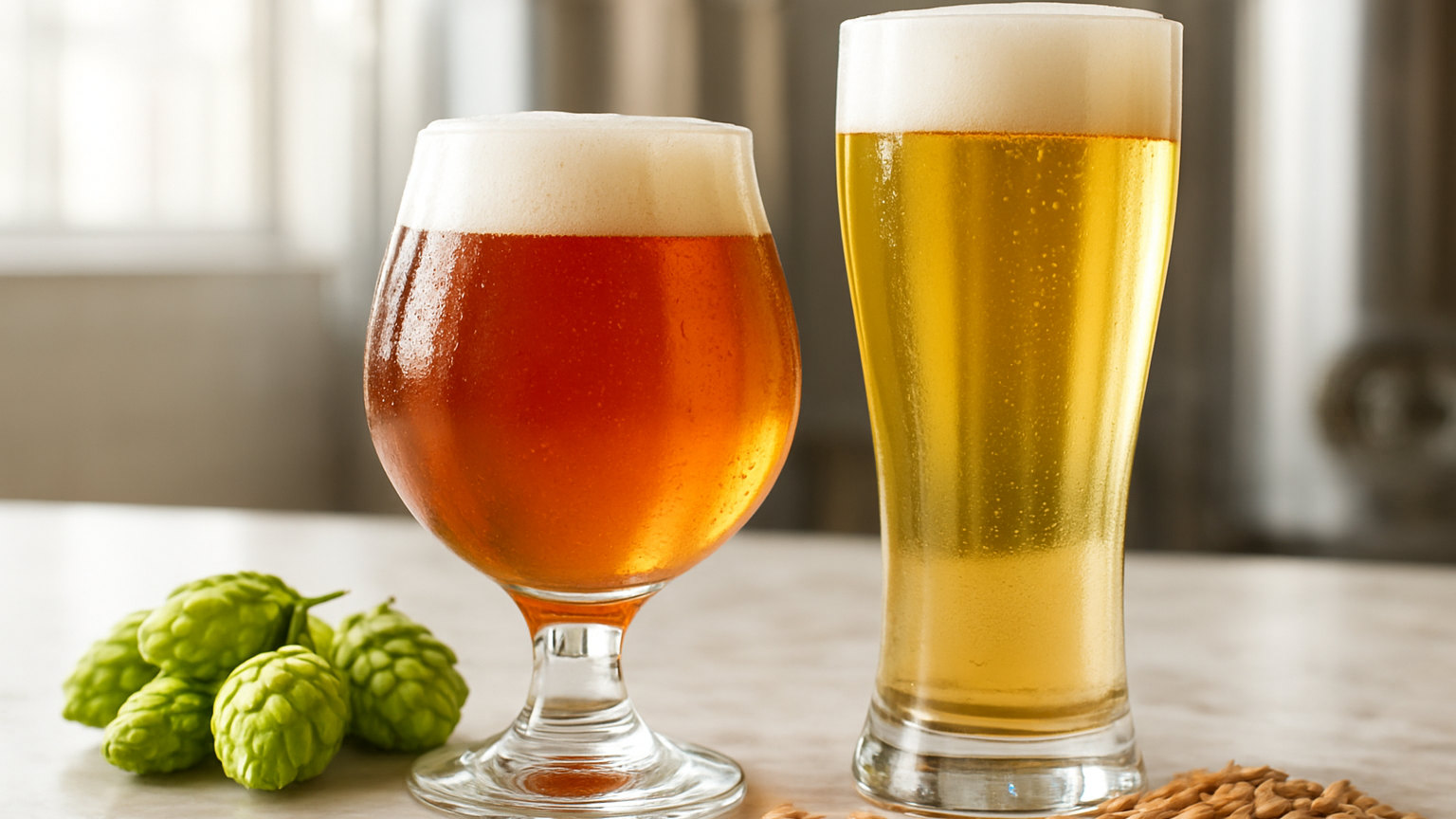
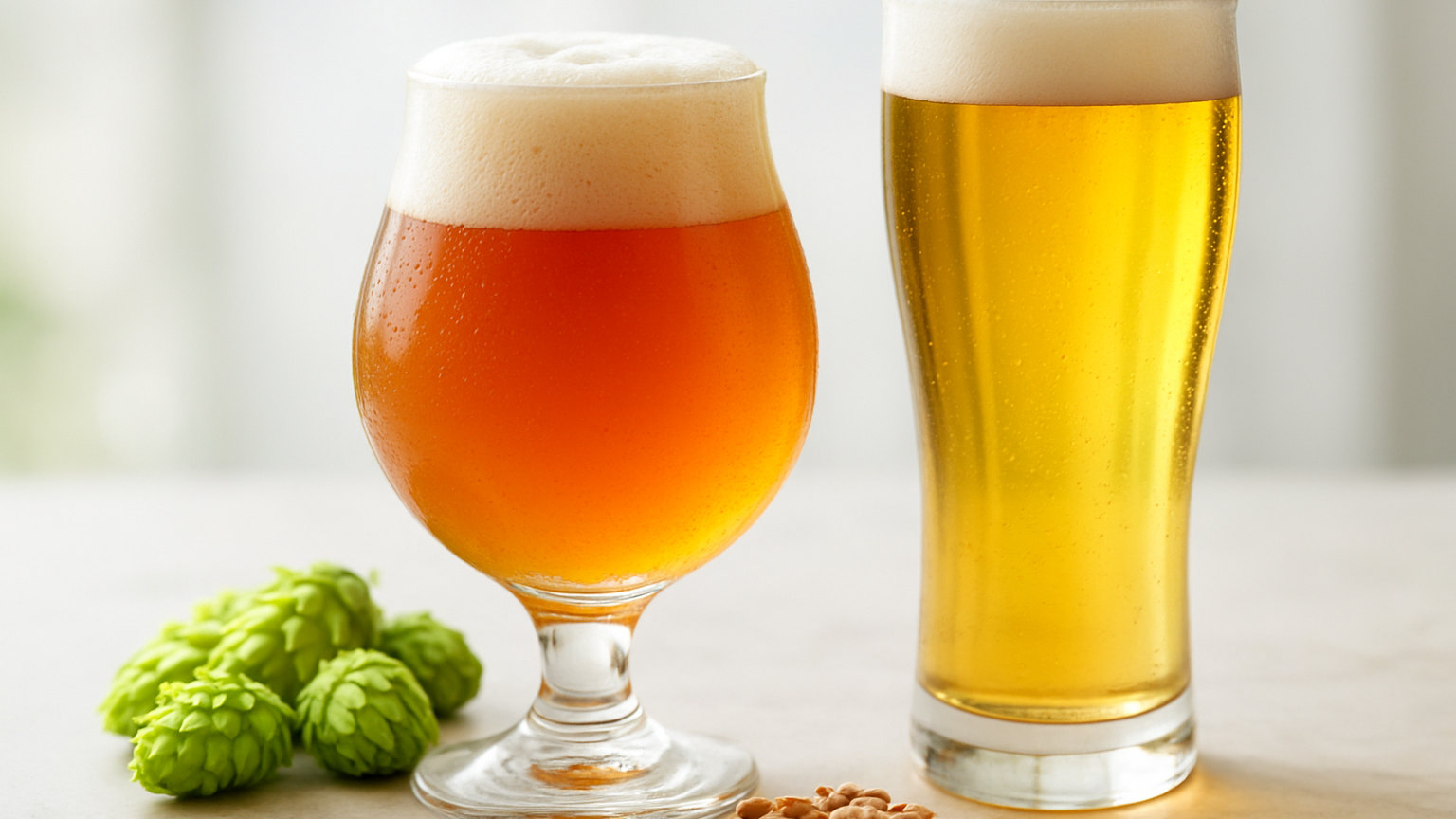
Pale ale generally has a more visible crystal malt or biscuit character supporting the hops, a moderate finish, and enough restraint that a second glass is appealing. IPA typically has a drier finish, more assertive bitterness or aroma, and more alcohol.
Neither is superior. They are built for different purposes, and the number of people who order an IPA and then find they wanted a pale ale suggests the distinction is worth attending to.
How to choose
Check the strength first, since it is the single most reliable indicator regardless of what the beer is called. Anything at or below five per cent will drink like a pale ale whatever the label says; anything above six and a half will drink like an IPA.
Then read the style qualifier, which now carries more information than the category name. Hazy, West Coast, session, double and cold all describe genuinely different beers, and they are considerably more informative than the choice between two terms whose boundary nobody agrees on.
Why breweries choose one or the other
Commercial considerations play a large part. IPA sells better than pale ale in most markets, so a brewery with a beer sitting between the two has an incentive to call it an IPA.
Duty is the counterweight, since rates rise with alcohol content, and a beer kept below a strength threshold costs less to sell. Some breweries consequently produce a pale ale at four point four per cent and an IPA at five point five for reasons that are as much about tax and price point as about brewing intention.