
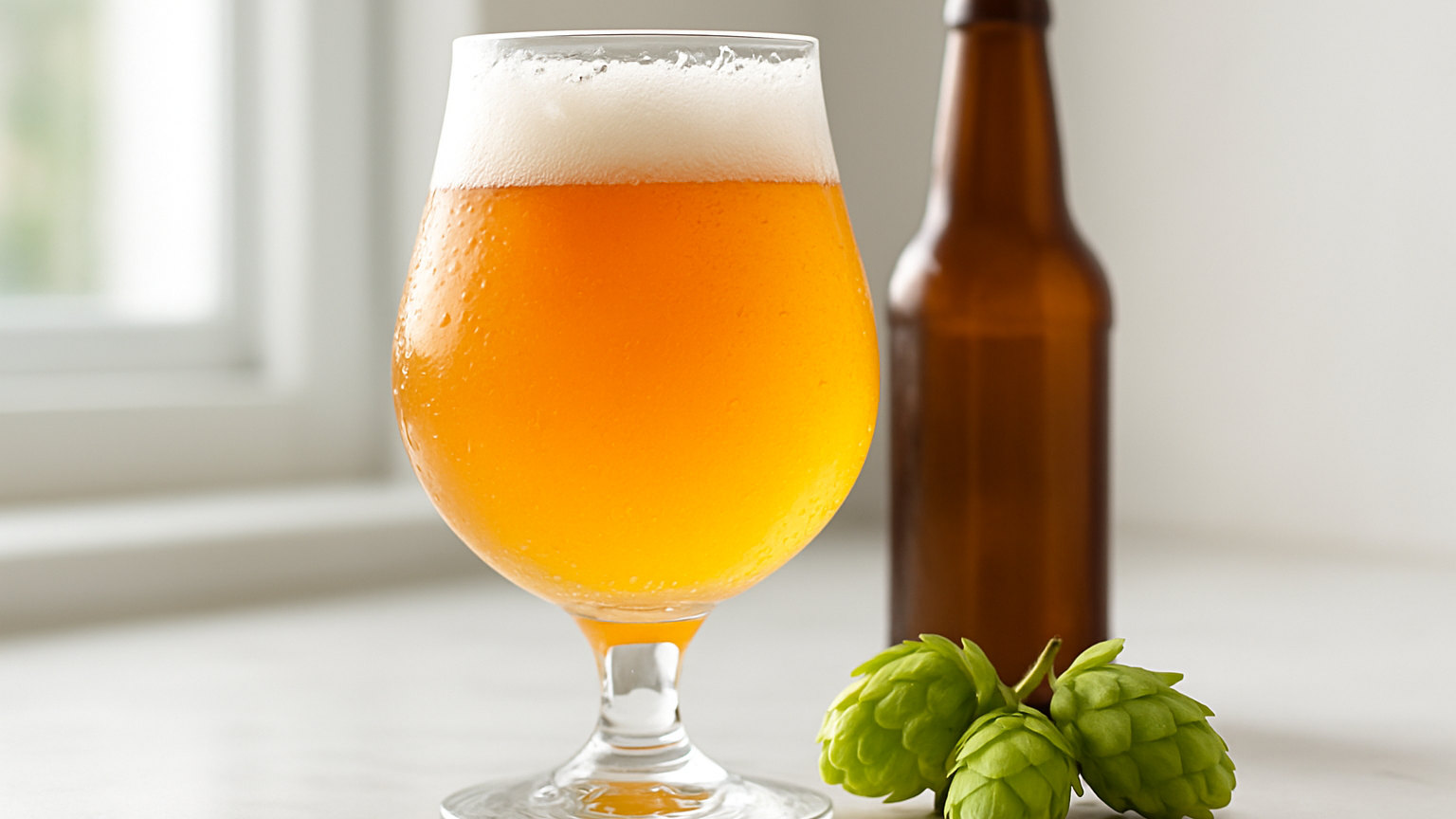
IPA is bought for aroma. The dry hopping that produces it accounts for a large share of the ingredient cost, and drinkers pay a premium for beers that smell of tropical fruit and pine.
Serving that beer at four degrees, straight from a fridge, suppresses most of it. It is the most common and most easily fixed mistake in drinking craft beer at home.
What temperature does to hops
Aromatic compounds reach the nose by evaporating from the surface of the liquid, and volatility falls sharply as temperature drops. A very cold beer releases far fewer of them.
Cold also suppresses the perception of sweetness while sharpening bitterness and carbonation. In a bitter beer that produces a harsh, thin impression, with the hop bite present and the fruit character missing.
The result is that an expensive, heavily dry-hopped IPA served at fridge temperature tastes much like a cheaper one, since the quality you paid for is precisely the part that has been switched off.
The right range
Around seven to ten degrees suits most IPA, which is cooler than a British cellar and warmer than a domestic fridge.
Session IPA and lighter examples sit at the cooler end, around seven or eight. Standard IPA and hazy styles are best around eight to ten. Double and imperial IPA want ten to twelve, since cold accentuates alcohol and suppresses the aroma that justifies the strength.
The practical instruction is simple: take the can out of the fridge ten to fifteen minutes before opening it. That moves a beer from around four degrees into the right range with no equipment and no planning.
Why very cold serving persists
Habit, mostly, imported from lager. It is also true that cold masks flaws, which suits mass market beer and works against beers with something to say.
Pubs and bars serving craft beer on keg frequently run their lines cold for the same reasons, and asking for a beer to be poured slightly warmer is not usually practical. This is one area where drinking at home offers a genuine advantage.
The glass
Shape matters more for aromatic beer than for anything else. A glass that narrows towards the rim collects the aroma above the beer and directs it upwards, which is exactly what a hop-forward beer needs.
A tulip-shaped glass, a stemmed teku-style glass or an ordinary large wine glass all work well. A straight-sided pint glass does the job poorly, since the aroma disperses rather than gathering.
Pour with some vigour to raise a decent head. Foam traps volatile compounds and releases them gradually, which is why a beer poured flat smells of less. Filling no more than two thirds leaves room for the aroma to collect.
A clean glass matters as much as the shape. Detergent residue destroys head retention and dulls the nose, so rinse thoroughly and dry with a clean cloth rather than one that has been near fabric conditioner.
Testing it
Pour half a can into a glass straight from the fridge and leave the rest in the can on a worktop for fifteen minutes before pouring the remainder into a second glass.
Smell both together. The difference in aroma intensity is usually substantial and immediately convinces people who assumed temperature advice was fussiness.
The same principle applies across beer generally: the more a beer depends on aroma, the more it suffers from being served very cold, and IPA depends on aroma more than any other mainstream style.
Cans, bottles and pouring
Drinking straight from the can is common and costs you most of the aroma, since the small opening lets very little reach the nose. For a beer bought for its smell, that is a considerable waste.
Pouring also releases excess carbonation, which otherwise makes the beer feel gassier than intended and can leave it sitting heavily. Two minutes with a glass changes the experience substantially, which is a reasonable return for the washing up.


