
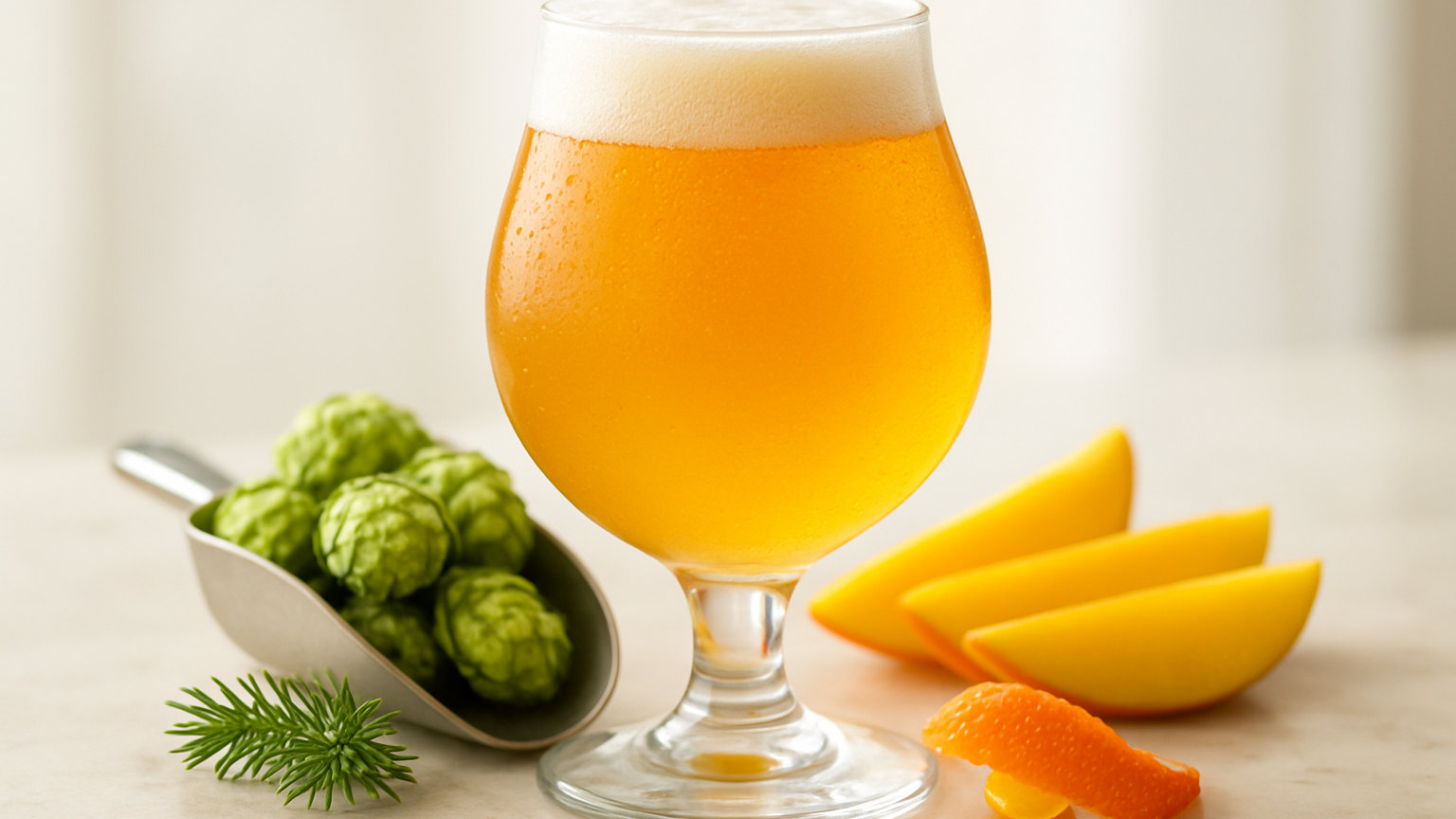
Modern IPA is a hop delivery system, and the specific varieties used determine what the beer smells and tastes of far more than the malt or the yeast do. Breweries increasingly name the hops on the label, which is genuinely useful information once you know what the names mean.
The American classics
Cascade is the variety that started the modern style. Released in the early 1970s and adopted by Californian brewers, it gives grapefruit, floral and faintly spicy character, and it defined what American hops meant for a generation. Beers built on it taste recognisably of the first wave of craft brewing.
Centennial is often described as a more intense Cascade, with stronger citrus and a firmer bitterness. Chinook brings pine, resin and grapefruit pith with a robust, sometimes harsh bitterness that suits West Coast styles.
Simcoe contributes pine, passionfruit and a distinctive quality frequently described as catty or dank, which sounds unappealing and is prized. Amarillo gives orange and apricot with a softer edge.
The modern aroma varieties
Citra, released in 2008, changed the direction of the style. It delivers intense grapefruit, lime, lychee and tropical fruit, and it is now among the most widely used hops in craft brewing. A great many beers advertising tropical character are built on it.
Mosaic gives blueberry, mango, stone fruit and a complex, shifting profile that varies with how it is used. Together with Citra it accounts for a substantial proportion of hazy IPA production.
Sabro is the unusual one, giving coconut, tangerine and cream, which is unmistakable when a brewery uses it prominently and not to everyone's taste.
The southern hemisphere
Australian and New Zealand varieties bring characters that American hops do not.
Galaxy, from Australia, gives intense passionfruit and peach and is used in small quantities because it dominates readily. Nelson Sauvin, from New Zealand, produces a white wine character often compared to sauvignon blanc, with gooseberry and crushed grape notes that are genuinely distinctive.
Riwaka, Motueka and Vic Secret each contribute their own lime, tropical and herbal profiles, and southern hemisphere hops are harvested six months out of phase with northern ones, which affects freshness and availability.
What creates these differences
Hop aroma comes from essential oils, and the balance between compound families determines the character. Terpenes such as myrcene give resinous and citrus notes. Other compounds produce floral and spicy aromas.
A separate and more recently understood group are thiols, sulphur-containing compounds present in tiny quantities that produce intense tropical fruit, passionfruit and grapefruit aromas. Many exist in hops in a bound, odourless form and are released by yeast during fermentation, which is why the choice of yeast strain affects hop character so much.
Processed hop products
Most brewing now uses pellets rather than whole cones, since they store better and extract more efficiently.
Concentrated lupulin products, sold under various names, separate the aromatic glands from the leafy vegetal material. Using them delivers aroma with less plant matter, which reduces the grassy, astringent quality that heavy dry hopping can produce. They cost more and are widely used in hazy IPA for exactly that reason.
Using the information
If a beer names its hops, that tells you what to expect: Citra and Mosaic means tropical and juicy, Chinook and Simcoe means pine and resin, Nelson Sauvin means something closer to white wine.
Single-hop beers, made with one variety so the character is unmasked, are the best way to learn what each does. Several breweries produce series of them, and working through three or four teaches more about hop character than any amount of reading.
Freshness applies to hops too
Hops are an agricultural product with a single annual harvest, and they degrade in storage. Northern hemisphere varieties are picked in late summer, so a beer brewed in autumn uses fresher hops than one brewed the following summer.
Some breweries release fresh hop or wet hop beers made within hours of harvest, using undried cones. These are seasonal, taste distinctly green and grassy in a way dried hops do not, and are worth trying once as a demonstration of what the drying process removes.


