
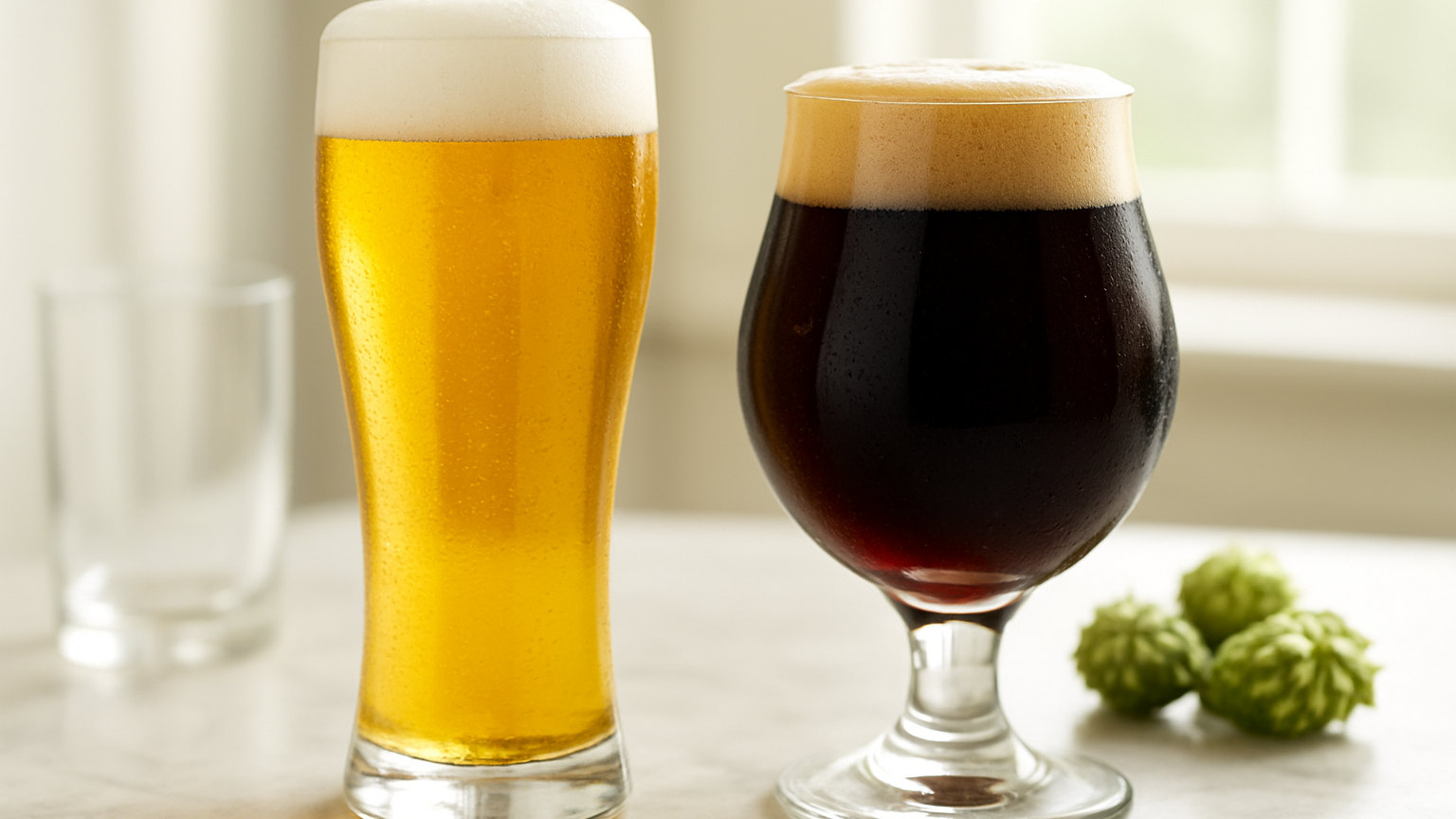
Wine is assumed to improve with age and beer is assumed not to, and for lager specifically the assumption is right in the great majority of cases. Most lager is at its peak within days of packaging and declines steadily from there.
Understanding what declines and why explains both the general rule and the handful of exceptions.
What fades first
Hop aroma is the most fragile element and begins disappearing immediately. The volatile oils responsible for the floral, spicy character of a pilsner degrade over weeks, and a beer that smelled vivid on packaging can be noticeably muted three months later.
This matters more in lager than in many styles because there is so little else happening. An IPA losing hop aroma still has malt and body; a pilsner losing hop aroma has lost a substantial proportion of its identity.
Oxidation follows, producing the characteristic stale flavours of wet cardboard, sherry and, in darker beers, a sweet toffee note that was not there before. Oxygen picked up during packaging drives this, and warm storage accelerates it considerably.
How long is reasonable
For pale lager and pilsner, drink within three months of packaging and ideally within one. Beyond six months the beer is generally flat and dull, whatever the best before date says.
Best before dates in beer are set for commercial rather than sensory reasons and are frequently generous. A lager six weeks inside its date can already be past its best, which is why packaging dates are more useful than expiry dates and why brewers who print them are doing drinkers a favour.
Darker lagers such as dunkel and schwarzbier hold up somewhat better, since malt character is more robust than hop aroma, but they are still best fresh.
The exceptions
Strong dark lagers can genuinely improve. Doppelbock and eisbock, at seven per cent and well above, have the malt concentration and alcohol to survive and develop, and a year or two in a cool dark place can integrate the flavours and add dried fruit and sherry-like complexity.
Bock sits at the edge, holding for perhaps a year without gaining much. Rauchbier can soften usefully as the smoke integrates.
The principle is the same one that applies to wine: strength and concentration allow ageing, while delicacy does not. A four per cent pilsner has nothing to develop into.
Storing it properly
Cool, dark and stable, exactly as for wine. Temperature matters most, and warm storage roughly doubles the rate of staling for every increase of several degrees, which is why beer left in a warm garage deteriorates so fast.
Darkness is critical for anything in green or clear glass, since light damage produces a skunky fault within minutes of direct sunlight.
Store bottles upright rather than on their side. Unlike wine, beer gains nothing from cork contact, and standing upright reduces the surface area exposed to the small amount of air in the neck, as well as keeping any yeast sediment at the bottom.
The practical routine
Buy lager in the quantities you will actually drink over a few weeks rather than stockpiling it. Check packaging dates where breweries print them and treat best before dates as an outer limit rather than a target.
Keep it in a cupboard or fridge rather than on a worktop, and rotate stock so older cans get used first.
And if you have a doppelbock or an eisbock, that is the one to put at the back of the cupboard deliberately. Buying two and opening them a year apart is the beer equivalent of the multiple-bottle rule in wine, and it is the only situation in lager where patience is rewarded.


