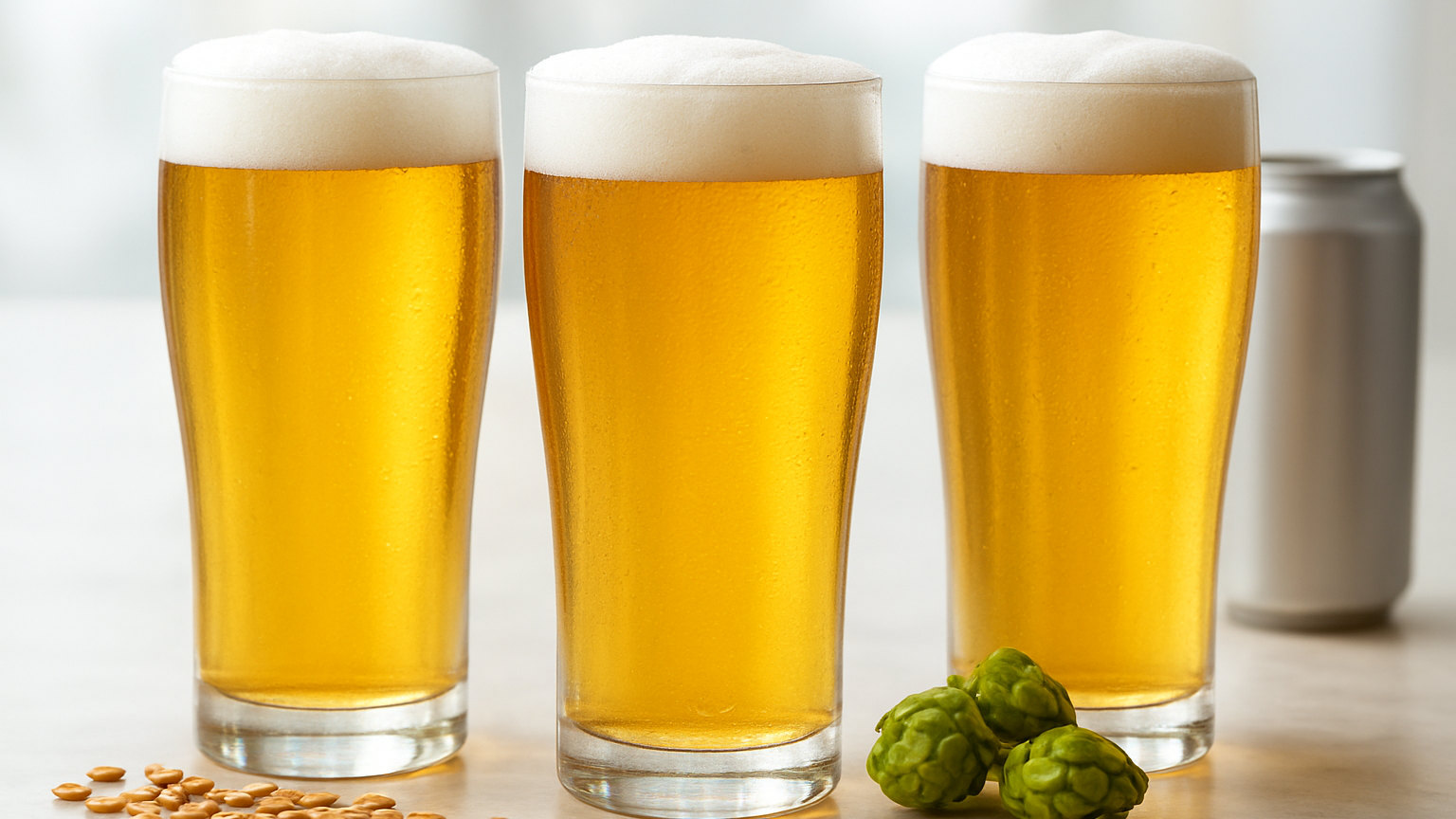
Line up half a dozen of the best selling lagers in Britain and the differences are considerably smaller than the advertising budgets behind them. This is not an accident or a conspiracy; it is the predictable result of brewing to a specification that prioritises consistency, low cost and broad acceptability.
What they have in common
The category is generally called international pale lager, and its defining characteristics are a pale straw colour, light body, low bitterness, high carbonation and a clean finish with very little aroma.
That profile is achieved through a set of shared decisions. Adjunct grains, usually rice or maize, replace a proportion of the malted barley, lightening the body and reducing colour and cost. Hopping is restrained, using extracts in many cases for consistency. Fermentation is efficient and conditioning periods are short compared with traditional lagering.
The result is a beer designed to be inoffensive, to taste the same everywhere, and to be drunk cold in quantity. Judged against that brief, these beers succeed completely.
Adjuncts, and whether they are a problem
Rice and maize have a poor reputation among beer enthusiasts, and the criticism is partly fair and partly reflexive.
They are cheaper than malted barley and they lighten body, which is why they are used at scale. They also contribute very little flavour of their own, which is the point: a lager built on rice tastes cleaner and thinner than an all-malt equivalent.
Used deliberately they are legitimate. Several Japanese lagers use rice to produce a crisp, dry beer that is exactly what the brewer intended, and the technique has a long history in that tradition. The objection is less to the ingredient than to its use as a cost-saving measure that produces a beer with nothing much in it.
An all-malt lager has more body, more bread and biscuit character and a fuller finish, which is what German purity rules guarantee and what most craft lager delivers.
Where the beer is actually made
A detail worth knowing is that many familiar international brands sold in Britain are brewed here under licence rather than imported. The recipe is specified by the brand owner and the production happens domestically, which reduces shipping costs and improves freshness.
Strengths sometimes differ between markets too, with the domestic version of a well known continental lager occasionally sold at a lower alcohol level in Britain than at home.
None of this is hidden, and the small print on a can will usually say where it was brewed. It is simply not the impression the branding creates, and it is worth checking if a beer's country of origin is part of why you are buying it.
Do the differences matter
Blind comparisons of mass market lagers tend to produce weak results, with participants struggling to identify brands they drink regularly. That is not a reflection on anyone's palate; it reflects genuinely narrow differences.
Where distinctions do exist, they are mostly in body, bitterness and how much adjunct is used. A few of these beers are all-malt and taste noticeably fuller. A few are hopped more assertively.
The bigger variable is freshness and serving. A lager poured from a clean, well maintained tap at the right temperature will beat the same beer from a warm bottle every time, and pub cellar practice affects the glass more than the brand does.
What to do about it
There is nothing wrong with drinking mass market lager, and defending it is easier than the enthusiast consensus allows. It is refreshing, consistent and cheap, and it does a job.
If you want more from a lager without leaving the category, three moves work. Buy German or Czech, where all-malt brewing and longer conditioning are standard. Buy in cans rather than clear or green bottles, which avoids light damage. And check the date, since these beers are at their best fresh and lose what little aroma they have within months.
Any of those costs almost nothing and changes the glass more than switching between the big brands ever will.