
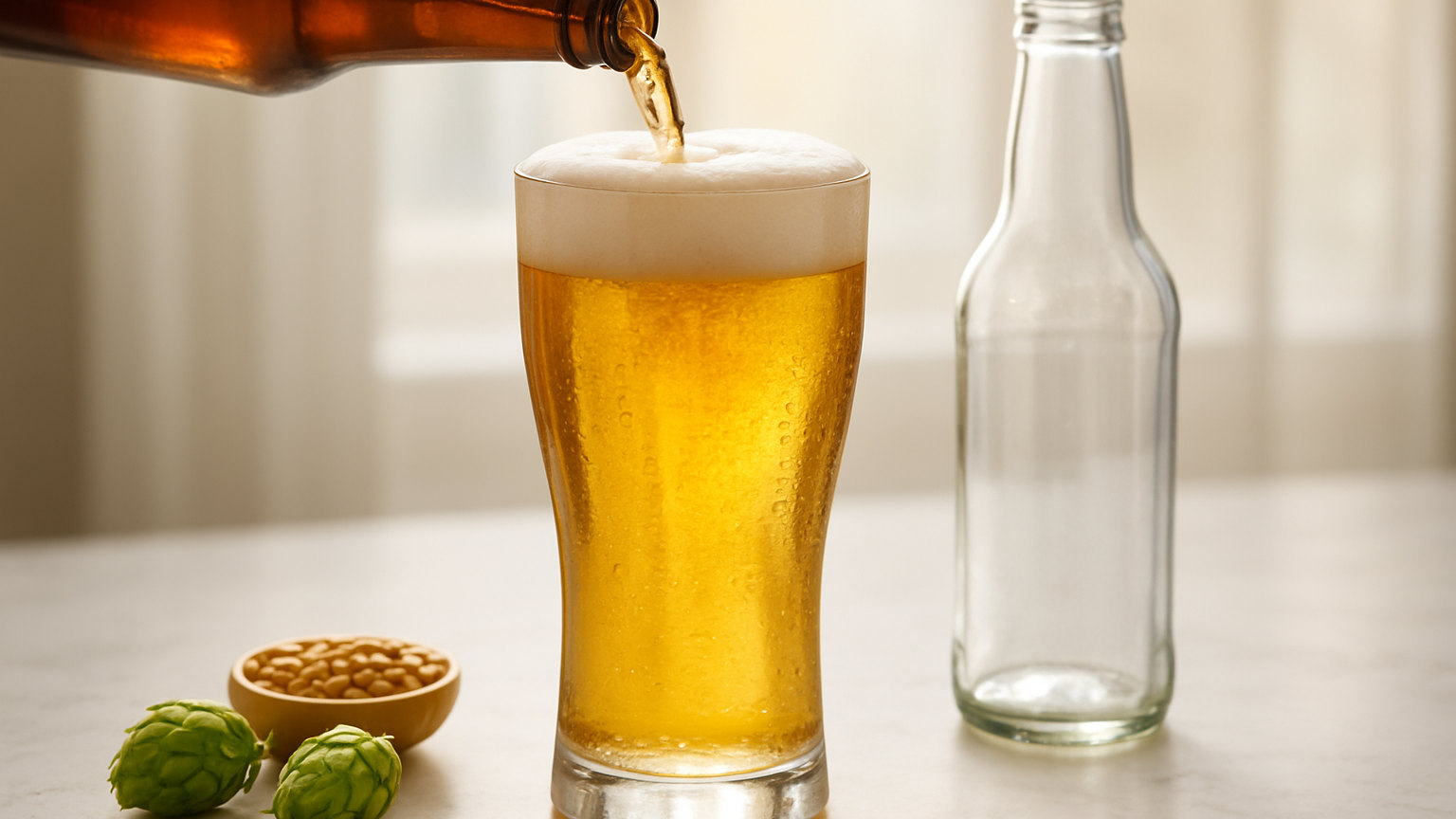
Some beers, particularly those sold in green or clear glass, carry a distinctive aroma that has nothing to do with the recipe. The usual descriptions are skunky, catty or burnt rubber, and in North America the fault is simply called skunked because the compound responsible is closely related to what a skunk produces defensively.
It is a light damage fault, it is entirely preventable, and it happens far faster than most people assume.
The chemistry
Hops contain compounds called isohumulones, which provide bitterness. When exposed to light, particularly in the ultraviolet and blue part of the spectrum, these break down. Riboflavin naturally present in the beer acts as a catalyst for the reaction.
The product of that breakdown is a thiol, a sulphur-containing compound, and human noses are extraordinarily sensitive to it. Detection thresholds are in the parts per trillion, which is why even brief exposure produces a noticeable effect.
The relationship to skunk spray is genuine rather than metaphorical: the compounds belong to the same chemical family, which is why the description is so consistent across drinkers who have never encountered a skunk.
How quickly it happens
Faster than seems reasonable. A clear bottle in direct sunlight can develop noticeable lightstrike within minutes. In a shop under fluorescent lighting, the process takes days to weeks depending on the intensity and the packaging.
This is why a beer can be faulty while being well within its date. Nothing has gone wrong with the brewing or the freshness; the damage occurred after packaging, possibly in transit or on a shelf.
Packaging and protection
Brown glass blocks most of the damaging wavelengths and offers good protection. Green glass offers considerably less. Clear glass offers essentially none.
Cans are completely opaque and therefore immune, which is one of several technical arguments in their favour. Keg and cask beer is similarly protected until it reaches the glass.
The obvious question is why anyone uses green or clear bottles at all, and the answer is marketing. Green glass became associated with imported continental lager, partly through historical accident, and the association with quality proved commercially valuable enough to outweigh the technical drawback. Clear glass shows off a beer's colour, which sells.
Some brewers using clear or green glass use hop extracts that have been chemically modified so they cannot form the offending compound. This works, and it is one reason certain beers in clear bottles remain unaffected.
How to avoid it
Buy cans where the choice exists, or brown glass. Avoid bottles displayed in shop windows or under bright lighting, and prefer stock from the back of a chiller.
At home, keep beer in a dark cupboard or a fridge rather than on a worktop, and do not leave bottles in the sun at a barbecue, which is where a great deal of domestic lightstrike happens.
If you buy a case, storing it in its box does the job perfectly well.
Recognising it, and what it is not
The smell is distinctive once identified: sulphurous, slightly rubbery, faintly cabbage-like, and detectable immediately on opening. It sits over the beer rather than in it, and it does not blow off with time.
It is worth distinguishing from other faults. Oxidised beer tastes of wet cardboard and stale sherry. Beer past its date tastes flat and dull. Some styles, particularly certain lagers, legitimately show a light sulphur note from fermentation that fades as the glass sits.
Lightstruck beer is not harmful, merely unpleasant, and a bottle affected by it can reasonably be returned to a retailer. It is also worth mentioning if a pub is storing bottles in a sunny window, since the problem is entirely within their control and most staff have never been told about it.


