Bock is a strong, malty lager, and the family it heads runs from beers of around six and a half per cent to freeze-concentrated versions that reached record strengths. It is the answer to anyone who assumes lager means light and weak.
Where the name comes from
The style traces to Einbeck in Lower Saxony, a brewing town whose beer was widely exported in the late Middle Ages. When Bavarian brewers began producing their own version, the town's name was reshaped by the local accent into something close to bock, which happens to mean billy goat in German.
That coincidence explains the goat that appears on a great many bock labels, an image with no connection to the beer beyond a linguistic accident.
The traditional bock
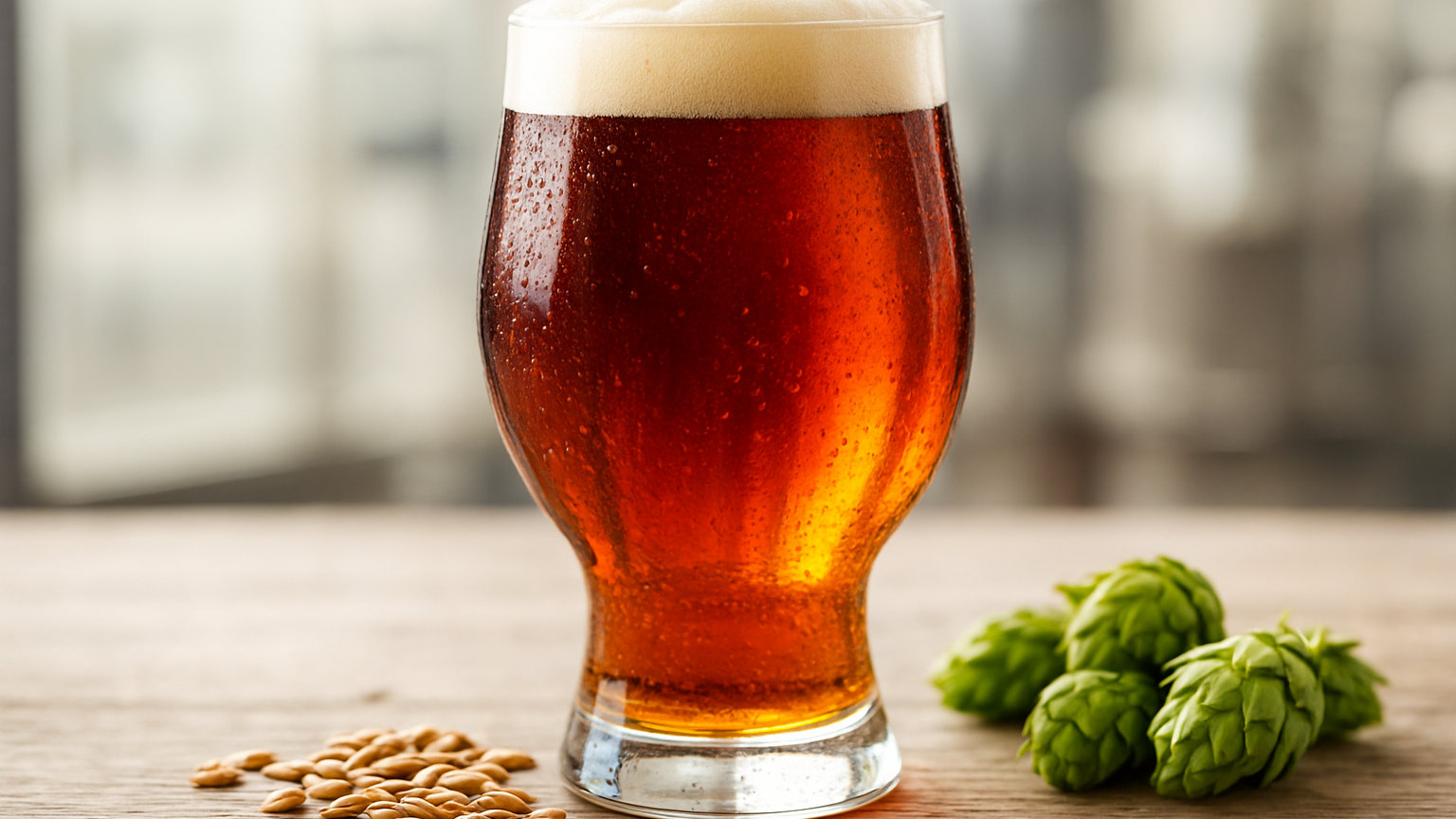
A standard bock is dark amber to brown, around six to seven per cent, and built on malt. Expect bread crust, toast, caramel and dried fruit, with just enough hop bitterness to keep it from being cloying and very little hop aroma.
Despite the strength it should be smooth rather than hot, which is the achievement: producing a strong beer that remains clean requires careful fermentation and a long conditioning period, and the lager yeast leaves nowhere to conceal a rushed job.
Doppelbock and the monastic story
Doppelbock, meaning double bock, is stronger again, typically seven to eight per cent and sometimes considerably more. It is richer, darker and sweeter, with pronounced dried fruit, chocolate and toffee character.
The style is associated with the Paulaner monks of Munich, who brewed a strong beer to sustain themselves through Lent when solid food was restricted. The description of it as liquid bread reflects both the malt-driven flavour and its original purpose.
The naming convention is worth knowing. That original monastic beer was called Salvator, and other breweries adopted the ending, so doppelbocks across Germany carry names finishing in -ator. Spotting that suffix on a label tells you roughly what strength and style to expect.
Eisbock and the strength race
Eisbock is made by partially freezing a doppelbock and removing the ice. Since water freezes before alcohol, taking the ice out concentrates everything remaining, raising the strength and intensifying the flavour.
The origin story involves barrels left outside overnight in a Franconian winter, which is plausible enough to be repeated widely. Traditional examples sit somewhere between nine and thirteen per cent and are sipped in small measures.
The technique was later pushed to extremes by breweries competing to produce the world's strongest beer, with results reaching far higher strengths. Those were novelties rather than examples of the style, and the traditional versions are considerably more enjoyable.
The other members of the family
Maibock, also called heller bock, is the pale spring version. It keeps the strength while being golden rather than brown, with more hop character and a lighter body, and it is served in May in some parts of Germany.
Weizenbock is the wheat beer variant, fermented with ale yeast rather than lager yeast, which puts it technically outside the lager family. It combines bock strength with the banana and clove character of a hefeweizen, and it is one of the more distinctive beers in German brewing.
How to drink it
Serve bock warmer than you would a pale lager, around eight to ten degrees, since cold suppresses exactly the malt complexity you are drinking it for. Use a glass with a decent bowl rather than a straight-sided one.
Measures should be modest. These are beers for a half rather than a pint, particularly at doppelbock strength.
At the table they suit roast pork, sausages, game, strong cheese and anything caramelised. Doppelbock is also one of the few beers that works with dessert, particularly with chocolate. And unlike most lager, the stronger examples will keep and develop for a year or two in a cool dark place, since the malt has enough substance to survive.
That keeping quality makes bock a reasonable beer to buy two of, opening one immediately and the other a year later. The comparison shows how oxidation and time work on a malt-driven beer, turning fresh caramel and toast towards dried fruit and something faintly sherried, and it is the only corner of the lager family where the experiment is worth running.