
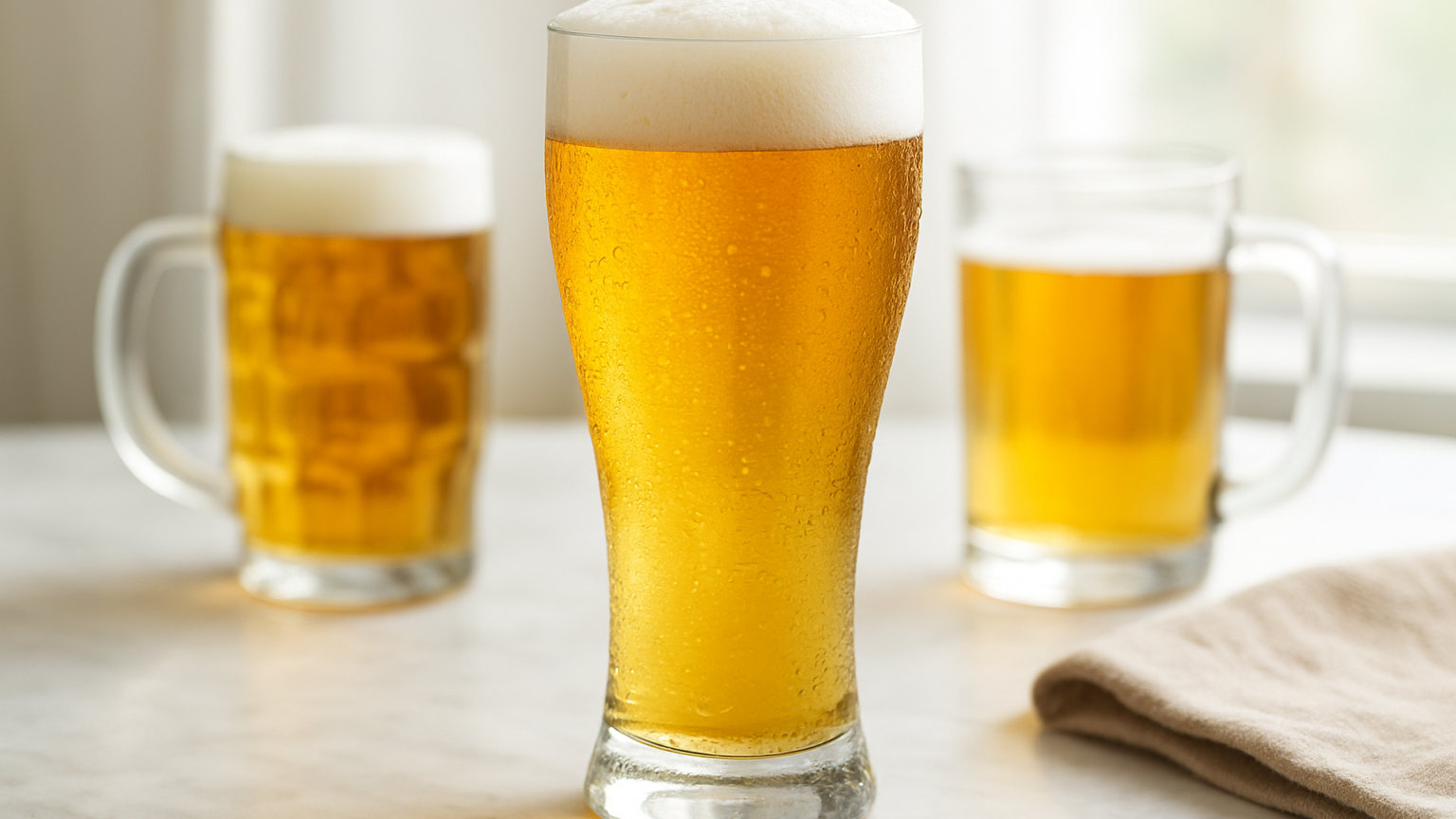
Beer glassware has accumulated an elaborate vocabulary, with distinct shapes for individual styles and regions, most of it driven by local tradition rather than by rigorous testing. Shape does affect the drinking experience, though less than the marketing of specialist glassware implies, and one entirely unglamorous factor matters more than any of it.
What shape actually does
Three functions are real. A glass that narrows towards the top holds aroma above the beer and directs it towards the nose. A shape that supports a head keeps carbonation and aromatics in play, since the foam traps volatile compounds and releases them gradually. And the width of the opening affects how quickly the beer warms and how it hits the palate.
Beyond that, most differences are matters of custom and presentation. The tall, elegant pilsner glass exists partly to display the colour and clarity that made pale lager a sensation in the first place, which is a legitimate reason even if it is not a functional one.
The traditional shapes
The pilsner glass is tall and tapered, showing off colour and carbonation and concentrating the head. It suits pilsner and pale lager and looks the part.
The willi becher, a slightly waisted tumbler, is the German workhorse and is used for almost everything. It is unfashionable, practical and perfectly good.
The stange is a tall narrow cylinder used for kölsch, served in small measures and replaced frequently so the beer is always fresh. The related becher is used for altbier.
The dimpled mug and the ceramic stein both keep the hand off the beer, which helps on a warm day, though a ceramic vessel prevents you seeing what you are drinking.
The Bavarian maß, the litre mug associated with Oktoberfest, is a serving vessel first and a drinking glass second, and it exists for volume rather than for aroma.
Nucleation, and what those etchings do
Many modern beer glasses have a laser-etched pattern on the base, and it is not decoration. Carbon dioxide needs a nucleation site to form a bubble, and a smooth glass provides very few, which means the gas stays dissolved and the head collapses.
An etched base provides a continuous supply of sites, producing a steady stream of bubbles that maintains the head and carries aroma upwards throughout the drink.
It genuinely works and it is one of the few glassware features with a clear mechanism. It also means the beer goes slightly flat faster, which is a reasonable trade.
The thing that matters more than shape
A beer-clean glass is one with no residue of any kind on the inside surface, and it is far more consequential than the shape of the vessel.
Fats and detergent residues destroy head retention and dull aroma. A glass washed with ordinary washing-up liquid and rinsed inadequately, or dried with a tea towel that has been near fabric conditioner, will produce a beer that looks flat and smells of very little.
The test is straightforward. Pour a beer and look at the inside of the glass: if bubbles cling to the sides in patches, the glass is not clean, and if the foam collapses within a minute, something is coating the surface.
Wash beer glasses separately with a dedicated brush and minimal detergent, rinse thoroughly in hot water, and let them air dry upside down on a rack before storing them upright.
What to own
One shape covers everything, and a willi becher or a decent tulip-shaped beer glass of around half a litre will serve pilsner, helles, dunkel and bock perfectly well. Buy several, keep them clean and store them upright away from cupboard smells.
If you want a second shape, a smaller glass of around a third of a litre suits stronger lagers, where a half-litre measure of doppelbock is more than most evenings require.
The pint glass, incidentally, is a legal measure rather than a design, and a nucleated tulip pint is a considerable improvement on the plain straight-sided one for anything with aroma.


