Lager accounts for the overwhelming majority of beer drunk in the world, and it achieved that position in a little over a century from a standing start. Before the middle of the nineteenth century it was a regional Bavarian style; by the middle of the twentieth it was the default beer almost everywhere.
The reasons are a combination of technology, appearance, economics and marketing, and they arrived more or less simultaneously.
Refrigeration removed the constraint
Lager requires cold fermentation and cold storage, which before mechanical refrigeration meant caves, cellars and ice cut from lakes in winter. That limited production to places with the right geography and the right climate, and it made summer brewing largely impossible.
Industrial refrigeration, developed through the second half of the nineteenth century, removed the limitation entirely. Any brewery anywhere could now make lager year round, and the style was suddenly available to industrial-scale production in a way that its geography had previously prevented.
Pale malt and glassware
The second factor was appearance. Advances in malting produced consistently pale malt, and the pale golden beer that resulted arrived at exactly the moment mass-produced glass drinking vessels became affordable.
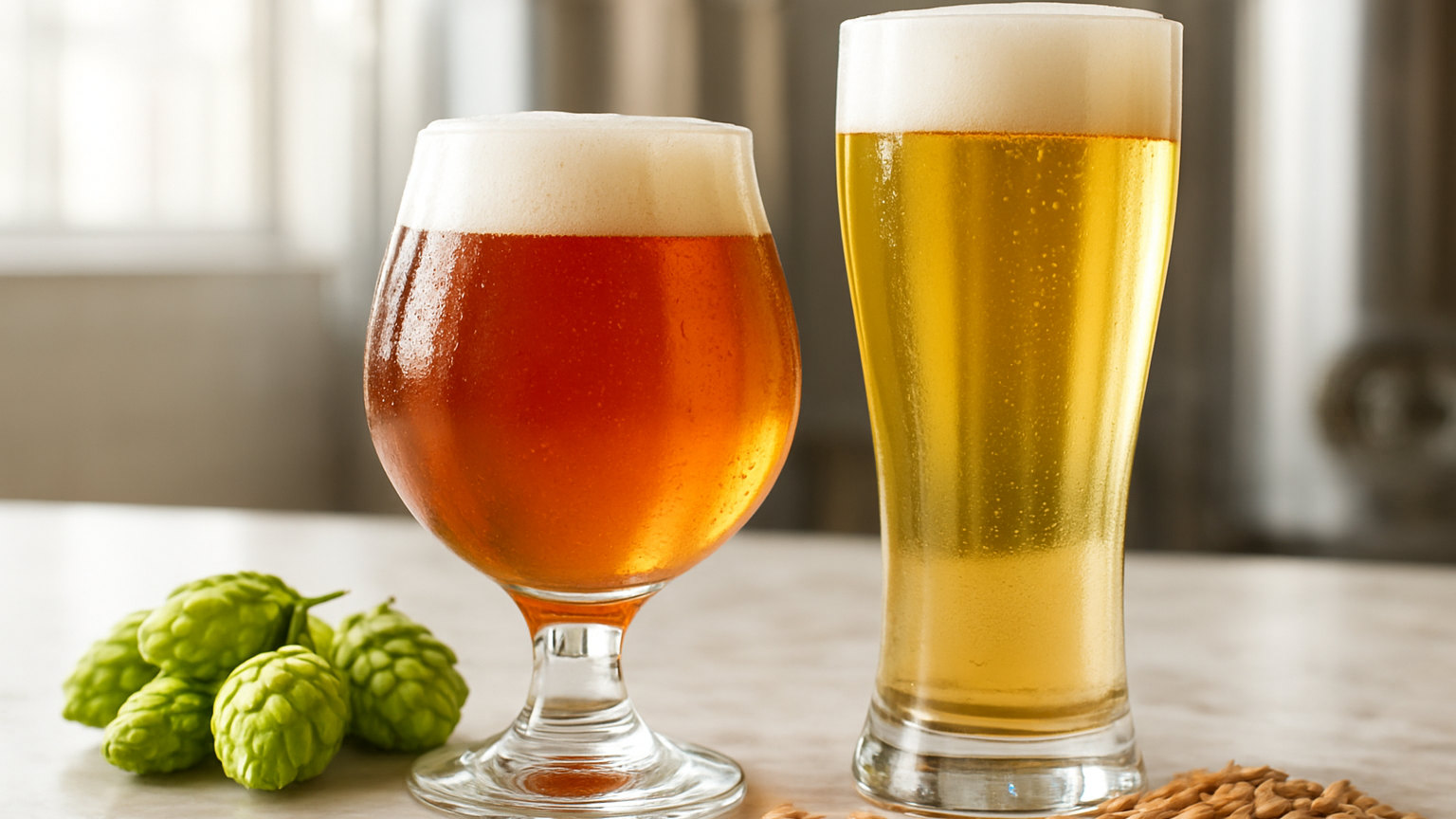
For most of brewing history, beer was drunk from pewter, wood or stoneware and nobody saw it. A brilliantly clear golden lager in a glass was a spectacle, and it made cloudy, dark traditional beer look primitive by comparison.
The visual argument was extraordinarily effective, and it drove demand in a way that flavour alone would not have.
Consistency and scale
The third factor is commercial. Lager's clean fermentation profile and long conditioning produce a beer that is reproducible to a degree that ale traditionally was not.
For a brewery selling nationally or internationally, consistency is worth more than character. A drinker who orders a familiar brand in a different city and receives exactly what they expected is a returning customer, and lager delivers that reliably.
The style also tolerates adjunct grains, pasteurisation and long distribution chains better than more delicate beers, which suits industrial production and global shipping.
The refreshment argument
Lager is served cold, is relatively low in alcohol, is highly carbonated and does not demand attention. As a category it is designed for drinking in quantity in warm weather, which is a substantial commercial advantage in most of the world's populated areas.
Where beer traditions developed in cool northern climates around cellar-temperature ale, the global export of brewing went overwhelmingly to warmer places, and pale lager suited them better.
What was lost and what came back
The dominance came at a cost. Regional styles disappeared across Europe as breweries consolidated and converted to lager production, and traditional ale in Britain came close to extinction in the second half of the twentieth century before organised consumer campaigning arrested the decline.
Something similar happened within lager itself, where a rich family of German and Czech styles was reduced, in most export markets, to a single pale interpretation.
The revival of interest in traditional and craft brewing over the past few decades has partly reversed this, and it has now reached lager itself. Breweries that once regarded the style as beneath them are producing pilsners, helles and dunkels, and drinkers who assumed lager meant one thing are discovering a category that was always considerably wider than the version that conquered the world.