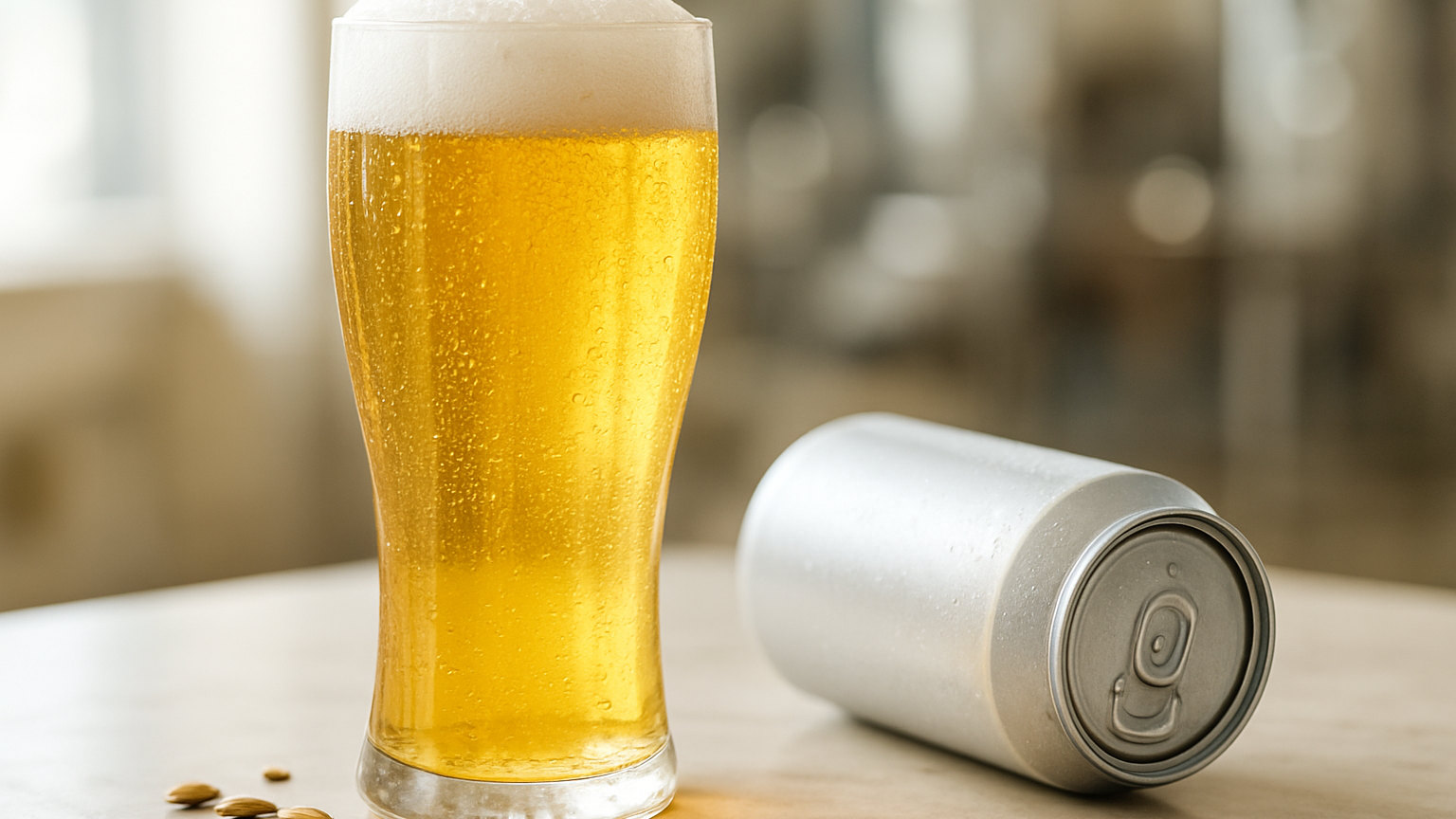
The trade term is beer-clean, and it means something stricter than visually clean. A glass can look spotless and still carry a film of fat or detergent sufficient to flatten the head and mute the aroma of an otherwise excellent beer.
It is the most common and least recognised cause of a disappointing pint, at home and in pubs.
What the residue does
Foam is stabilised by proteins forming a structure around gas bubbles. Fats and surfactants disrupt that structure directly, which is why a trace of grease collapses a head almost instantly.
Detergent residue does the same thing. Washing-up liquid is designed to break down fat by interfering with surface tension, and any left behind in a glass will interfere with the beer's foam just as effectively.
Aroma suffers alongside, since much of it is carried in the head, and a beer with no foam smells of considerably less.
The tests
Three are quick and reliable.
Pour the beer and look at the inside of the glass below the surface. Bubbles clinging to the sides in patches indicate residue; a clean glass releases them from the etched base and the walls stay clear.
Watch the head over a minute. If it collapses to nothing quickly in a beer that should hold it, suspect the glass rather than the beer.
Check for lacing as the level drops. Clean rings of foam adhering to the glass indicate a clean surface; foam sliding straight down leaving nothing behind indicates a coating.
A fourth test used in the trade is to wet the empty glass: water should sheet evenly down the inside rather than beading into droplets.
Washing them properly
Use a dedicated brush and a minimal amount of a detergent free of rinse aids and moisturisers. Better still, use a bottle brush and hot water alone for glasses used only for beer.
Rinse thoroughly in hot water, which is the step most often skimped.
Do not dry with a tea towel that has been through fabric conditioner, and ideally do not dry with a cloth at all. Let glasses air dry inverted on a rack so water runs out.
Once dry, store them upright. An inverted glass sitting on a shelf traps stale air and picks up cupboard smells, which the beer will carry immediately.
Dishwashers
They can work well, with two caveats. Rinse aid is designed to leave a film that prevents water spots, and that film is exactly what destroys foam. A dishwasher used for beer glasses should ideally run without it.
Glasses should also not be crowded, since contact points chip rims, and a chipped rim is both unpleasant to drink from and a hygiene problem.
Many pubs run separate glasswashers using non-rinse-aid detergent for precisely these reasons.
In a pub
If a pint arrives with no head in a style that should have one, or with bubbles clinging to the glass, the glassware is the likely cause rather than the beer.
It is entirely reasonable to mention, and most bars will pour a fresh one into a different glass. Chilled glasses straight from a freezer are a separate issue, since condensation and ice crystals also interfere with foam.
The wider point is proportion. People spend a great deal of attention on which brewery made a beer and very little on the vessel it arrives in, when the vessel is capable of undoing everything the brewery did.
Frozen glasses
A glass straight from the freezer looks appealing on a hot day and causes two problems.
Ice crystals on the inside dilute the beer as they melt, and the extreme cold suppresses aroma to the point where an interesting beer tastes of very little.
Condensation forming on the outside also runs down and makes the glass slippery. For a mass market lager on a hot afternoon a frozen glass is a reasonable choice; for anything with aroma it works directly against the beer.