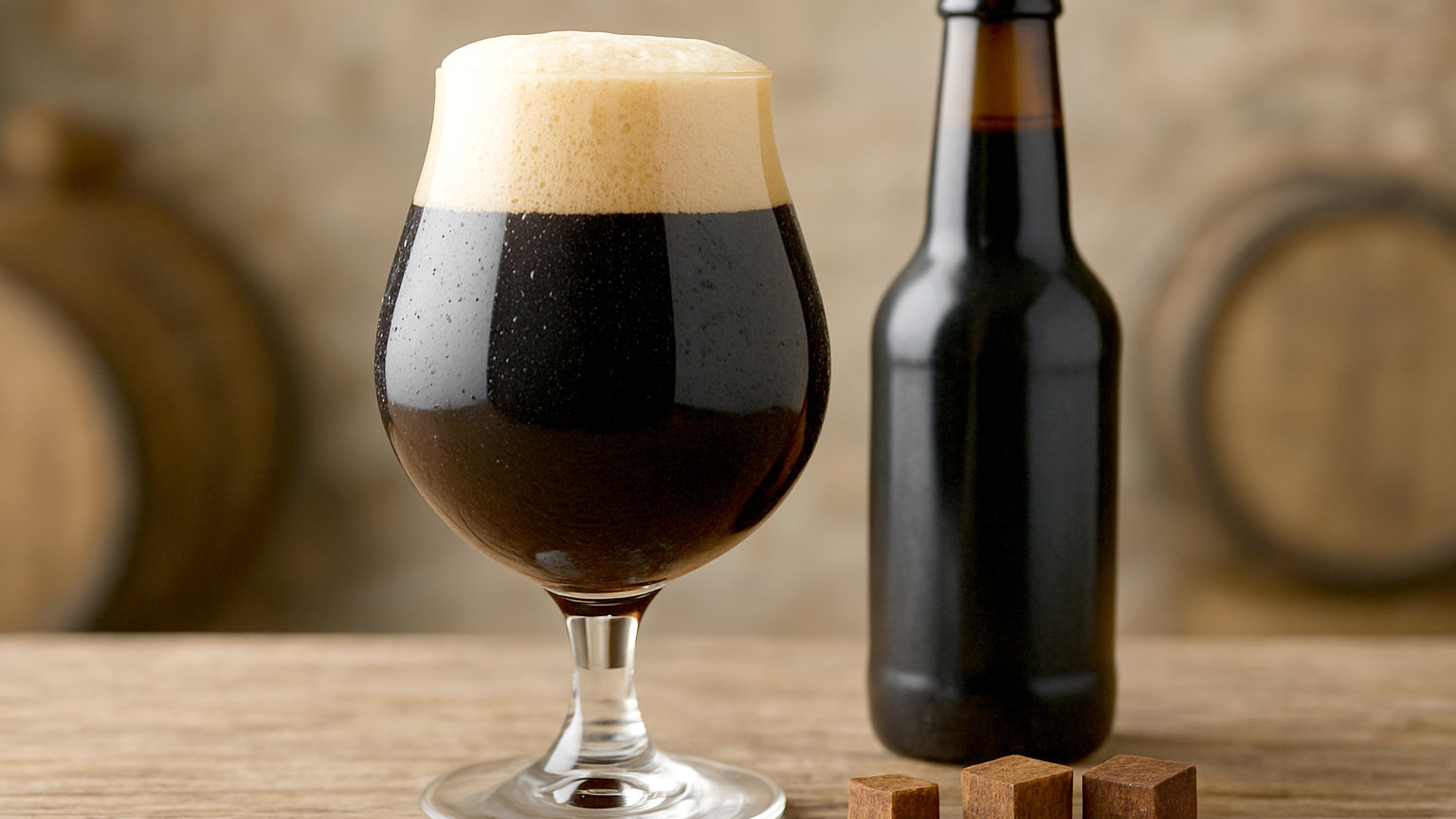
The standard advice about beer is to drink it fresh, and for the overwhelming majority of it that is correct. Strong dark beer is the exception, and imperial stout in particular can develop for years in a way that resembles wine more than beer.
What makes a beer ageable
Three things. High alcohol acts as a preservative and gives the beer substance to survive change. Substantial residual sugar and malt concentration provide something to develop into. And low hop aroma means there is little to lose, since hop character is the most fragile element in beer and fades first regardless.
The last point explains why hoppy beers should never be aged and dark malty ones can be. An IPA loses its entire reason for existing within months; an imperial stout loses hop bitterness it can spare and gains complexity in exchange.
Bottle-conditioned beers, containing live yeast, generally develop best, since the yeast slowly consumes oxygen and continues to work.
What changes
Oxidation drives most of it, and in this context it is desirable rather than a fault. Over a few years, harsh roast edges soften, bitterness declines, and new flavours appear: sherry, port, dried fruit, leather, tobacco and dark chocolate.
Any alcoholic heat integrates and the beer becomes smoother. Carbonation usually declines slightly. In barrel-aged examples the spirit character rounds out and marries with the beer rather than sitting alongside it.
There is frequently an awkward middle period, somewhere between one and two years, where the fresh character has faded and the mature character has not arrived. A beer tasted then can be disappointing and will usually recover.
Which beers to keep
Imperial stout above about eight per cent is the reliable candidate, and barrel-aged versions particularly so. Baltic porter ages well along similar lines.
Strong old ale and barley wine belong in the same category, as do some vintage-dated strong dark beers released specifically for keeping.
What not to keep: dry Irish stout, standard porter, oatmeal stout, milk stout and anything below about six per cent. These are session beers and they simply fade.
Pastry stouts with fruit and lactose are unpredictable, and the fruit character in particular can deteriorate unpleasantly.
How to do it
Buy at least two bottles, ideally three or four. A single bottle aged for five years is a guess, and opening one every year or two tells you how the beer is developing and lets you catch it when it suits you.
Store upright rather than on the side. Beer gains nothing from cork contact, and standing upright keeps any sediment at the base and reduces the liquid's contact with the closure.
Keep it cool, dark and stable. Somewhere between ten and fifteen degrees is ideal, and stability matters more than the exact figure. A cupboard away from radiators will do; a loft or a garage will not.
Darkness matters particularly for anything in green or clear glass, though most strong stout comes in brown bottles.
Vertical tastings
The reward for buying multiples is the ability to taste several vintages of the same beer together, which is called a vertical.
Several breweries release the same imperial stout annually with the year on the label specifically to encourage it, and comparing three or four years side by side shows what age does more clearly than any description.
It also demonstrates the limits. Most beers reach a point where the fruit and roast have faded and only oxidative character remains, and finding that point for a particular beer is the practical value of the exercise. For most strong stouts it arrives somewhere between five and ten years, which is a useful thing to know before putting a case away.
Keeping records
The practical difficulty with ageing beer is remembering what is there and how old it is. A note on the bottle with the purchase date, or a simple list, solves it entirely and prevents the common outcome of finding something interesting five years after it should have been drunk.
It is also worth writing one line about each bottle when you open it, particularly whether it seemed young, ready or tired. With multiple bottles of the same beer, that note is what turns the next one from a guess into a decision.