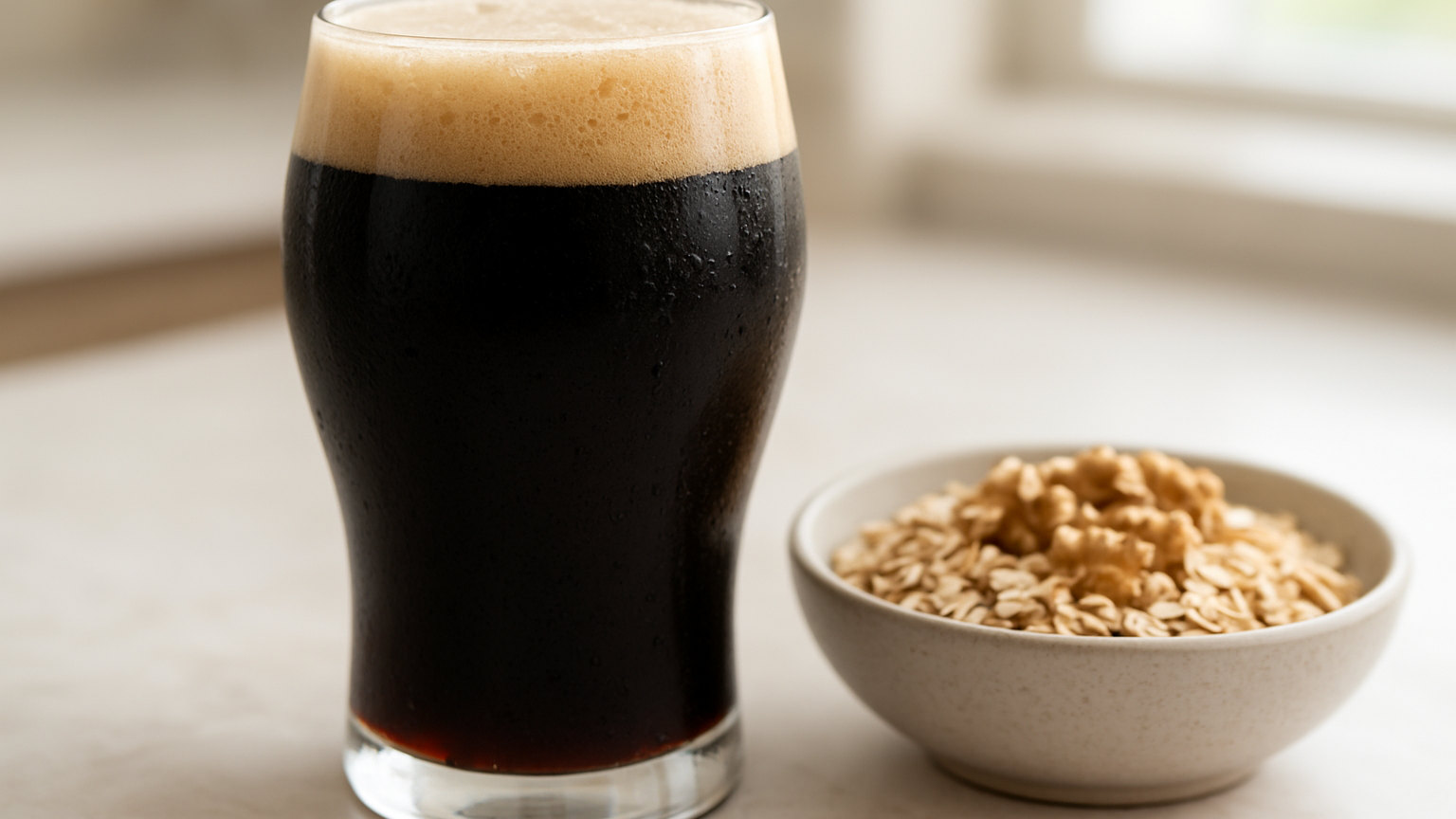
Few drinks carry a health reputation as durable as stout. It was advertised for decades as good for you, given to blood donors, recommended to nursing mothers and prescribed to convalescents, and the impression has outlived every one of those practices.
The honest position is that the claims reflect early twentieth century assumptions and marketing rather than evidence, and that current guidance takes a very different view. Nothing here is medical advice, and anyone with questions about alcohol and their own health should speak to a doctor.
Where the claims came from
The famous slogan dates from a 1920s advertising campaign, and it was reportedly based on market research in which drinkers reported feeling better after a pint. That is an observation about how people felt rather than a clinical finding.
The wider context was a period in which beer was genuinely regarded as nutritious. Milk stout was marketed on its lactose content, oatmeal stout on its oats, and dark beer generally on its supposed strengthening properties.
Medical practice followed the assumptions of the time. Stout was offered in hospitals, to new mothers and to blood donors, and those practices persisted in some places well into the second half of the century.
Advertising standards eventually required the removal of health claims from beer marketing, and the clinical practices were discontinued as understanding changed.
What is actually in it
Stout contains small amounts of iron, and this is the basis of the blood donor association. The quantity is modest and a portion of ordinary food supplies considerably more, so it is not a meaningful source.
Dark beer contains polyphenols and other antioxidant compounds derived from malt and hops, and some research has looked at their effects. The findings are largely from laboratory work or observational studies, and observational studies of alcohol are notoriously difficult to interpret because moderate drinkers differ from non-drinkers in many other respects.
Stout is also relatively low in calories for its volume, with a pint of dry stout generally containing fewer than a pint of standard lager, which is a fair point about the style and not a health benefit.
What current guidance says
United Kingdom Chief Medical Officers advise that both men and women should not regularly drink more than fourteen units a week, spread over three or more days, with several drink-free days. The guidance explicitly states that there is no level of regular drinking that carries no risk.
A pint of stout at four point two per cent contains around two and a half units.
Guidance on pregnancy is clearer still: the advice is that the safest approach is not to drink alcohol at all, since no safe level has been established. The historical practice of recommending stout to expectant and nursing mothers is not something any current guidance supports.
How to read health claims about drinks generally
Alcohol research is genuinely difficult, and the sensible response to any claim that a particular drink is beneficial is caution.
Studies frequently compare drinkers with non-drinkers without accounting for the fact that people who do not drink often include those who stopped for health reasons. Findings about individual compounds in a laboratory rarely translate to effects at the quantities present in a normal serving.
Where a compound in beer or wine appears beneficial, it is generally available in greater quantity in food that carries no alcohol with it.
The reasonable conclusion
Stout is an enjoyable drink with genuine qualities: it is flavourful at low strength, relatively modest in calories, and satisfying in a way that few low-alcohol drinks manage.
Those are good reasons to drink it. Its historical reputation as a health tonic is not, and treating any alcoholic drink as beneficial rather than simply pleasurable is not supported by current guidance.
Where to find reliable information
Guidance on alcohol and health in the United Kingdom comes from the Chief Medical Officers and is published by the NHS, and it is the appropriate reference for anyone weighing up their own drinking rather than a beer's marketing history.
Anyone concerned about their consumption, or about alcohol in the context of a specific condition, medication or pregnancy, should speak to a GP or pharmacist, both of whom can give advice specific to the person rather than general information.