
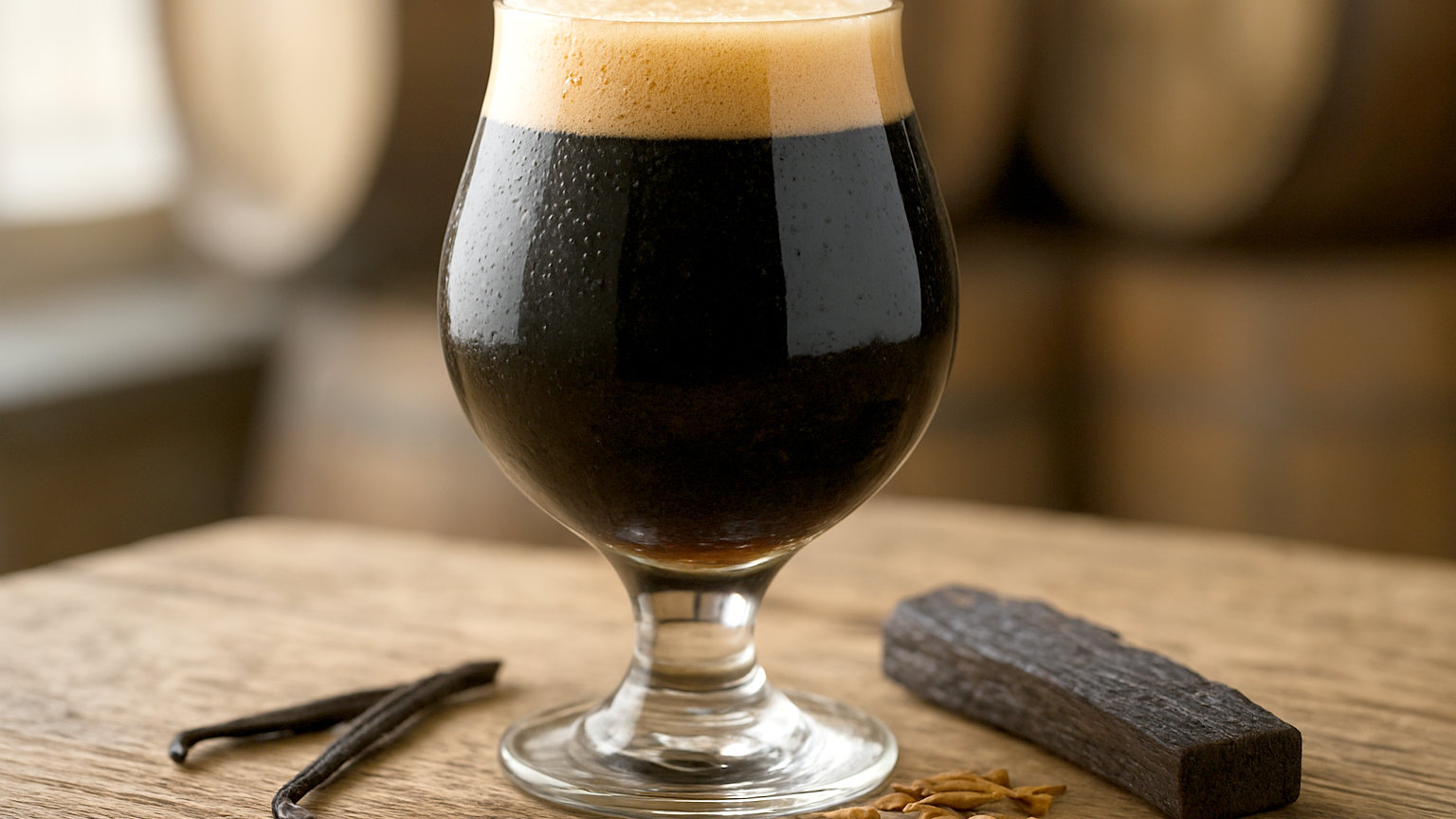
Barrel ageing has become the standard way for a brewery to make a statement, and imperial stout is the style it suits best. A beer that already tastes of chocolate, coffee and dark fruit takes vanilla, oak and spirit character remarkably well.
What the barrel contributes
Three things happen simultaneously, and they are the same processes that operate in whisky and wine maturation.
Extraction is the most obvious. Oak contains vanillin, giving vanilla, and lactones, giving coconut and creaminess. Charring or toasting the inside caramelises wood sugars, adding toffee and spice. The wood also contributes tannin, which gives structure and a slight drying quality.
Residual spirit is the second. A freshly emptied bourbon barrel holds a surprising quantity of whiskey soaked into the wood, and that transfers into the beer, adding both flavour and a measurable amount of alcohol.
Oxidation is the third. Wood is slightly permeable, so a controlled trickle of oxygen reaches the beer over months, softening harsh edges and developing sherry and dried fruit character in the same way it does in a strong bottled beer, only faster.
Which barrels are used
Bourbon barrels are the most common by a wide margin, since American law requires bourbon to be aged in new oak and the used barrels are consequently cheap and plentiful. They give vanilla, coconut and caramel, which suits stout perfectly.
Whisky barrels from Scotland give a drier, more restrained result. Rum barrels contribute molasses and tropical sweetness. Wine and port barrels add fruit and acidity. Tequila, brandy and maple syrup barrels all appear.
Some breweries use barrels previously holding their own beer, and a few maintain foeders, very large wooden vessels used for extended maturation and sometimes housing wild organisms deliberately.
How long it takes
Six months to eighteen is typical, with some programmes running considerably longer. The variables are barrel size, how many times the barrel has been used, and the ambient temperature of the storage space.
Fresh first-use barrels give up their character quickly and can dominate a beer within a few months. Second and third fills work more slowly and more gently.
Over-oaked beer is a real failure mode, tasting of raw wood and tannin with the beer buried underneath. Judging when to pull a barrel is the skill.
Blending
This is the part that separates good barrel programmes from indifferent ones. Individual barrels vary enormously, even when filled from the same batch on the same day, since each piece of wood behaves differently.
Most releases are therefore blends, combining barrels that are too oaky with those that are underdeveloped, and sometimes with fresh beer, to produce a balanced whole.
Single barrel releases exist and are exactly what the name suggests: one barrel bottled on its own, unblended, with all the variability that implies.
Why they cost so much
Barrels are expensive to buy and to house. A brewery ageing beer for a year has capital tied up and warehouse space occupied, and evaporation and absorption mean measurable losses in volume.
The base beer is usually strong, which means more malt per litre and higher duty. And demand for the best examples exceeds supply substantially, which does the rest.
A bottle at twenty or thirty pounds looks extravagant next to a can of pale ale and is priced roughly in line with what it cost to produce.
How to drink them
Serve at twelve to fourteen degrees, considerably warmer than most beer, and in a small glass. A third of a pint is a sensible measure at eleven or twelve per cent.
Give it time in the glass, since these beers change noticeably over twenty minutes as they warm and open.
They also age well in bottle, and the spirit character integrates further over two or three years. Buying two and comparing them a few years apart is the most rewarding thing to do with a bottle in this category.
What to check before buying
Look for the barrel type, since it predicts the flavour: bourbon means vanilla and coconut, rum means molasses and tropical sweetness, wine means fruit and acidity.
The length of ageing is worth noting where stated, and so is whether the beer is a blend of barrels or a single barrel release, since single barrels vary far more. Any additional adjuncts will usually be listed, and a beer that is barrel aged and also contains vanilla, coconut and lactose is a considerably sweeter proposition than one aged in wood alone.


