Oatmeal stout has a comforting, wholesome name that suggests porridge and winter mornings, and the reality is more technical. Oats contribute very little flavour. What they contribute is texture, and the effect is substantial.
The mechanism
Oats are unusually high in beta-glucans, long-chain molecules that dissolve into the liquid during mashing and remain in the finished beer.
These molecules increase viscosity and coat the palate, producing the silky, rounded, almost slippery mouthfeel that defines the style. Proteins from the oats contribute as well, improving head retention and giving a denser foam.
Typical inclusion is between about five and fifteen per cent of the grain bill. Below that the effect is negligible; much above it and brewing becomes difficult, since beta-glucans make the mash sticky and slow to drain, which is the practical reason oat quantities are limited.
What it does to the beer
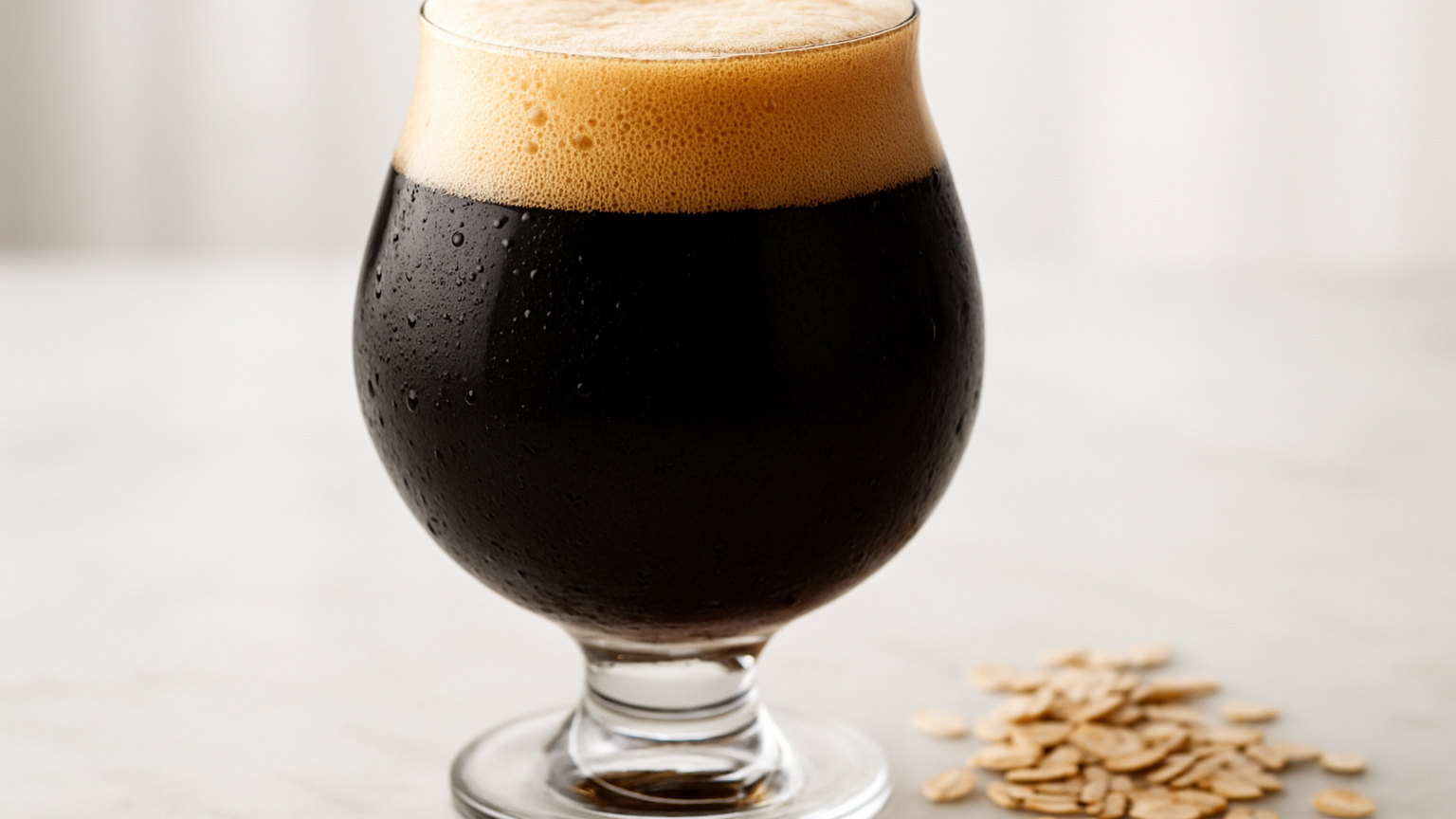
An oatmeal stout has the roast character of any stout, generally from chocolate malt and roasted barley, with a body that feels considerably fuller than the strength suggests.
Strength is usually four to six per cent, and the texture makes it seem stronger. The oats also soften the perception of roast bitterness by giving it something to sit against, which makes the style gentler than a dry stout without the added sweetness of a milk stout.
Flavour contribution from the oats themselves is subtle: a faint nuttiness and a bready quality that supports rather than announces itself.
Why the style exists
Oatmeal stout emerged in Britain in the late nineteenth and early twentieth centuries, part of a wider trend of beers marketed as nourishing and restorative alongside milk stout.
The health framing has not aged well and the beer has, since the technique produces something genuinely better rather than merely marketable. The style faded along with most British dark beer and was revived by craft brewers who recognised what the oats were doing.
The wider use of oats
Modern brewing uses oats far beyond stout, and the reason is the same in every case.
Hazy IPA relies on oats heavily. The proteins contribute to the haze and, more importantly, the beta-glucans give the soft, full body that defines the style. A hazy IPA without oats or wheat tends to taste thin.
Oats appear in New England pale ales, in modern sours for body, and in low-alcohol beers where the challenge is producing mouthfeel without alcohol. Anywhere a brewer wants texture without sweetness or strength, oats are the standard answer.
Forms and practicalities
Flaked oats are the most common, pre-gelatinised so the starch is accessible during mashing. Malted oats and rolled oats are also used, and each behaves slightly differently.
Brewers frequently add rice hulls alongside them, which contribute nothing to flavour and prevent the mash from becoming impossible to drain.
One point worth noting for anyone avoiding gluten: oats are frequently processed alongside wheat and barley, and in any case an oatmeal stout contains barley malt, so it is not gluten free by any measure.
How it compares
Within the dark beer family, oatmeal stout sits between dry stout and milk stout. Dry stout is lean and sharp, milk stout is sweet and full, and oatmeal stout is full-bodied without being sweet.
For a drinker who finds dry Irish stout too austere and milk stout too sugary, it is frequently the answer, and it is a good winter beer at a strength that does not require a taxi home.
Served around ten to twelve degrees in a glass with a bowl, it shows the texture best. Straight from a cold fridge, the silkiness that justifies the whole approach is considerably harder to notice.
Oatmeal stout and coffee
The style is a natural base for coffee additions, and a great many coffee stouts are built on an oatmeal base. The silky texture suits the coffee character, and the malt sweetness balances the acidity that coffee brings.
Coffee can be added as cold brew after fermentation, as whole beans steeped like a dry hop, or as grounds in the boil. Cold brew addition generally gives the cleanest result, since boiling coffee extracts harsh compounds in the same way over-brewing does in a cafetiere.