Baltic porter is one of the more logical anomalies in beer: a porter, historically an English ale style, fermented with lager yeast in countries where lager brewing was the norm. The result is a strong dark beer with a smoothness that ale fermentation does not produce.
How it came about
London brewers exported strong porter around the Baltic through the eighteenth and nineteenth centuries, where it was popular and expensive.
Local brewers in Poland, the Baltic states, Scandinavia and Russia set about producing their own versions. Since those regions had adopted Bavarian lager brewing, the beers were made with lager yeast fermented cold and then lagered, using the equipment and expertise available.
What emerged was a hybrid: the recipe and colour of an English porter with the fermentation profile of a lager. Trade disruption and tariffs accelerated the substitution, and the local style outlived the imports.
What the lager fermentation changes
Cold fermentation produces very few esters, so the fruity character that ale yeast contributes is absent. Extended cold conditioning then smooths the beer further.
At eight or nine per cent, that matters considerably. An ale-fermented beer of that strength typically carries noticeable fruitiness and a warming alcoholic edge, while a Baltic porter is remarkably clean and integrated, with the alcohol well hidden.
The style is consequently easy to underestimate. It drinks like something considerably weaker, which is worth bearing in mind.
What it tastes like
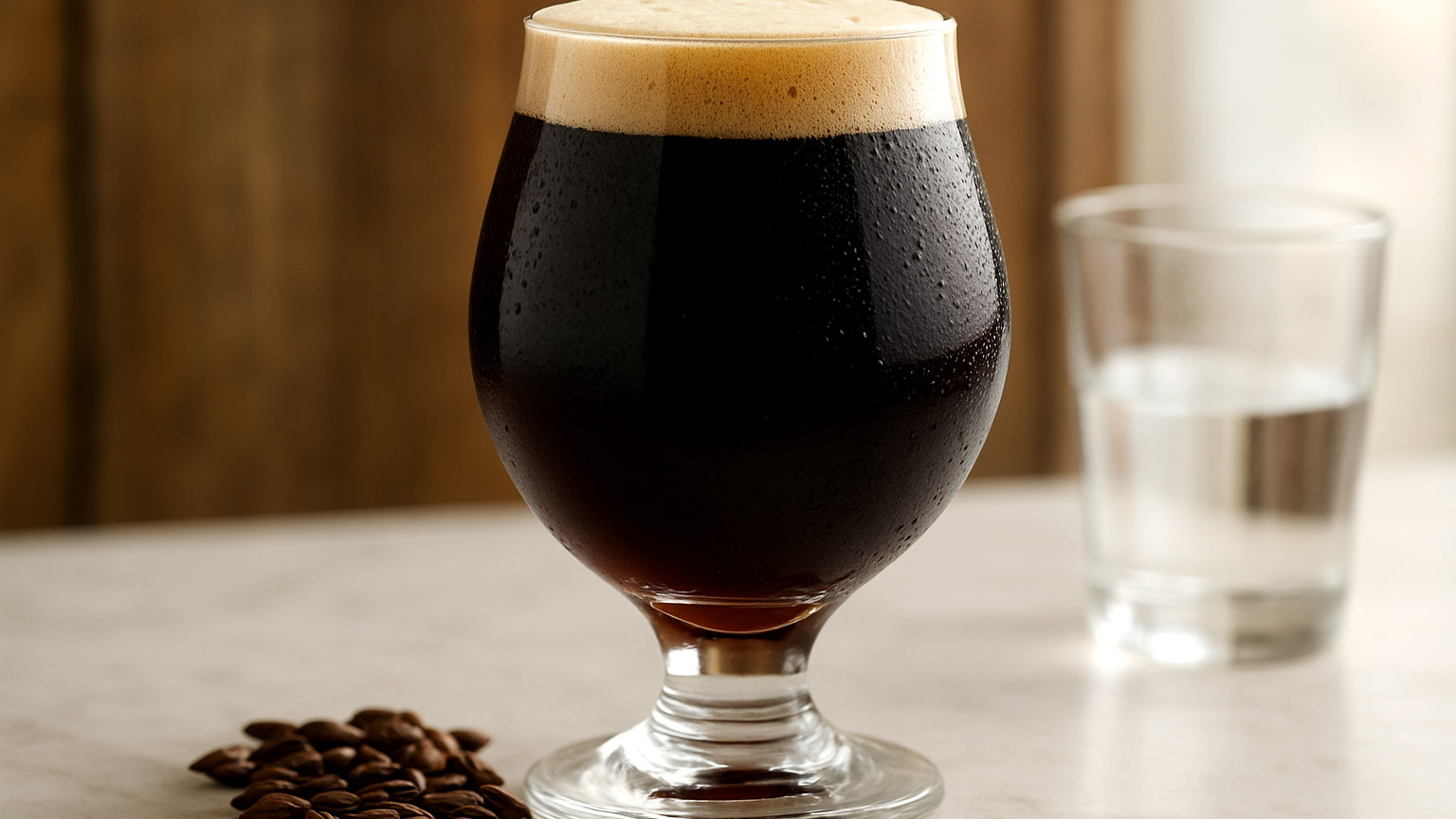
Deep brown to black, with flavours of dark chocolate, liquorice, molasses, dried fruit, coffee and often a distinct plum or raisin note. Roast character is present but softer than in a stout, since the style leans on chocolate and brown malts rather than sharp roasted barley.
Bitterness is moderate, sweetness is noticeable but restrained, and the body is full without being heavy. Strengths generally run from six to nine and a half per cent.
The overall impression is of something rich and smooth rather than intense, which distinguishes it from imperial stout.
Compared with imperial stout
The two are often confused, and the differences are consistent.
Imperial stout is ale-fermented, more heavily roasted, more bitter and generally more intense, with an alcoholic warmth that is part of the experience. Baltic porter is lager-fermented, smoother, cleaner and rounder, with the emphasis on integration rather than power.
A drinker who finds imperial stout too aggressive frequently prefers Baltic porter, and vice versa for anyone who wants the intensity.
Where to find it
Poland is the heartland, producing the majority of what is made and treating the style as a national speciality. The Baltic states, Finland, Sweden and Denmark all have their own versions, and craft brewers elsewhere have taken it up.
It is considerably less fashionable than imperial stout, which means prices tend to be reasonable for the strength and quality. Polish supermarket examples in Britain are frequently excellent and cost a fraction of what a comparable craft imperial stout would.
Serving and keeping
Serve at around ten to thirteen degrees. Colder than that flattens the complexity and makes the beer seem merely sweet.
Use a glass with a bowl and pour a modest measure, since a half litre at nine per cent is a substantial quantity of alcohol.
It ages well, along the same lines as imperial stout, developing dried fruit and sherry notes over a few years. The clean lager fermentation means there is little yeast character to fade, so what changes is mainly the malt and the oxidative development.
At the table it suits roast meat, game, strong cheese and chocolate desserts, and it is one of the better beers for a cold evening in front of a fire, which is broadly what it was designed for.
Reading Polish labels
Polish porter is worth knowing how to identify, since the style is better represented there than anywhere. Look for the word porter or portera on the label, usually alongside a strength in the eight to nine and a half per cent range.
The Baltic designation is used more by international craft brewers than by the traditional producers, so a Polish bottle may simply say porter. Given that ordinary British porter sits at around five per cent, the strength on the label is the quickest way to tell which style you are holding.