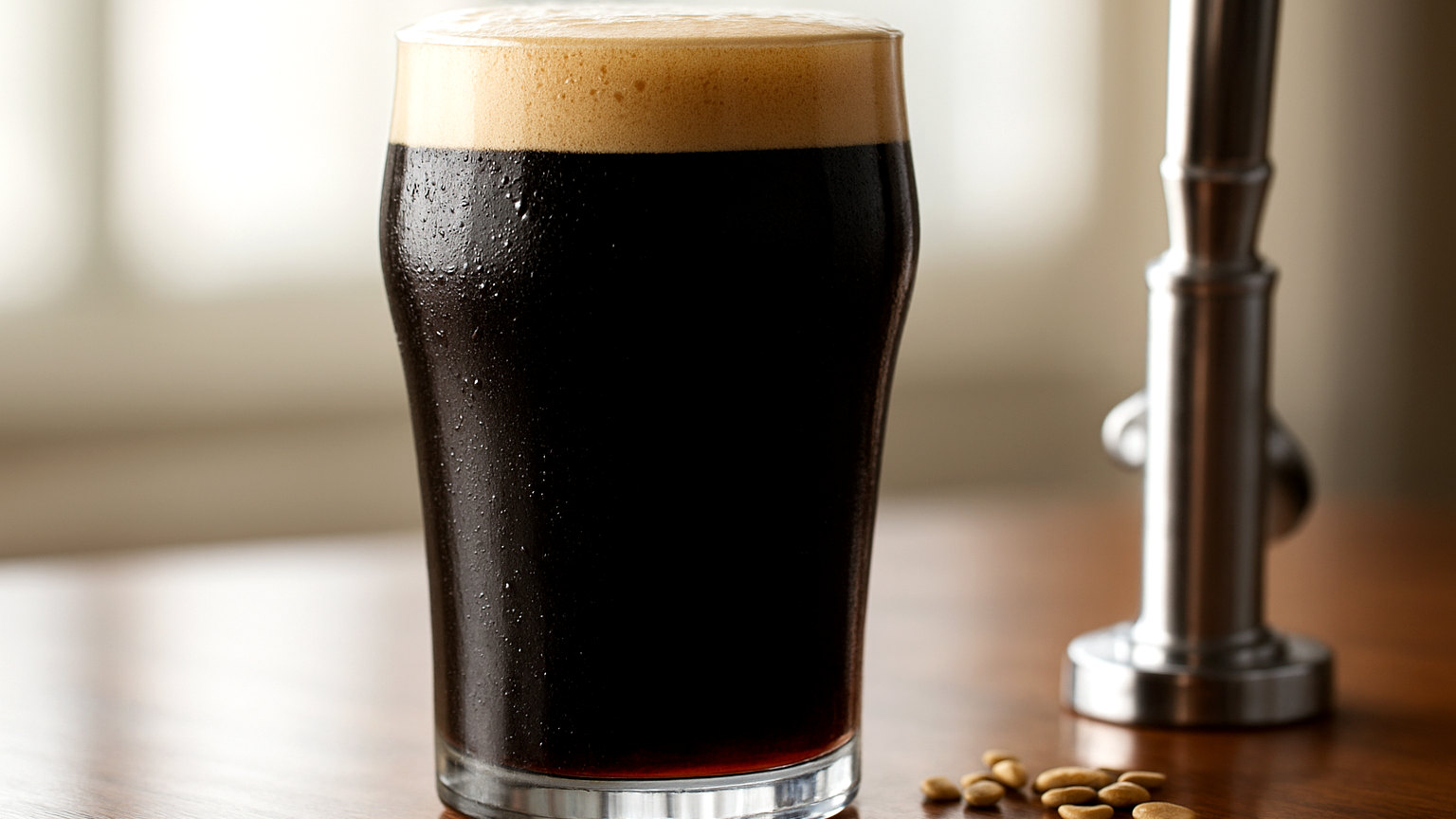
Dry Irish stout is among the most recognisable beers in the world and among the most frequently misunderstood. It looks heavy, it is not; it tastes smooth, and much of that comes from how it is dispensed rather than from what is in it.
What is in the glass
The grain bill is straightforward: pale malt, flaked barley for body and head retention, and a proportion of roasted barley for colour and flavour.
Roasted barley is the defining ingredient. Unmalted and roasted very dark, it gives sharp espresso bitterness, a dry finish and a faintly astringent edge quite unlike the softer cocoa character of chocolate malt.
Strength is typically four to four and a half per cent, and the beer is fermented out thoroughly so very little residual sugar remains. The result is a genuinely dry beer, which is the point of the name.
Some producers add a small quantity of soured or aged beer to the blend, contributing a subtle tartness that balances the roast, which is a survival of the historical porter practice of blending old and young beer.
The calorie question
It surprises people to learn that a pint of dry stout generally contains fewer calories than a pint of standard lager, and the reason is straightforward.
Calories in beer come principally from alcohol and from residual sugar. Dry stout is modest in both: four per cent alcohol and very little unfermented sugar. Its dark colour comes from a small quantity of roasted grain that contributes almost nothing to the total.
The assumption that dark equals heavy is a visual one with no basis in the composition.
Where the smoothness comes from
The creamy texture and the dense head that define the drinking experience are a function of dispense rather than of the beer itself.
Draught dry stout is served using a gas mix that is largely nitrogen rather than carbon dioxide. Nitrogen is poorly soluble in liquid, so instead of dissolving it forms very small bubbles, producing a dense, tight foam quite unlike the loose head on a carbonated beer.
The beer is also pushed through a restrictor plate with fine holes, which shears the liquid and creates the cascading effect as the bubbles settle.
Crucially, low carbonation removes the sharp carbonic prickle that carbon dioxide produces, which softens the perception of bitterness and makes the beer taste rounder and sweeter than the same liquid would if carbonated normally.
Cans achieve the effect with a widget, a small nitrogen-charged capsule that releases gas when the can is opened.
Bottled and cask versions
The same beer carbonated conventionally is a noticeably different drink: sharper, more bitter, with the roast character more prominent and the texture considerably leaner.
Bottled extra stout versions are usually stronger and are carbonated rather than nitrogenated, which is why they taste so unlike the draught product despite sharing a name.
Cask-conditioned Irish stout exists and is worth seeking out, offering a middle position with gentle natural carbonation and a fuller expression of the roast.
How to serve it
Nitro stout is traditionally served cold, around six degrees, and the two-part pour with a settling period is genuine rather than theatrical: the beer needs time for the nitrogen to break out and the head to form.
Carbonated versions benefit from being served warmer, around ten to twelve degrees, where the roast and malt character show properly.
As a category, dry stout is one of the most useful beers in a pub. It is low in strength, low in calories, full of flavour and available almost everywhere, which is a combination very little else manages.
Why the two-part pour exists
The instruction to fill a glass most of the way, let it settle and then top it up is genuine rather than ceremonial. Nitrogen needs time to break out of solution and form the dense head, and pouring in one go produces a loose, unstable foam that collapses.
The waiting period is generally quoted at around two minutes, which is roughly how long the cascade takes to resolve. A bar that pours it in one movement is producing a visibly different pint, and the difference is in texture as much as in appearance.