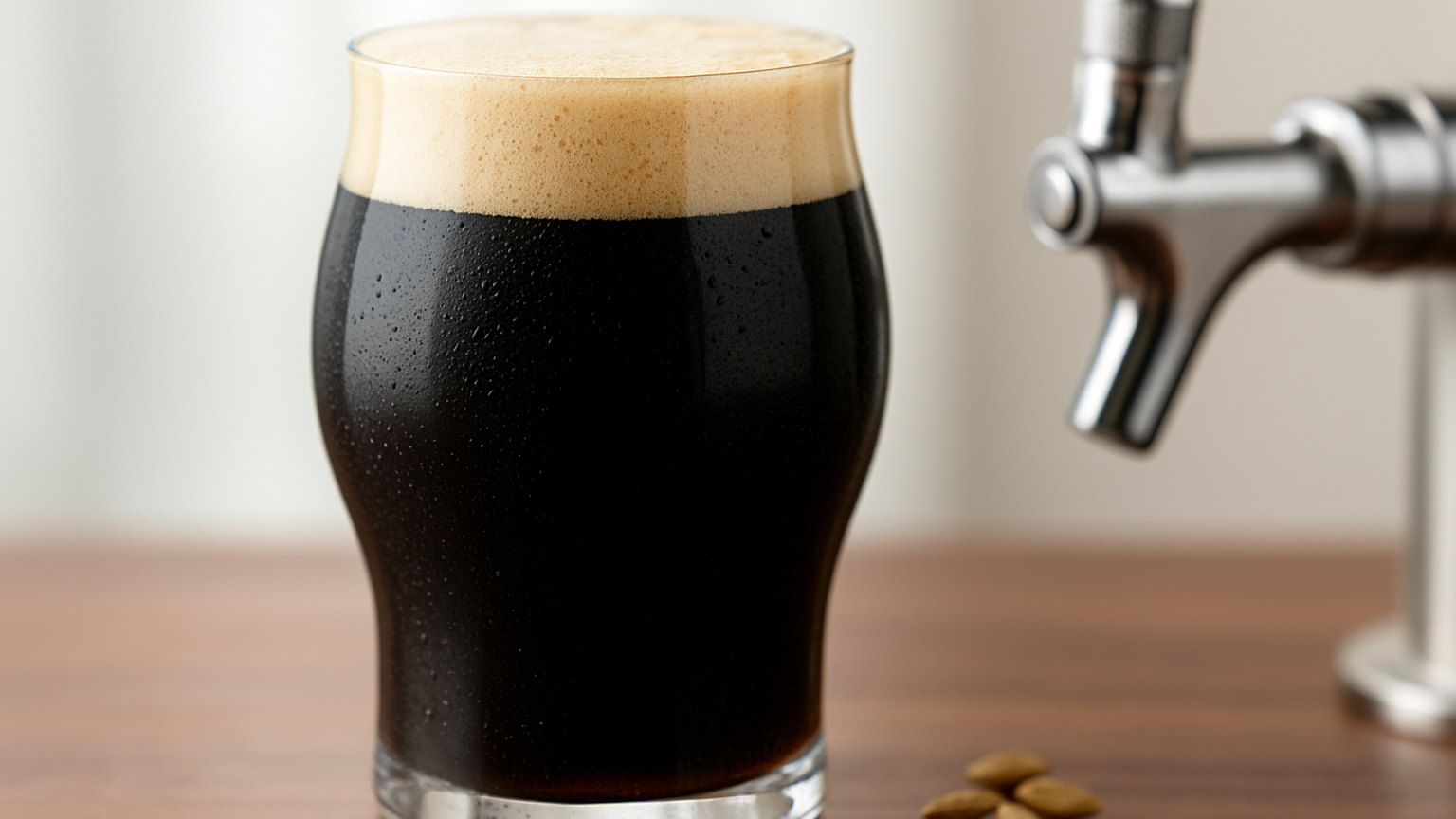
Nitro beer is beer dispensed with nitrogen rather than carbon dioxide, and the effect is unmistakable: a dense creamy head, a cascading surge as the beer settles, and a texture that people consistently describe as smooth.
It is a genuine change to the beer rather than a presentational trick, and the reasons are physical.
Why nitrogen behaves differently
Carbon dioxide is highly soluble in beer, dissolving readily under pressure and coming out of solution as relatively large bubbles that produce the familiar prickle and loose head.
Nitrogen is poorly soluble by comparison. Instead of dissolving substantially, it forms very small bubbles that rise slowly and pack together tightly, producing a dense, stable foam with a texture closer to whipped cream than to ordinary beer head.
A typical nitro dispense uses a gas mix of roughly seventy per cent nitrogen to thirty per cent carbon dioxide, applied at higher pressure than a standard keg. The beer itself is carbonated to a low level.
The restrictor plate and the cascade
Nitro taps have a distinctive spout containing a disc perforated with very small holes. Beer forced through it at pressure is sheared violently, which knocks gas out of solution and generates the enormous quantity of tiny bubbles.
The cascade effect that follows, where the beer appears to surge downwards while the head builds, is a circulation pattern. Bubbles rise fastest in the centre of the glass and the displaced liquid falls at the edges, which reads visually as a downward flow.
It takes a minute or two to settle, which is why nitro beers are traditionally poured in two stages.
What it does to flavour
This is the part often missed. Carbon dioxide dissolved in beer forms carbonic acid, which contributes a distinct sharpness and accentuates the perception of bitterness.
Reducing carbonation removes that edge, so a nitro beer tastes softer, rounder and sweeter than the same liquid carbonated normally. The roast bitterness of a stout is noticeably tamed.
The dense head also holds aromatics in the foam rather than releasing them, which some drinkers find mutes the beer's aroma. This is why nitro suits beers built on texture and malt rather than those built on hop aroma.
The widget
Canned nitro beer contains a small hollow plastic capsule charged with nitrogen. When the can is opened and the pressure inside drops, gas jets out through a tiny hole, agitating the beer and producing the same effect a restrictor plate creates on draught.
Some bottles use a similar device, and a few products achieve a comparable result through a widget in the base of the container.
The instruction to pour a widget can rather than drink from it is worth following, since the effect depends on the beer being agitated as it leaves the can.
Which beers suit it
Dry stout is the classic and the pairing that made the technique famous. Sweet stout, oatmeal stout, porter, mild and some bitters all suit it too, since all are malt-driven and benefit from a softened bitterness.
Nitro IPA has been tried repeatedly and is generally unsuccessful. The style depends on hop aroma and a sharp bitter finish, and nitrogen suppresses both. What emerges is a soft, muted beer that has lost the qualities the hops were added for.
Nitro coffee and nitro cold brew apply the same principle outside beer entirely, with the same creamy result.
Whether it is better
It is different, and the trade is clear once understood: softer texture and reduced bitterness in exchange for less aroma and less carbonation.
For a stout drunk on a cold evening, that trade is usually worth making. For a beer whose appeal is aromatic, it is not.
The demonstration is easy where a pub serves the same beer both ways, or by comparing a nitro can with a conventionally carbonated bottle of the same brand. The difference is larger than most people expect from a change in gas.