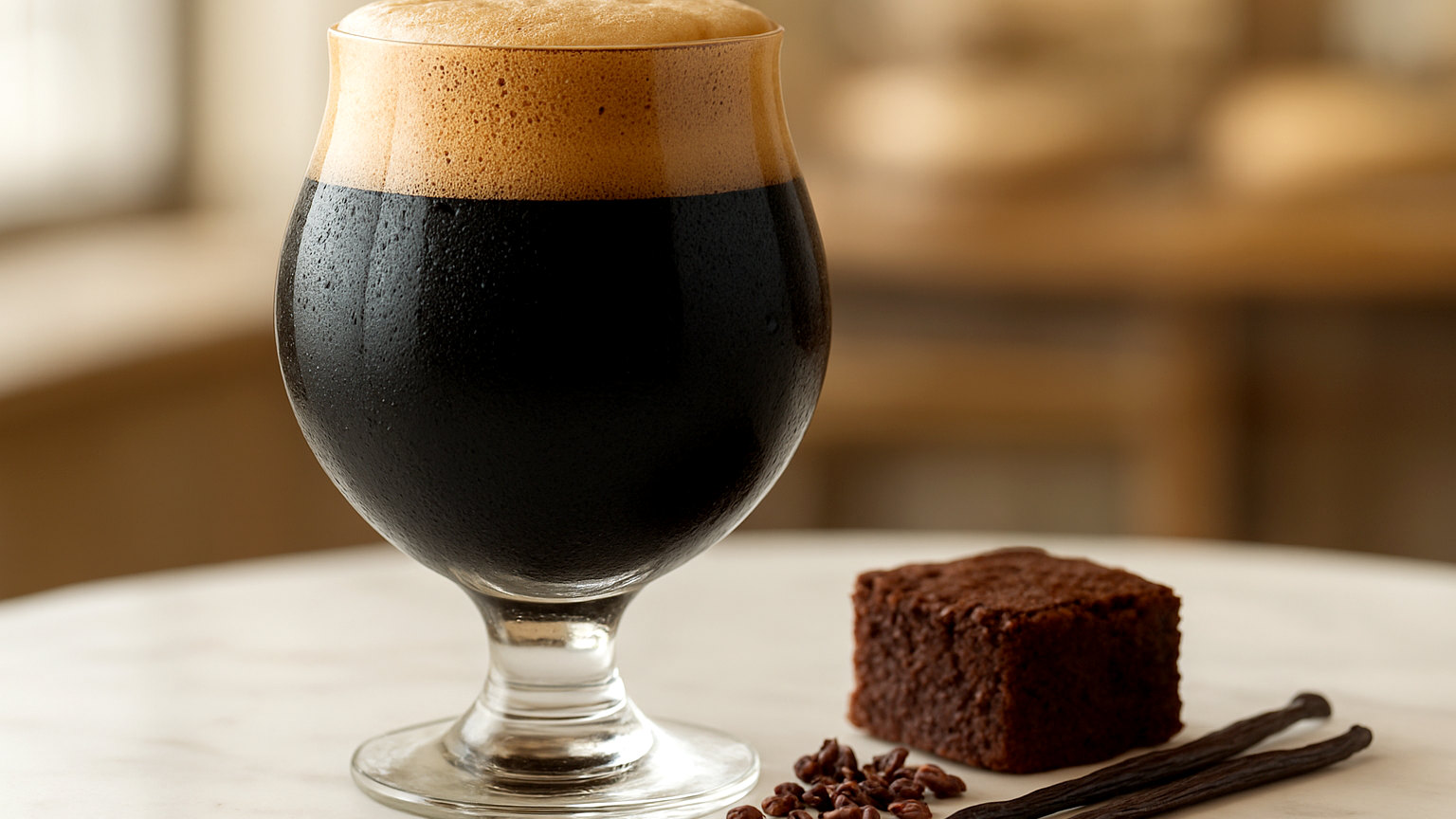
Pastry stout is a modern category of dark beer sweetened heavily and flavoured to resemble a dessert. Vanilla, cacao, coconut, marshmallow, cinnamon, maple, fruit purée and biscuit all appear, frequently several at once, and the names generally describe a pudding rather than a beer.
It attracts more argument than any other current style, and both sides have a point.
How they are made
The base is usually an imperial stout, strong and malt-heavy, which provides the roast character and the body to carry additions.
Lactose is the key ingredient. Being unfermentable by brewer's yeast, it survives fermentation and delivers sweetness and thickness without adding alcohol. Quantities used are substantially higher than in a traditional milk stout.
Flavourings are added after fermentation: whole vanilla pods, cacao nibs, toasted coconut, coffee, purées and various extracts. Some are barrel aged as well.
The intention is to reduce roast bitterness to a minimum and let the additions dominate, which is the opposite of what a traditional stout does.
The case against
The criticism is that these beers are sweet to the point where the beer underneath is irrelevant. If lactose, vanilla and purée are supplying almost all of the flavour, the argument goes, the brewing skill involved is limited and the product is closer to a flavoured alcoholic dessert than to beer.
There is also a practical objection. They are frequently difficult to drink more than a small measure of, they are expensive, and the sweetness masks flaws that a drier beer would expose.
Some in the trade regard the category as a symptom of a market chasing novelty at the expense of craft.
The case for
Beer has always used adjuncts. Historical brewing included herbs, spices, fruit and sugars long before the modern purity conventions, and Belgian brewing has used fruit and spice continuously for centuries.
Making a well balanced sweet beer is also harder than critics allow. Excessive lactose produces something cloying and unpleasant, and the good examples achieve a balance between sweetness, roast and alcohol that requires judgement.
And commercially they have brought people to craft beer who found bitter styles unappealing, which is a legitimate function.
What to know before buying
Most contain lactose, which means they are not vegan and may not suit anyone avoiding dairy. The label should say so and the style name is a strong hint.
They are usually strong, typically eight to twelve per cent, and sold in small bottles or cans for good reason. A third of a pint is a sensible measure.
They are also expensive, reflecting the base beer's strength, the cost of real vanilla and cacao, and often barrel time.
Freshness matters less than for hoppy beer but more than for a plain imperial stout, since fruit and dairy additions can deteriorate.
How to approach one
Serve at twelve to fourteen degrees in a small glass, and treat it as a dessert rather than as a drink to have several of. Sharing a bottle between two or three people is the sensible approach.
At the table it works with cheese and with plain accompaniments rather than with actual desserts, since two sweet things together become overwhelming.
The reasonable position on the category is that these are enjoyable occasional beers rather than a betrayal of anything. Whether they are still beer is a question about definitions rather than about quality, and the answer is that they are, in the same way that a fruited Belgian lambic is, and that nobody is obliged to enjoy them.
Where the category may be heading
Signs suggest the extreme end has passed its peak. The competitive escalation towards ever sweeter and more elaborate beers has slowed, and several breweries that built reputations on them have moved towards more restrained versions.
What appears to be settling out is a middle position: imperial stouts with genuine adjunct character but less lactose, where the vanilla or coconut supports the beer rather than replacing it. That is a more sustainable place for the style to sit, and it produces beers that are considerably easier to finish.