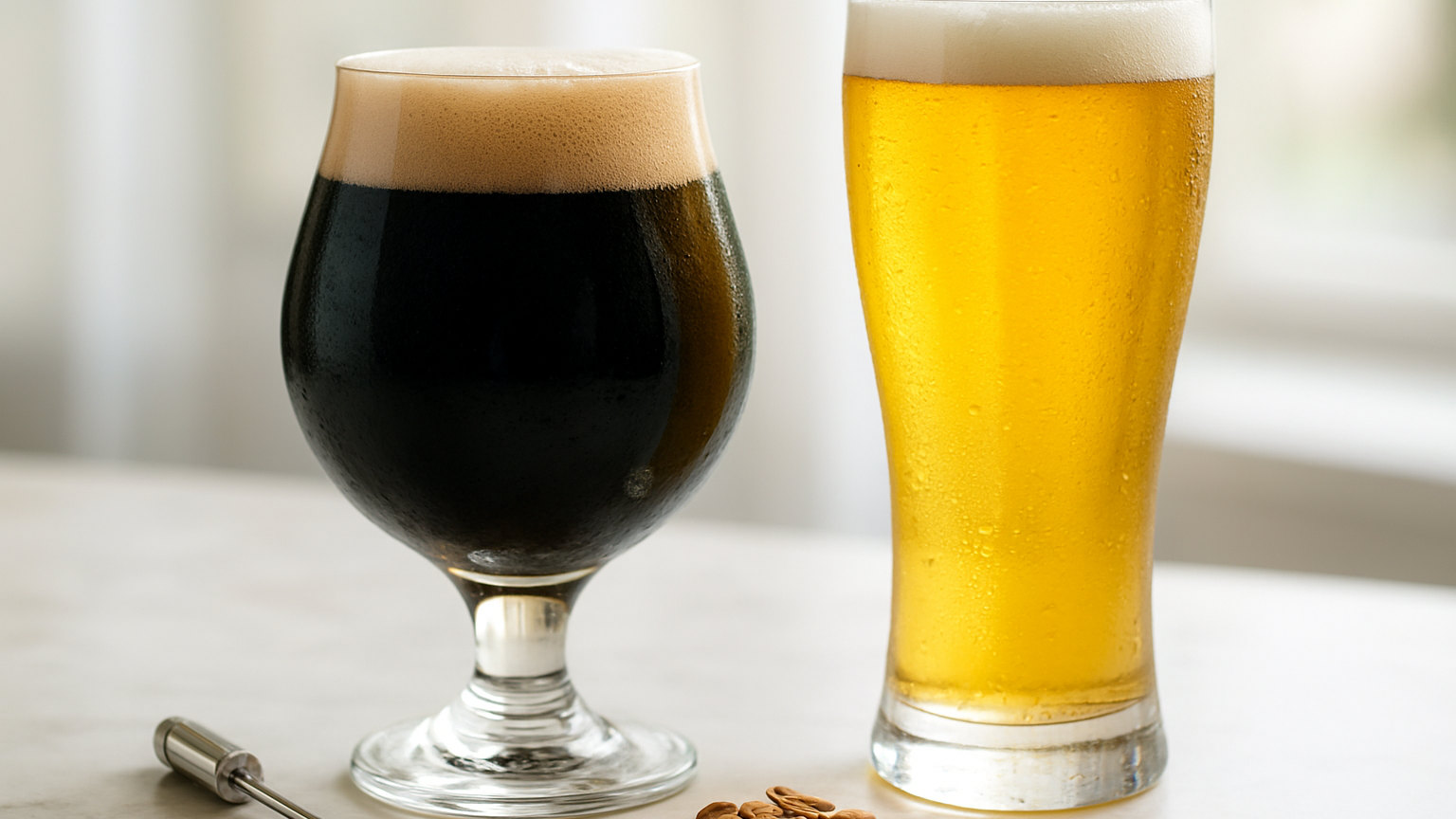
Dark beer served straight from a cold fridge tastes thin, sharp and vaguely metallic, which is why a good many people conclude they dislike stout when what they dislike is the temperature it arrived at.
What cold does
Aromatic compounds reach the nose by evaporating from the surface of the liquid, and that evaporation slows sharply as temperature falls. A very cold beer therefore smells of considerably less, and since most of what we call flavour is smell, it tastes of less too.
Cold also suppresses the perception of sweetness while accentuating bitterness and carbonation. In a beer built on roasted grain, that is exactly the wrong trade: the coffee and chocolate notes recede while the roast bitterness sharpens into something acrid.
The malt sweetness that would normally balance the roast is the first thing to disappear.
The right range
Dry stout and standard porter are best around ten to twelve degrees, which is cellar temperature rather than fridge temperature.
Oatmeal stout and milk stout sit in the same range, where the texture and sweetness show properly.
Imperial stout, Baltic porter and barrel-aged beers want twelve to fourteen, and serving them colder wastes most of the complexity that justifies the price.
The general principle across all beer is that the darker, stronger and maltier the beer, the warmer it should be served. Pale, light and hoppy beers sit at the cold end; dark, strong and malty ones at the warm end.
The nitro exception
Nitrogen-dispensed dry stout is traditionally served considerably colder, around six degrees, which appears to contradict everything above.
The explanation is that the style is built around texture rather than aroma. Nitrogen produces a dense creamy head and very low carbonation, and the appeal is the mouthfeel and the soft, rounded bitterness rather than the smell. Cold serving suits that, and the beer is designed for it.
Even here, a nitro stout allowed to warm slightly in the glass will show more roast and malt character than the first mouthful did, which is worth noticing as a pint goes down.
The practical adjustment
For bottles and cans at home, take the beer out of the fridge fifteen to twenty minutes before opening it. That moves it from around four degrees into the useful range with no equipment.
Better still, store dark beer in a cool cupboard rather than the fridge and chill it only briefly if the weather demands it. A cupboard in most British houses sits close to the right temperature for much of the year.
In a pub, cask-conditioned stout and porter will be served at cellar temperature already, which is one of several arguments for seeking it out.
Glassware
A glass with a bowl that narrows slightly at the top collects the aroma and directs it upwards, which matters for a beer whose appeal is largely aromatic. A tulip or a stemmed glass works well.
Pour with enough vigour to raise a head, since foam traps volatile compounds and releases them gradually, and fill no more than two thirds so there is space above the beer for the aroma to gather.
For strong examples, a small glass is better than a large one for the simple reason that a smaller measure warms more evenly and encourages the slower pace these beers deserve.
Testing it
Pour half a bottle straight from the fridge and leave the rest for twenty minutes before pouring the remainder.
The warmer glass will show noticeably more chocolate and coffee character and considerably less sharp roast bitterness. Most people who try this once stop taking dark beer straight from the fridge, which is the cheapest improvement available in the whole category.
The wider point about temperature
British drinking has ended up with two extremes and very little in between: lager served close to freezing and cask ale at cellar temperature, with bottled and canned beer at home usually taking the lager treatment by default.
Most beer sits better somewhere in the middle, and the range between eight and thirteen degrees covers the great majority of what people drink. Treating the fridge as a tool rather than a default position is the single habit that improves home drinking most, and it applies as much to a bottled pale ale as it does to a stout.