Sour beer divides sharply on ageing. Traditional barrel-fermented styles are among the very few beers that develop for a decade or more, while modern kettle-soured fruited beers are best within a few months. The difference comes down to how they were made.
Why traditional sours last
Three properties work in their favour. Low pH inhibits the organisms that spoil ordinary beer, so acidity acts as a preservative in the same way it does in wine.
Live culture in the bottle, including Brettanomyces and lactic bacteria, continues to work slowly, consuming oxygen and developing new compounds over years.
And there is no hop aroma to lose. Since these beers use aged hops for their antimicrobial properties rather than for flavour, the most fragile element of ordinary beer is simply absent.
The result is a beer that changes over a very long period without deteriorating, which is close to unique in brewing.
What changes over time
Acidity mellows and integrates, so a sharply tart young gueuze becomes rounder without becoming sweet.
Brettanomyces character develops and shifts, with the barnyard notes often softening while tropical fruit and honeyed qualities emerge.
Carbonation may increase slightly as fermentation continues, and the beer generally becomes drier as remaining sugars are consumed.
Oxidative notes appear over long periods, adding sherry, nuts and dried fruit, which suits these beers well rather than spoiling them.
Fruit character, by contrast, fades. An old kriek retains its acidity and complexity while the bright cherry recedes, which is why some drinkers prefer fruit lambics younger than they prefer gueuze.
Which to keep
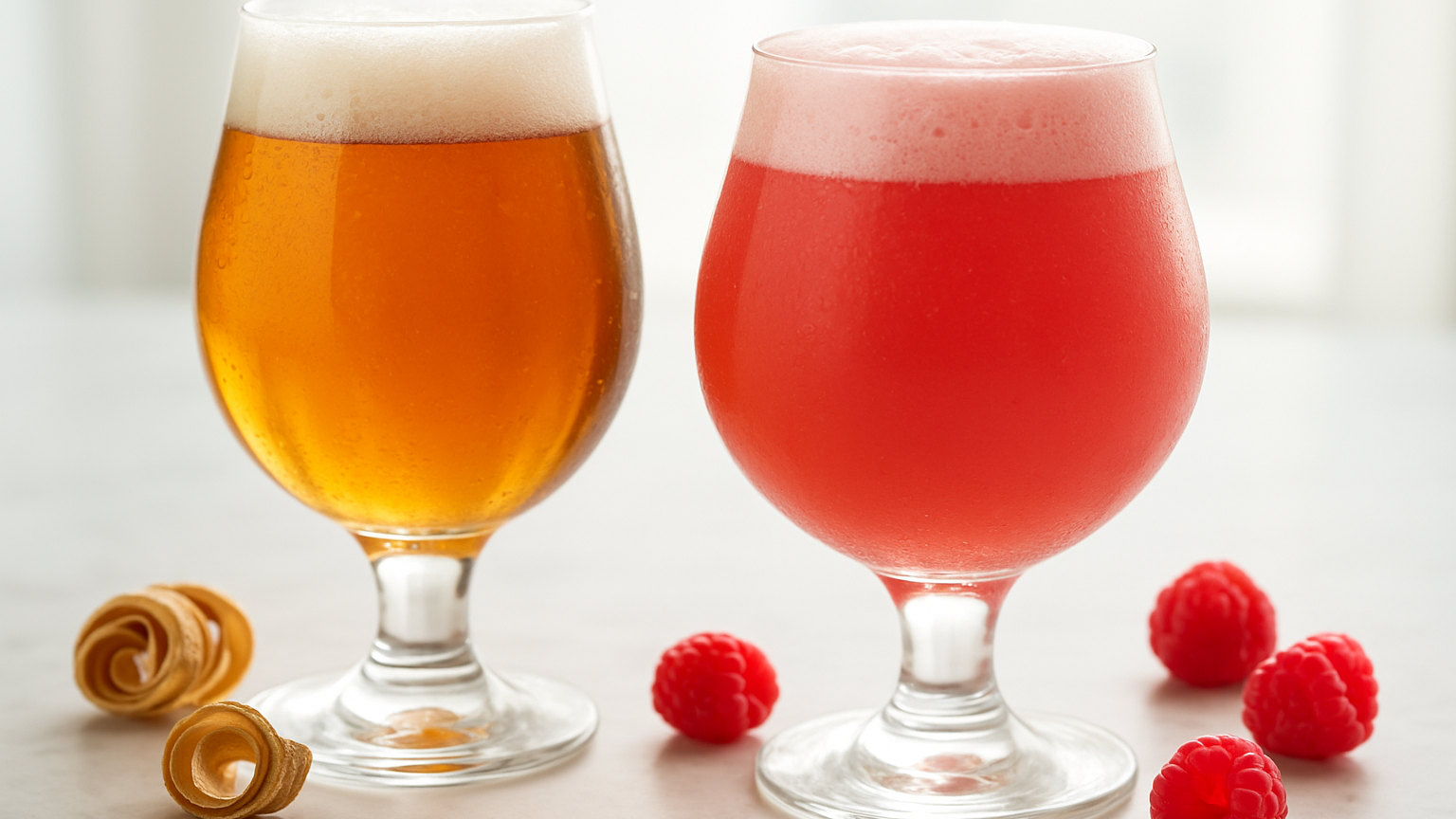
Oude gueuze is the outstanding candidate and can develop for ten to twenty years. Traditional oude kriek and framboise age well over a shorter horizon, perhaps five years, before the fruit thins.
Flemish red and brown ales develop for several years. Bottle-conditioned saisons and strong Belgian ales with brett character do likewise.
What not to keep: kettle-soured fruited beers, gose, Berliner weisse and any modern sour made quickly with fruit purée. These have no live culture, no oak influence and nothing to develop into, and both the fruit and the freshness fade.
Anything below about four per cent generally lacks the substance to age regardless of its acidity.
How to store them
Cool, dark and stable, between about ten and fifteen degrees, with stability mattering more than the exact temperature.
Most producers recommend storing these bottles upright rather than on their side, since the beers are bottle conditioned and standing keeps the sediment at the base. It also reduces the contact between an acidic beer and the cork.
Corked and caged bottles are under substantial pressure, so avoid warm storage entirely, and let a bottle rest for a day or two after transport before opening.
Vintages and verticals
Many traditional producers date their bottles, and buying several years of the same beer to taste together is one of the more rewarding exercises available in drinks.
Blenders also release vintage gueuze specifically for keeping, and these are collected in the way wine is, with secondary market prices to match.
The practical approach is the same as with wine: buy two or three of anything you intend to keep, open one to establish a baseline, and revisit at intervals.
Knowing which you have
The label usually makes it clear. Oude, spontaneous, barrel aged, mixed fermentation and bottle conditioned all indicate something worth keeping.
Fruit purée, kettle soured, or a simple modern name with a bright can design generally indicates a beer to drink now, and there is no shame in that. A fresh fruited sour on a hot afternoon is doing exactly what it was made for, and putting one in a cupboard for three years achieves nothing at all.
What deterioration looks like
Sour beers do eventually decline, and the signs differ from ordinary beer. Fruit character fades to nothing, leaving acidity with no fruit behind it. Acetic character can increase if oxygen has been reaching the bottle, pushing the beer towards vinegar.
Carbonation may also become excessive in bottle-conditioned examples, and a bottle that gushes uncontrollably has continued fermenting further than intended. None of this is dangerous, and all of it is a reason to open bottles at intervals rather than leaving a case untouched for a decade.