Gueuze is a blend of lambics of different ages, refermented in the bottle. It is dry, intensely sour, highly carbonated and one of the most complex things anyone brews, and the comparison with champagne is made so often because the production logic is genuinely similar.
How the blend works
A blender takes young lambic, usually around one year old and still containing unfermented sugars and active organisms, and combines it with older lambic of two or three years, which is fully fermented, dry and complex.
The bottle is sealed. The remaining sugar in the young beer ferments, producing carbon dioxide that has nowhere to escape, so the finished beer becomes sparkling without any gas being added.
That is the same principle used to make champagne, and the pressure achieved is comparable, which is why gueuze is bottled in heavy glass with a cork and cage.
The young beer supplies fermentable material and freshness, the old beer supplies depth and acidity, and the blender's judgement determines the result.
Why blending is a separate craft
Some producers brew and blend; others buy lambic from breweries and blend it without brewing at all. The blender is a distinct profession in this corner of Belgium, and the good ones are regarded as the equivalent of a champagne house's cellar master.
The task is genuinely difficult. Every barrel is different, since each houses its own microbial population and has aged differently, and a blend may draw on many barrels to reach a consistent result.
The blender has to assess how each component will develop after bottling, since the beer continues changing for years, which means judging what a blend will taste like in future rather than only how it tastes now.
What oude means
The word oude, meaning old, is a protected designation indicating traditional production: genuine spontaneous fermentation, barrel ageing, blending and bottle refermentation, with no sweetening or artificial carbonation.
Products labelled gueuze without it may be sweetened, filtered, pasteurised and force carbonated, and they are considerably softer and simpler. Some are pleasant; none of them tastes much like the traditional article.
The same applies to fruit lambics, where oude kriek indicates traditional production and the unqualified term frequently indicates a sweetened commercial product.
Looking for the word is the single most useful piece of label knowledge in the category.
What it tastes like
Bone dry with pronounced lactic acidity, high carbonation and a complex aromatic profile running to lemon, green apple, hay, barnyard, honey, oak and a distinctly cidery quality.
There is no residual sweetness to soften the acid, which makes a first encounter startling. Strength is around five to six per cent, which is modest for something so intense.
It is a beer to sip and consider rather than to drink in quantity, and a 375 millilitre bottle shared between two people is a reasonable serving.
Serving and ageing
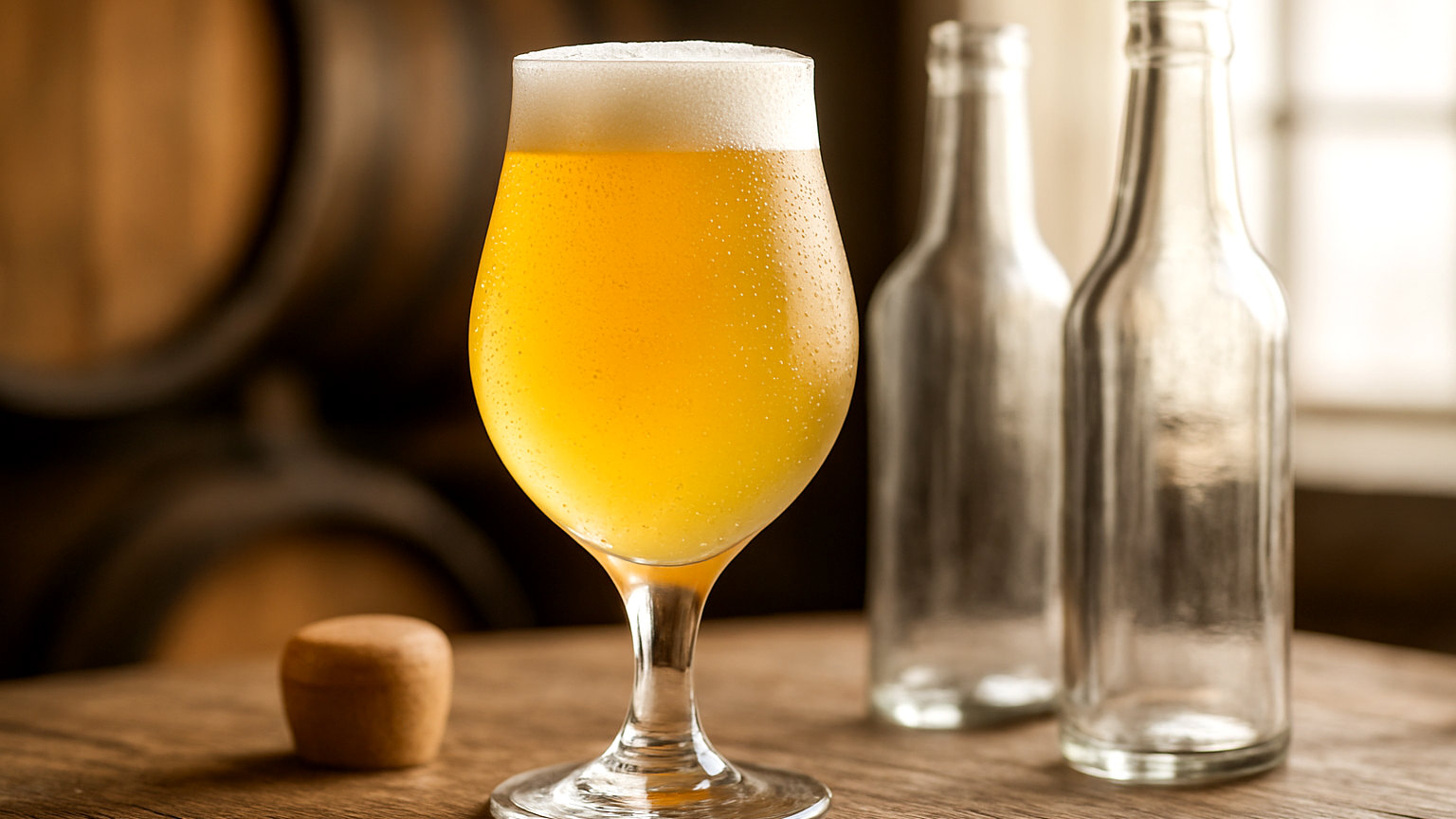
Serve at around eight to twelve degrees in a stemmed glass or a tulip, which lets the aroma develop and handles the carbonation.
Open it carefully. The pressure is substantial and a warm or disturbed bottle will foam vigorously.
Gueuze ages exceptionally well, developing for a decade or more as the acidity mellows and the funk integrates. Bottles are typically stored upright, and vintage-dated examples from good blenders are collected in the way wine is.
At the table
Its acidity makes it one of the best food beers in existence, functioning much as a sharp white wine would. It cuts through fat, handles vinegar and citrus that would destroy most drinks, and suits shellfish, charcuterie, goat's cheese, fried food and rich dishes equally.
If you have found beer generally poor with food, gueuze is the bottle that argues the other way, and it does so more convincingly than anything else in brewing.
Buying it
Look for the word oude, which indicates traditional production and is protected. Bottles are typically 375 or 750 millilitres with a cork and cage, and prices reflect years of barrel ageing rather than any premium positioning.
Specialist beer retailers and Belgian importers are the usual sources, and a good merchant will be able to say who blended it and roughly how the components were aged, which is exactly the information that distinguishes one bottle from another.