
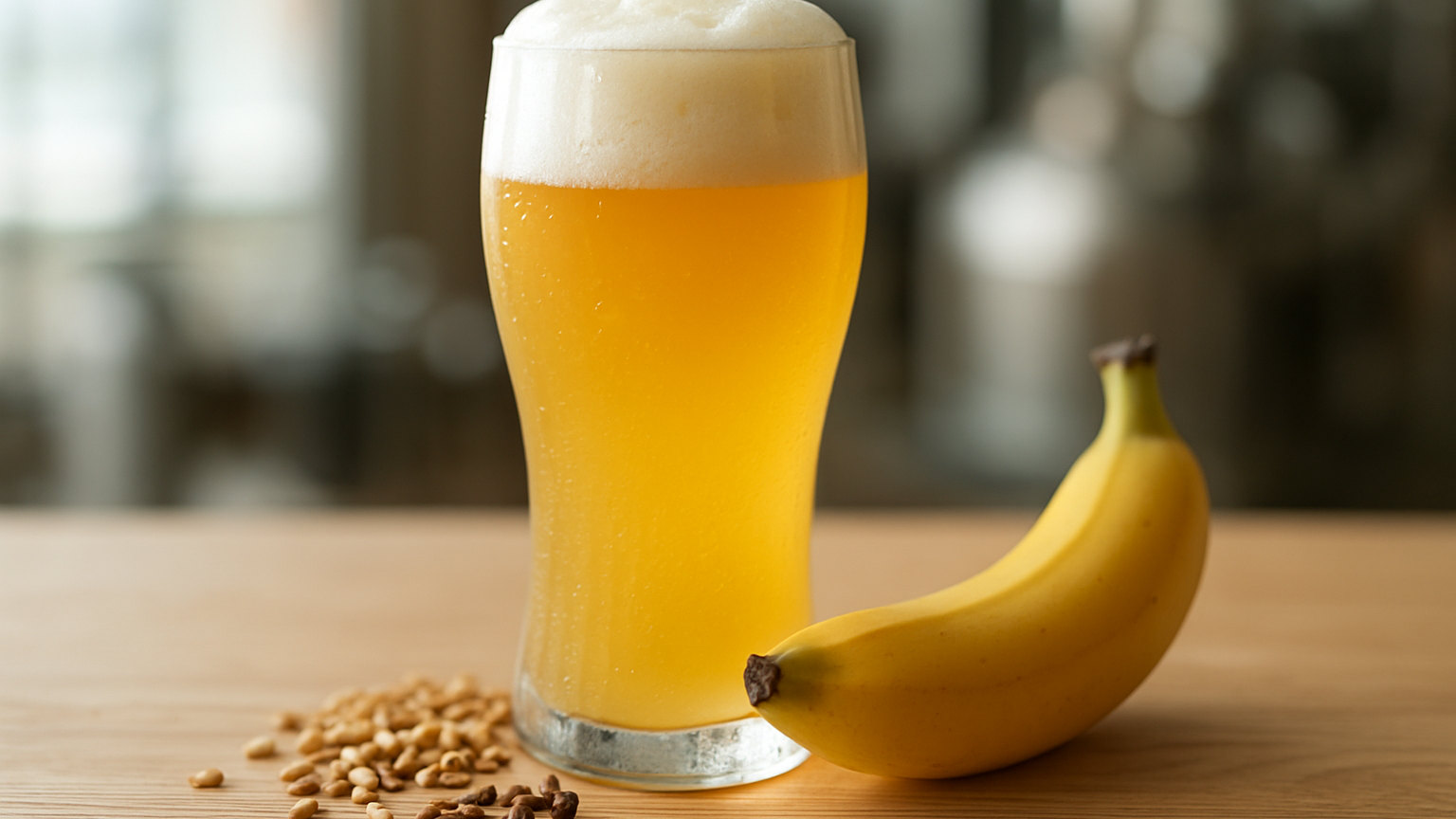
The first time someone tastes a German wheat beer, the reaction is usually surprise at how strongly it smells of banana. The second reaction is generally to assume something was added. Nothing was: both the banana and the clove come from the yeast, and they are the defining feature of the style.
The two compounds
Banana comes from isoamyl acetate, an ester produced by yeast during fermentation. It is the same compound responsible for banana flavour in confectionery, which is why the association is so immediate.
Clove comes from a phenol called 4-vinyl guaiacol, produced when yeast converts ferulic acid from the grain. Most brewing yeast cannot do this, and strains that can are described as phenolic. In most beer styles that ability would be a fault, since phenols read as medicinal or plastic; in wheat beer it is essential.
Weissbier yeast strains produce both, and the balance between them is what distinguishes one brewery's beer from another.
How the brewer controls it
Fermentation temperature is the main lever. Warmer fermentation produces more esters, so a beer fermented at the upper end of the range is more banana-forward. Cooler fermentation shifts the balance towards clove.
The mash matters too. Holding the mash at a particular temperature for a period, known as a ferulic acid rest, releases more of the precursor the yeast needs to make the clove compound, so a brewer wanting a spicier beer will include one.
Pitching rate, fermenter geometry and pressure all contribute as well. Some traditional producers ferment in open vessels, which increases ester production.
The result is that two hefeweizens can sit at opposite ends of the spectrum, one tasting overwhelmingly of banana and bubblegum, the other dry and clove-driven, from the same broad recipe.
What else is in it
Fifty to seventy per cent wheat malt with the remainder barley, producing a soft, full body and a dense white head.
Hopping is minimal, typically just enough for balance, with no hop aroma at all. The style is a yeast showcase, and hop character would compete with it.
Strength is around five to five and a half per cent, and the beer is unfiltered, giving the characteristic cloudiness.
Alongside banana and clove, expect bubblegum, vanilla and sometimes a faint smokiness or a hint of apple, all yeast-derived.
The variations
Kristallweizen is the same beer filtered bright. It looks elegant and tastes noticeably thinner, which most drinkers find a poor trade.
Dunkelweizen uses darker malts for a bready, caramel character underneath the yeast notes, and is an excellent autumn beer.
Weizenbock is the strong version at seven per cent and above, combining wheat beer yeast character with bock malt richness. It is one of the more distinctive beers Germany makes and ages surprisingly well.
American wheat beer, by contrast, uses a clean yeast, so it has the soft wheat body with none of the banana or clove. It is a different proposition entirely and worth knowing about, since the label may not make the distinction obvious.
Drinking it
Fresh, above all. The esters and phenols that define the style fade within months, and an old hefeweizen loses the character it exists for.
Serve at six to eight degrees. Too cold and the aromatics disappear; too warm and the banana becomes cloying.
Use a tall weizen glass if you have one, and pour with attention, since the yeast in the bottom of the bottle carries much of the flavour and needs rousing rather than leaving behind.
It is also one of the better breakfast beers in the world, which is not a joke: in Bavaria it is traditionally drunk with white sausage and pretzels before midday, and the combination is genuinely good.
Where to start
Buy two examples from different Bavarian breweries and drink them on the same evening. The gap between a banana-forward version and a clove-driven one is large enough to be obvious, and it is the quickest way to learn which end of the style suits you.
Avoid kristallweizen for a first encounter, since filtering removes both the yeast and much of the character the style exists for, and it gives a misleading impression of what the beer is meant to be.


