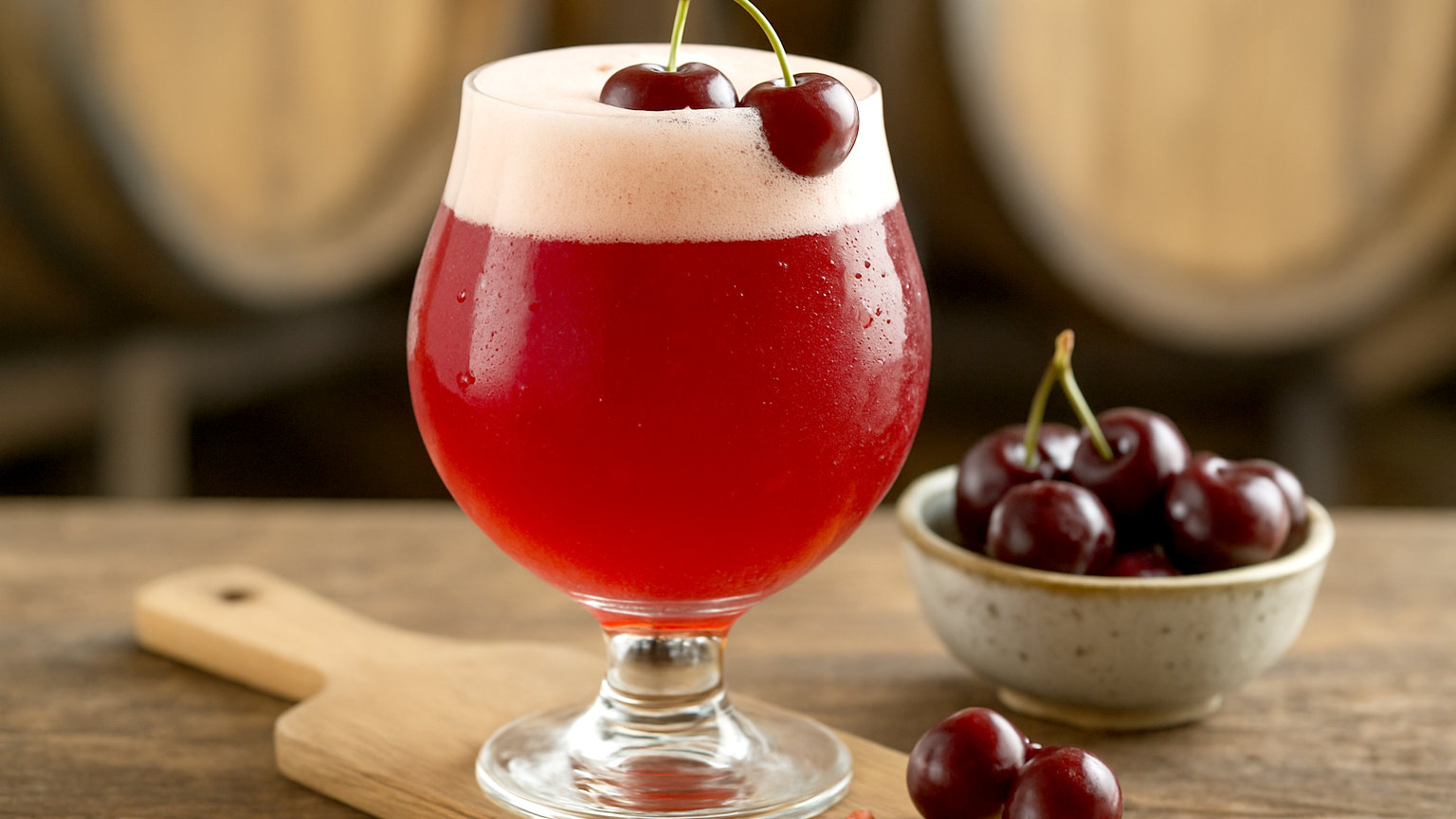
Kriek is lambic macerated with cherries, framboise with raspberries, and the family extends to peach, grape, blackcurrant and others. The traditional versions are dry, complex and genuinely sour. A great many products sold under the same names are not.
How traditional fruit lambic is made
Whole fruit is added to barrels of maturing lambic, typically at a rate of two hundred to three hundred grams per litre, which is a substantial quantity.
The beer then sits on the fruit for several months. The wild yeast and bacteria ferment the fruit sugars completely, so the finished beer contains no residual sweetness at all. What remains is the fruit's flavour, acidity, colour and tannin, with none of its sugar.
The stones contribute an almond note in kriek, which is part of the traditional character.
The beer is then usually blended and bottled for refermentation, in the same way gueuze is, producing a sparkling, bone-dry, intensely fruity and sour beer.
The traditional cherry is a small, dark, sour variety grown locally rather than a sweet dessert cherry, and its acidity and skin contribute more than sweetness would.
What the commercial versions do
Most fruit beer sold widely takes a different route. A lambic or lambic-based beer is sweetened with syrup or juice, frequently filtered and pasteurised, and force carbonated.
The results are sweet, soft, low in acidity and immediately appealing, and they are considerably closer to an alcoholic soft drink than to the traditional style.
These are not fraudulent, and many people enjoy them. They are simply a different product wearing a similar name, and someone who tries one and concludes they know what kriek tastes like has been misled by the label rather than by the beer.
How to tell which is which
The word oude on the label indicates traditional production, and it is protected. Oude kriek is the genuine article.
Look also for a stated fruit quantity per litre, an indication of maceration time, a cork and cage rather than a crown cap, and a producer known for lambic rather than for a general beer range.
Price is a reasonable guide. Fruit at three hundred grams per litre plus months of barrel time is expensive, and a very cheap fruit beer has almost certainly been sweetened.
Colour helps too. Traditional kriek is a deep, slightly murky red-brown, since the pigments oxidise over time. A bright, clear, uniformly red beer has usually been made quickly with juice.
Modern fruited sours
A large category of contemporary beer sits between the two: kettle-soured base beer with fruit purée added, typically fermented briefly or not at all.
These are bright, intensely fruity, moderately sour and often quite sweet. They are made in weeks rather than years and priced accordingly.
They are a legitimate style rather than a poor imitation of lambic, and comparing them to traditional fruit lambic is like comparing a fresh fruit tart to a fruit cake that has been maturing for two years. Both are worth eating and they are not the same thing.
How to drink them
Traditional fruit lambic should be served at eight to twelve degrees in a stemmed glass, and treated as a wine rather than as a beer. It rewards attention and does not reward volume.
It ages well, though the fruit character fades over years while the sourness and complexity remain, so most drinkers prefer these relatively young compared with gueuze.
At the table, traditional kriek suits duck, game, rich pork and chocolate desserts. Framboise works with cheese and with fruit desserts.
Sweetened versions are best treated as an aperitif or a dessert drink, and they suit people who do not otherwise enjoy beer, which is a genuine use rather than a criticism.
Other fruits
Beyond cherry and raspberry, traditional producers work with peach, grape, blackcurrant, apricot and rhubarb, and a few use more unusual fruit as one-off releases.
Grape versions are particularly interesting, since fermenting wine grapes in lambic produces something that sits genuinely between beer and wine, and several are made with specific varieties from named vineyards. They are expensive and among the more remarkable things being made in drinks at present.