
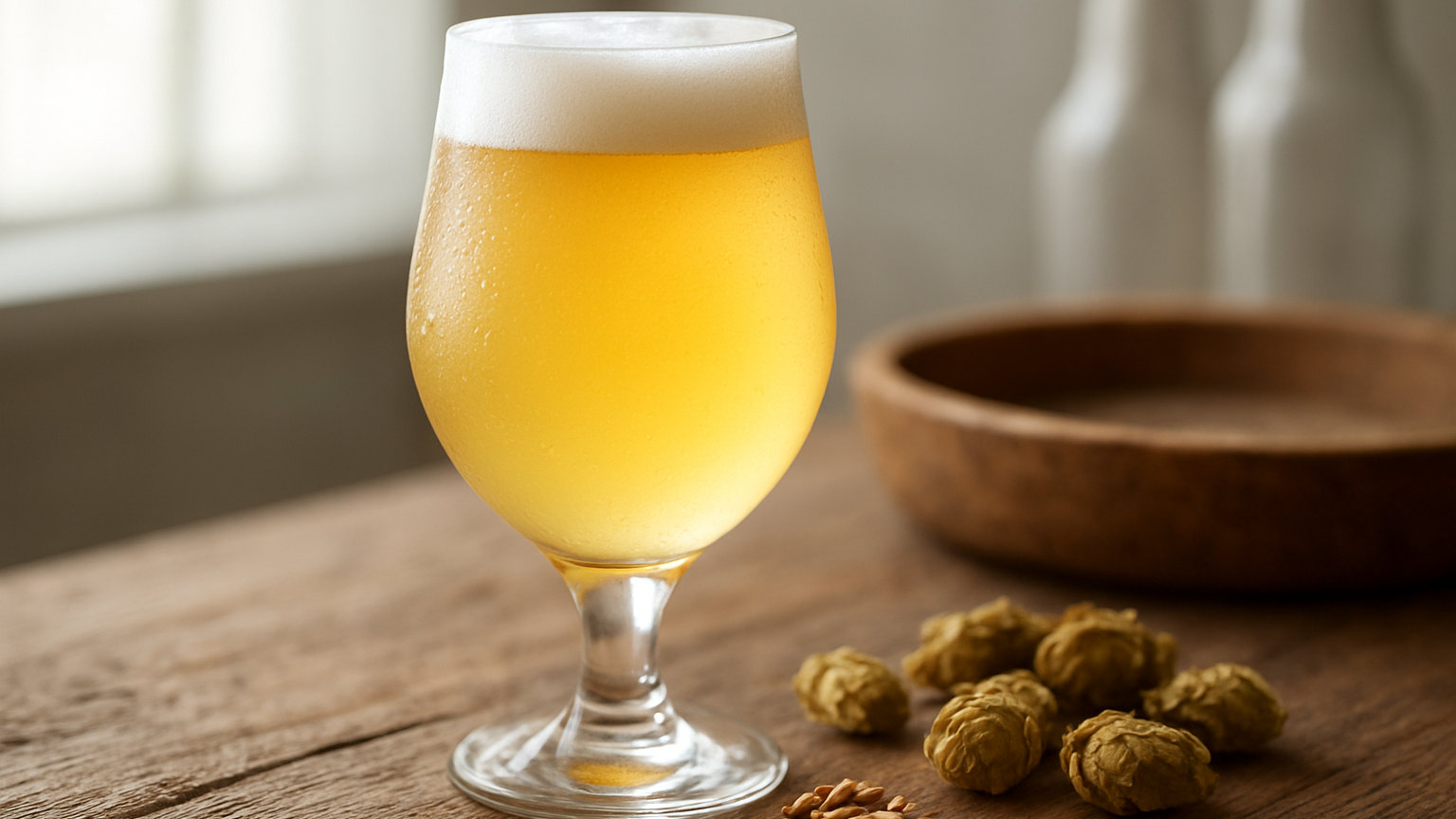
Lambic is the oldest surviving method of making beer, and by modern standards it should not work. No yeast is added, the hops are deliberately stale, the beer is left open to the air overnight and then abandoned in barrels for years.
The results include some of the most complex beers in the world, and the method survives in a small area south west of Brussels.
Spontaneous fermentation
After boiling, the wort is run into a coolship, a wide shallow open vessel usually placed in a loft with louvred windows. It is left overnight, cooling slowly while exposed to the air.
During that time wild yeasts and bacteria present in the atmosphere and in the fabric of the brewery settle into the liquid. No cultured yeast is pitched at any point.
The population involved is complex and includes Brettanomyces, various lactic acid bacteria and a succession of other organisms that dominate at different stages over the following months.
This works reliably only in specific conditions, which is why the practice survived in the Senne valley and the surrounding Pajottenland rather than everywhere. The resident microflora of those breweries, built up over generations, is part of the process.
The aged hops
Lambic uses hops that have been aged for two to three years, deliberately allowing the aromatic oils and bittering compounds to degrade.
The reason is that hops are wanted for their antimicrobial properties rather than for flavour. They restrain some organisms while allowing the desired ones to work, and any hop aroma or bitterness would clash with the finished beer.
Aged hops smell distinctly cheesy, which brewers regard as a sign they are ready.
The grain and the barrels
The mash uses roughly two thirds barley malt and one third unmalted wheat, a proportion unchanged for centuries and specified in traditional practice.
After the coolship, the beer goes into oak barrels, frequently old wine or port casks, where it stays for one to three years. The wood houses part of the microbial population and allows slow oxygen ingress.
Over that time the beer ferments, sours, clarifies and develops. Young lambic is cloudy and harsh; three-year-old lambic is dry, complex and still.
Why it is seasonal
Traditional lambic is brewed only in the cooler months, generally between October and April.
The reason is control. Warm summer air carries a different and less favourable microbial population, and the cooling in an open vessel takes too long in heat, allowing undesirable organisms to dominate.
This seasonal restriction is genuine rather than ceremonial, and it limits how much can be produced.
What it tastes like
Straight lambic, sold as unblended and served on draught in a few Belgian cafés, is still rather than sparkling, dry, sour and funky, with barnyard, hay, citrus and a distinctly cider-like quality.
It divides opinion sharply and is not the version most people encounter, since most lambic is either blended into gueuze or macerated with fruit.
Nothing about it resembles ordinary beer. Anyone approaching it expecting a sour version of something familiar will be surprised, and it is better approached as its own category entirely.
Protection and imitation
Traditional lambic production is protected within Belgian and European frameworks, with rules covering the grain proportion, the fermentation method and the region.
Brewers elsewhere have built coolships and attempted spontaneous fermentation with their own local microflora, and some results have been excellent. They cannot be called lambic, and they are generally sold as spontaneously fermented or wild ale.
The genuine article remains a small production from a handful of breweries and blenders, which is why bottles cost what they do and why a gueuze at fifteen pounds is priced roughly in line with the years of barrel time behind it.
How to try it
Straight lambic is difficult to find outside Belgium, since it is generally served on draught in local cafés and does not travel well.
What is widely available is gueuze, which is blended lambic refermented in the bottle, and fruit lambic. Both are more approachable than the unblended beer and both demonstrate what spontaneous fermentation produces. Starting with a fruit lambic and moving to gueuze is the gentler route, since the fruit softens the impact of the acidity considerably.


