
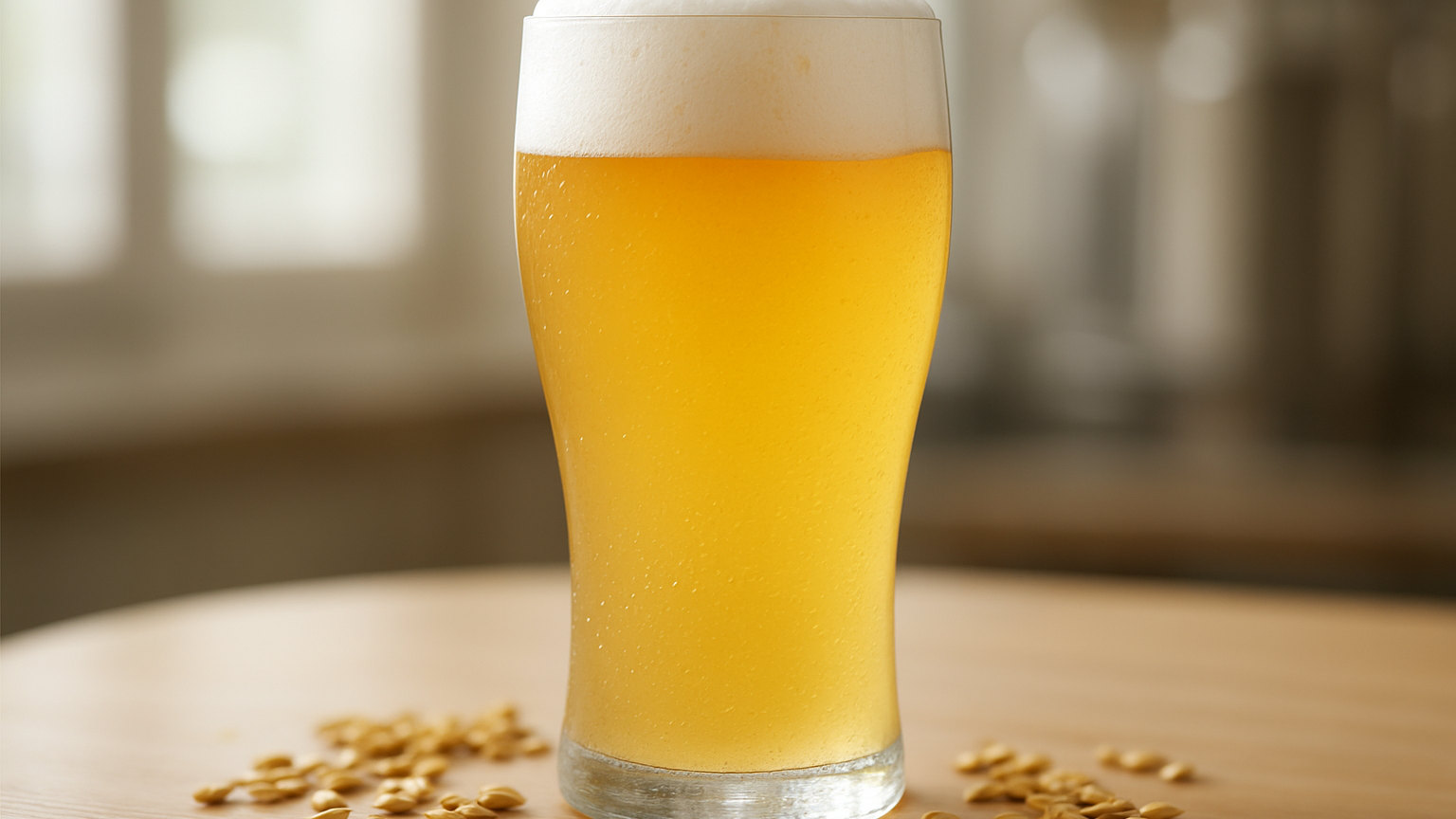
Wheat beer is beer brewed with a substantial proportion of wheat alongside the usual barley malt, typically somewhere between thirty and seventy per cent depending on the style. The wheat changes the beer in several ways at once, and the appearance is the most visible of them.
Where the haze comes from
Wheat is considerably higher in protein than barley, and a good deal of that protein survives into the finished beer as a fine suspension. Combined with yeast left in the beer because the style is traditionally unfiltered, the result is the cloudy appearance that defines it.
The German term hefeweizen means yeast wheat, and the yeast in the name is the point: the beer is meant to be served with it rather than clarified.
Filtered versions exist and are labelled accordingly, kristallweizen in German, and they are bright and clear. They taste noticeably leaner, which is a useful demonstration that the haze is not merely cosmetic.
What wheat does beyond the appearance
Protein contributes to head retention, which is why a properly poured wheat beer produces a dense white head several centimetres deep that lasts to the bottom of the glass. Very little else in brewing manages it.
The body is fuller and softer than a barley-only beer of the same strength, with a rounded, sometimes silky texture. Wheat also gives a distinct bready, doughy flavour that sits beneath whatever the yeast contributes.
Acidity is slightly higher, which contributes to the refreshing quality of the style even before any deliberate souring is involved.
Why brewers find it awkward
Wheat has no husk. Barley's husk forms a natural filter bed during mashing, allowing liquid to drain from the grain, and a mash with a high proportion of wheat becomes sticky and slow.
Brewers manage it by adding rice hulls, which contribute nothing to flavour and restore drainage, or by limiting the wheat proportion. It is the practical reason wheat beers rarely exceed about seventy per cent wheat.
The styles in the family
German weissbier, also called hefeweizen, is the best known: five to five and a half per cent, fermented with a distinctive yeast producing banana and clove aromas, lightly hopped and served unfiltered.
Belgian witbier uses unmalted wheat and adds coriander and orange peel, producing something spicier and tarter.
Dunkelweizen is the dark version, weizenbock the strong one at seven per cent and above, and American wheat beer uses the grain with a clean-fermenting yeast so the wheat character shows without banana or clove.
Beyond those, the sour family relies heavily on wheat. Berliner weisse, gose and lambic all use it, and the protein and slight acidity suit acidic styles particularly well.
Is cloudy beer a fault?
In this family, no. Haze is intended and a bright wheat beer either has been filtered deliberately or has been poured leaving the yeast behind.
The distinction worth making is between bright, stable haze and murky sediment. A wheat beer should look opaque and luminous rather than dull and brown, and if it looks flat and muddy with material settling as you watch, it is likely old rather than merely unfiltered.
Freshness matters here more than in most styles. The delicate yeast-derived aromas fade within a few months, so check the date and buy recent stock. A hefeweizen a year old will smell of very little.
Serving it
Around six to eight degrees, in a tall weizen glass if you have one, which is shaped to support the enormous head and to display the colour.
The pour matters more than in almost any other style, since the yeast settles in the bottle and needs rousing to get into the glass. Leaving it behind produces a thinner, paler beer that misses much of the point.
A note on gluten
Wheat beer is worth flagging for anyone avoiding gluten, since the name makes the ingredient explicit in a way most beer labels do not.
Both wheat and barley contain gluten, so these beers are unsuitable for anyone with coeliac disease. Gluten-reduced beers made using enzymes exist and are labelled accordingly, and dedicated gluten-free brewers use sorghum, millet, buckwheat or rice instead. Anyone with a diagnosed condition should follow guidance from their clinician rather than a beer label alone.


