The old fashioned is the original cocktail, in the strict sense that the word was defined to describe it: spirit, sugar, bitters and water. Everything else in the category is a variation on that idea, which is why it repays getting right.
It is also the drink most commonly made badly, and the reasons are consistent.
The recipe
Use 60 millilitres of bourbon or rye, roughly two ounces. Add one teaspoon of sugar syrup, or a sugar cube muddled with a little water, and two to three dashes of aromatic bitters.
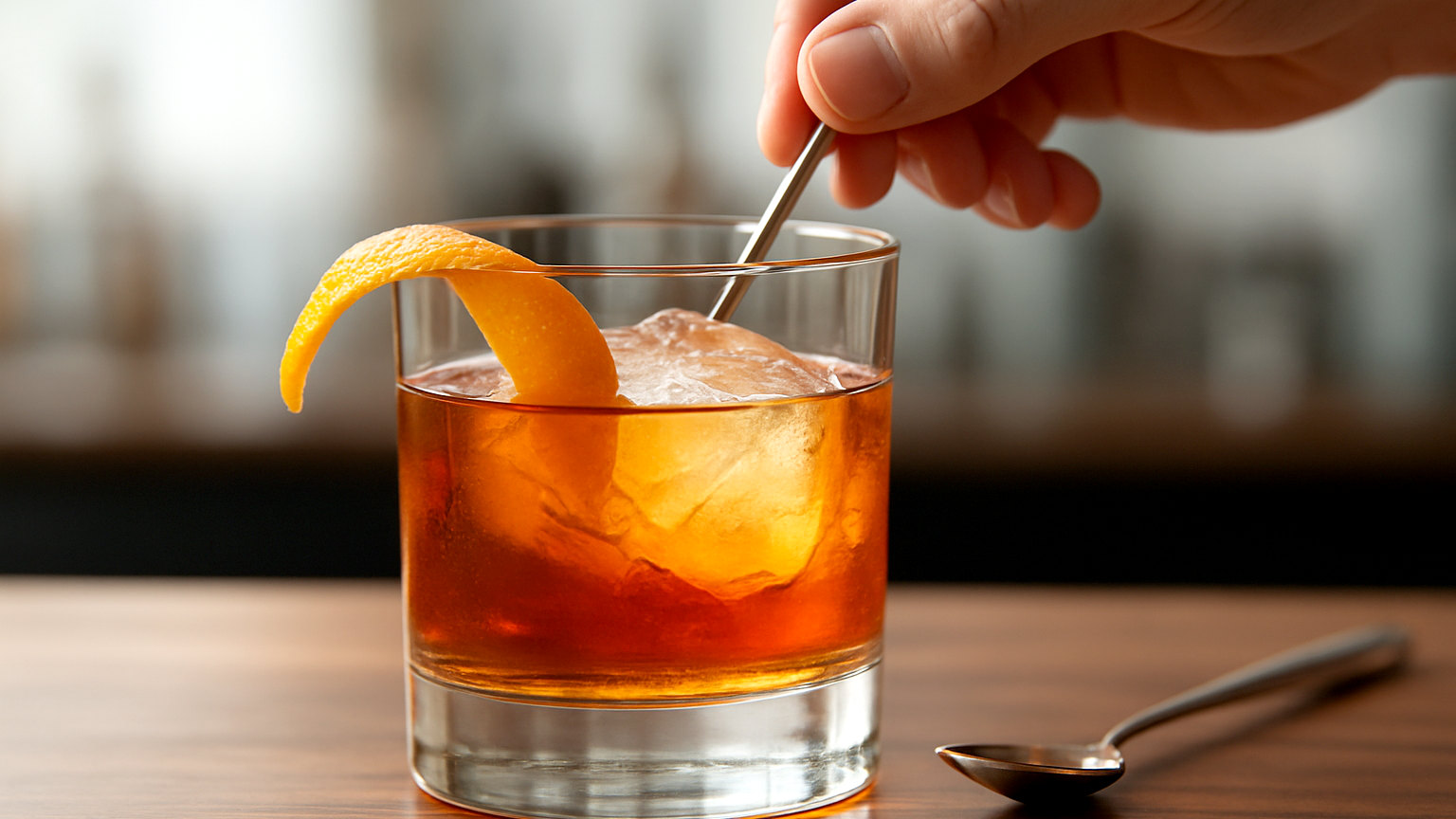
Add ice and stir for around thirty seconds, until the outside of the glass is cold and the drink has taken on enough water. Strain over a single large ice cube in a rocks glass, or stir directly in the glass with fresh ice.
Express a strip of orange peel over the surface, oil side down, so the oils land on the drink, then drop it in.
That is the whole thing. It has four components and no room for error.
Why dilution matters more than anything
Water is an ingredient rather than an accident. A drink of spirit, sugar and bitters with no dilution is hot and closed; the same drink with the correct amount of water is open, aromatic and balanced.
Thirty seconds of stirring adds roughly the right amount, which is somewhere around a quarter of the finished volume. Under-stirring produces something harsh, and over-stirring produces something thin.
This is why the ice matters. A single large cube melts slowly and holds the drink cold without continuing to water it down. Small cubes melt fast, and a drink built on them will be dilute within ten minutes.
If you make cocktails regularly, a mould for large cubes is the cheapest useful piece of equipment you can buy.
The fruit problem
A great many bars muddle an orange slice and a cherry into the bottom of the glass before building the drink. This is the single largest deviation from the original and it produces a different, sweeter, pulpier drink.
The practice appears to date from the mid twentieth century, when spirits quality and drinking habits both shifted, and it has proved remarkably persistent.
There is a regional exception worth acknowledging: the brandy old fashioned served in parts of the American midwest is muddled with fruit as a matter of local tradition and is a legitimate drink in its own right.
For the standard version, the citrus contribution should come from expressed peel oil rather than from muddled flesh.
Which spirit
Bourbon gives a rounder, sweeter drink with vanilla and caramel. Rye gives a drier, spicier one with more bite, and it is the traditional choice.
Either works, and the choice is a matter of preference rather than correctness. Something around forty five per cent or above stands up to dilution better than a spirit at forty.
The template also travels. An old fashioned made with aged rum, with cognac, with mezcal or with an aged tequila all work, adjusting the sweetener to suit: demerara syrup with rum, agave syrup with tequila.
Adjusting it
Sweetness is the variable most worth tuning. A teaspoon of syrup suits most people; some prefer half that, and a bourbon with obvious sweetness of its own needs less than a dry rye.
Bitters can be varied too, and swapping a dash of aromatic bitters for orange bitters changes the drink noticeably for almost no effort.
What should not be varied is the dilution. If the drink tastes harsh, it usually needs more stirring rather than more sugar, which is the most common misdiagnosis in home cocktail making.
Making sugar syrup
Simple syrup is equal weights of sugar and water, stirred until dissolved. It needs no heating, though warm water speeds it up, and it keeps in the fridge for a few weeks.
Rich syrup, at two parts sugar to one of water, is sweeter and thicker, so a smaller measure achieves the same effect with less dilution. Some bartenders prefer it in an old fashioned for exactly that reason.
Demerara syrup, made the same way with unrefined sugar, adds molasses depth and suits bourbon, aged rum and anything spirit-forward.