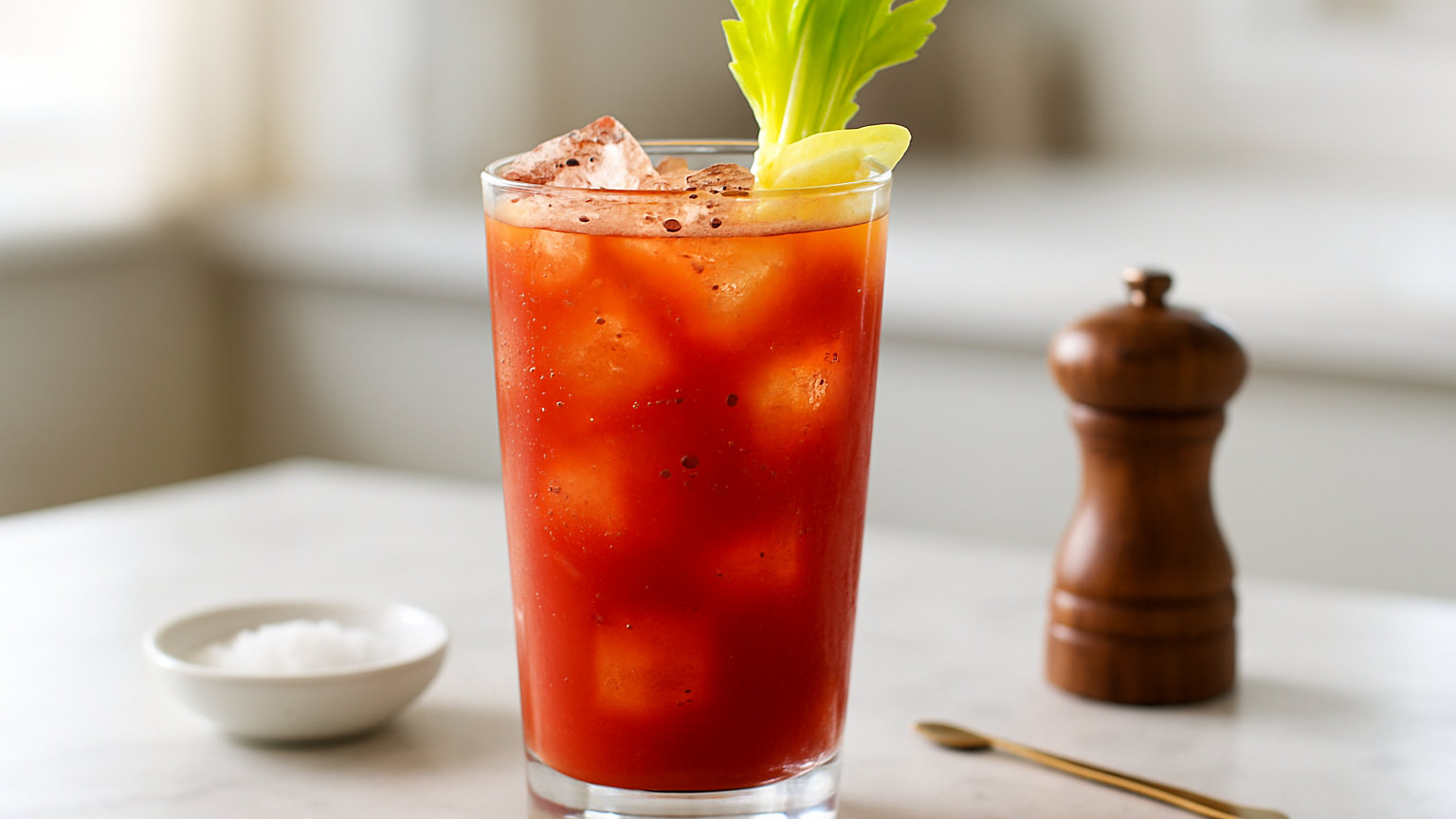
The bloody mary is the outlier in the classic canon: savoury rather than sweet or sour, seasoned like food rather than balanced like a drink, and made differently by everyone who makes it.
That variability is the point. It is a recipe in the way a soup is a recipe, and it should be adjusted to taste rather than measured precisely.
A working recipe
Combine 50 millilitres of vodka with 100 millilitres of tomato juice, 15 millilitres of fresh lemon juice, three dashes of Worcestershire sauce, two or three dashes of hot sauce, a quarter teaspoon of horseradish, a pinch of celery salt and a generous grind of black pepper.
Roll rather than shake, and season to taste before serving over ice in a tall glass.
Every one of those quantities is a starting point. More lemon lifts it, more horseradish gives it heat that sits differently from chilli heat, and celery salt is the ingredient that most often makes the difference between a flat drink and a good one.
Rolling rather than shaking
Shaking tomato juice aerates it, lightens the colour and produces a frothy texture that most people find unpleasant.
Rolling means pouring the mixture back and forth between two vessels several times, which combines and chills it without whipping air into it.
Alternatively, build it in the glass and stir gently. Either preserves the texture, which is part of what the drink is for.
Balancing it
Think in terms of seasoning rather than of sweet and sour.
Salt is the foundation, and an underseasoned bloody mary tastes of nothing. Celery salt is traditional and better than plain salt here.
Acid comes from lemon and, in some recipes, a splash of sherry or a dash of vinegar. It lifts the tomato and prevents the drink being heavy.
Umami comes from Worcestershire sauce, and anything else savoury you care to add. Soy sauce, olive brine and a spoonful of the liquid from a jar of pickles all work.
Heat comes from hot sauce, which is sharp and immediate, and from horseradish, which is warmer and sits further back. Using both gives a more interesting result than doubling either.
Black pepper is not optional.
The tomato juice
This is the largest variable and the one most worth spending on. Thin, watery juice produces a thin drink, and a thicker, well seasoned juice does much of the work for you.
Some bars use passata thinned with water, which gives more body. Fresh tomato juice is excellent and considerably more effort.
Chilling the juice properly beforehand matters, since a warm mix over ice dilutes fast.
Variations worth knowing
Replace the vodka with gin and it becomes a red snapper, which is arguably a better drink, since the botanicals add complexity the vodka does not.
Replace it with tequila and it becomes a bloody maria, which suits the chilli and lime element well.
Add beer, traditionally a light lager, and it becomes a michelada in one of its many forms.
A clarified version, filtered until the drink is clear, appears on serious cocktail lists and is a different experience entirely.
The garnish question
A celery stick is traditional and functional, since it stirs the drink and provides something to eat.
Beyond that, the modern tendency towards elaborate garnishes involving whole meals balanced on the rim is a matter of taste, and it makes the drink difficult to actually drink.
A lemon wedge, a celery stick and perhaps an olive or a pickled vegetable is enough, and anything that has to be removed before you can take a sip has probably gone too far.
Making it for several people
This is one of the few cocktails that genuinely improves when batched. Mixing everything except the spirit the night before allows the seasonings to combine, and horseradish and celery salt in particular need time to distribute properly.
Keep the mix refrigerated, add the vodka to order or to the jug shortly before serving, and taste again before pouring, since chilling flattens seasoning and a mix that was well judged when warm frequently needs adjusting when cold.