The mint julep is bourbon, sugar, mint and crushed ice, and it is one of the few classic drinks where the technique matters more than the proportions. Made properly it is aromatic and refreshing; made carelessly it tastes of grass and neat whiskey.
The recipe
Place eight to ten mint leaves in a julep cup or a rocks glass with 10 millilitres of sugar syrup, roughly two teaspoons.
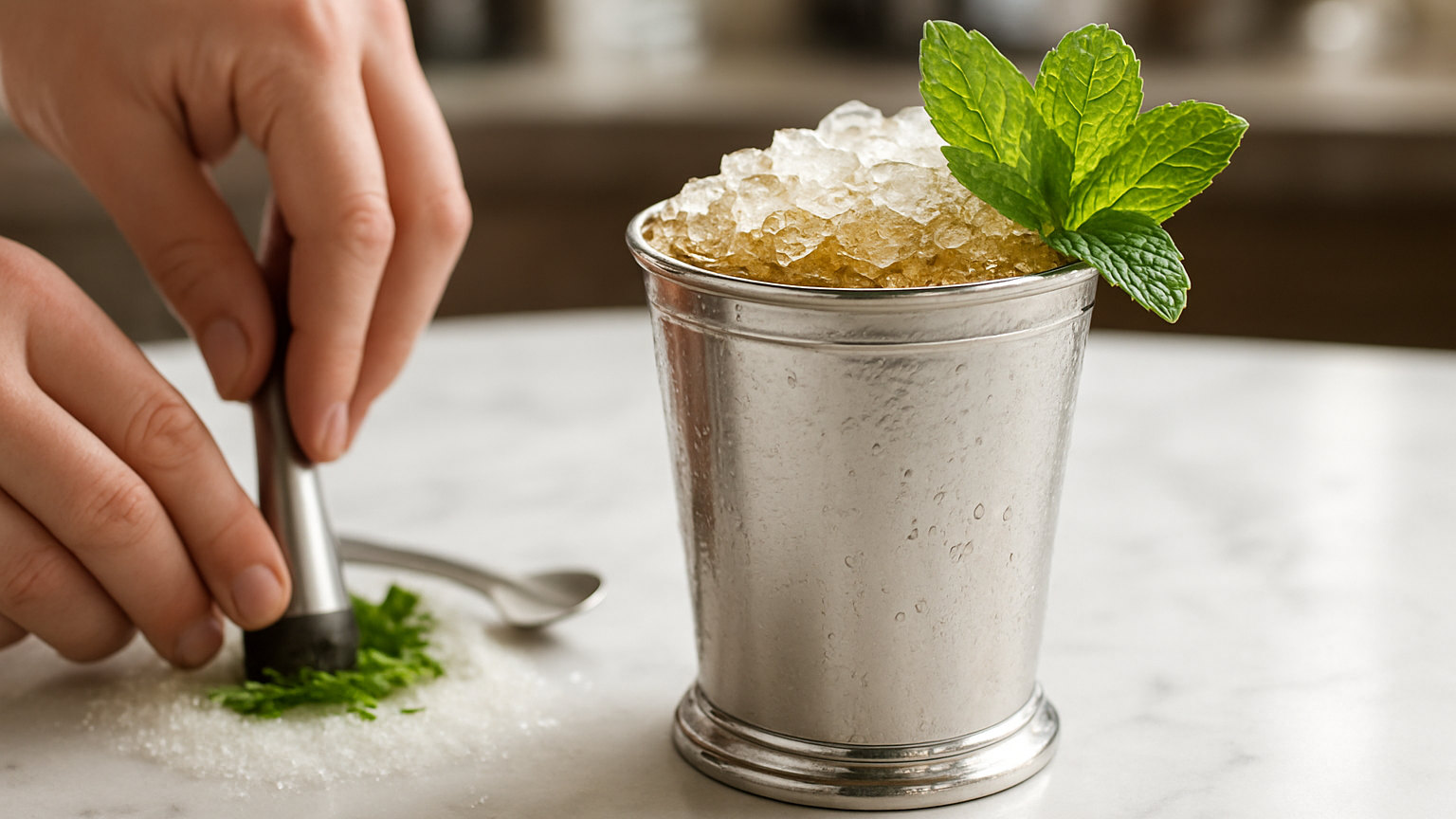
Press the mint gently against the side of the cup with a bar spoon, just enough to release the oils. Do not muddle it aggressively.
Add 60 millilitres of bourbon, two ounces, then fill the cup halfway with crushed ice and churn with the spoon until the outside begins to frost.
Add more crushed ice, mounding it above the rim, and top with a generous bunch of mint.
Serve with a short straw so the mint sits directly under the nose as you drink.
Why the mint must not be bruised
This is the central technique and the most common error.
Mint leaves carry aromatic oils on their surface, and pressing gently releases them. Muddling hard tears the leaf structure and releases chlorophyll and bitter compounds, producing a grassy, vegetal flavour that dominates the drink.
A gentle press, or even a firm slap of the garnish bunch between the palms before placing it, is all that is needed.
The garnish does most of the aromatic work in any case, since it sits at nose level while you drink.
Why crushed ice
The julep is one of a family of drinks built on crushed ice, and it serves two purposes.
It chills the drink rapidly, producing the frost on the outside of the cup that is part of the presentation and a genuine indicator that the drink is ready.
It also dilutes continuously as you drink, which is intended. A julep starts strong and becomes progressively longer and more refreshing, which is why it works in hot weather.
Crushing ice at home is straightforward: wrap cubes in a clean tea towel and hit them with a rolling pin, or use a purpose-made bag.
The cup
Traditional julep cups are silver or pewter, and the reason is thermal. Metal conducts heat away from the drink quickly and frosts visibly on the outside, which looks impressive and indicates the drink has reached temperature.
Holding the cup by the rim or the base rather than the body keeps the frost intact, which is the practical reason for the convention.
A rocks glass works perfectly well and simply does not frost in the same way.
Adjusting it
Bourbon is traditional and a rye julep is drier and spicier. Older recipes used cognac or rum before American whiskey became standard.
Some drinkers prefer a demerara or brown sugar syrup, which adds molasses depth and suits bourbon well.
Strength is worth noting: this is sixty millilitres of spirit with sugar and no citrus, so it is a strong drink that becomes gentler only as the ice melts. One is generally sufficient.
The wider julep family
The template of spirit, sugar, herb and crushed ice appears elsewhere. A smash is the same idea with citrus and seasonal fruit added, and a mojito is a related drink with rum, lime and soda.
The common technique across all of them is gentle handling of the herb and generous use of crushed ice, which is the transferable lesson. Once the julep is familiar, the rest of the family follows without any new recipes.
Choosing mint
Spearmint is the standard and the right choice. Peppermint is considerably more aggressive and contains more menthol, which produces a drink that tastes faintly medicinal.
Buy it as fresh as possible and store the bunch stems-down in a glass of water in the fridge, covered loosely, where it will keep for several days.
Use the tender upper leaves in the drink and save the tougher lower ones for syrup, since they carry less aroma and more of the bitter compounds.