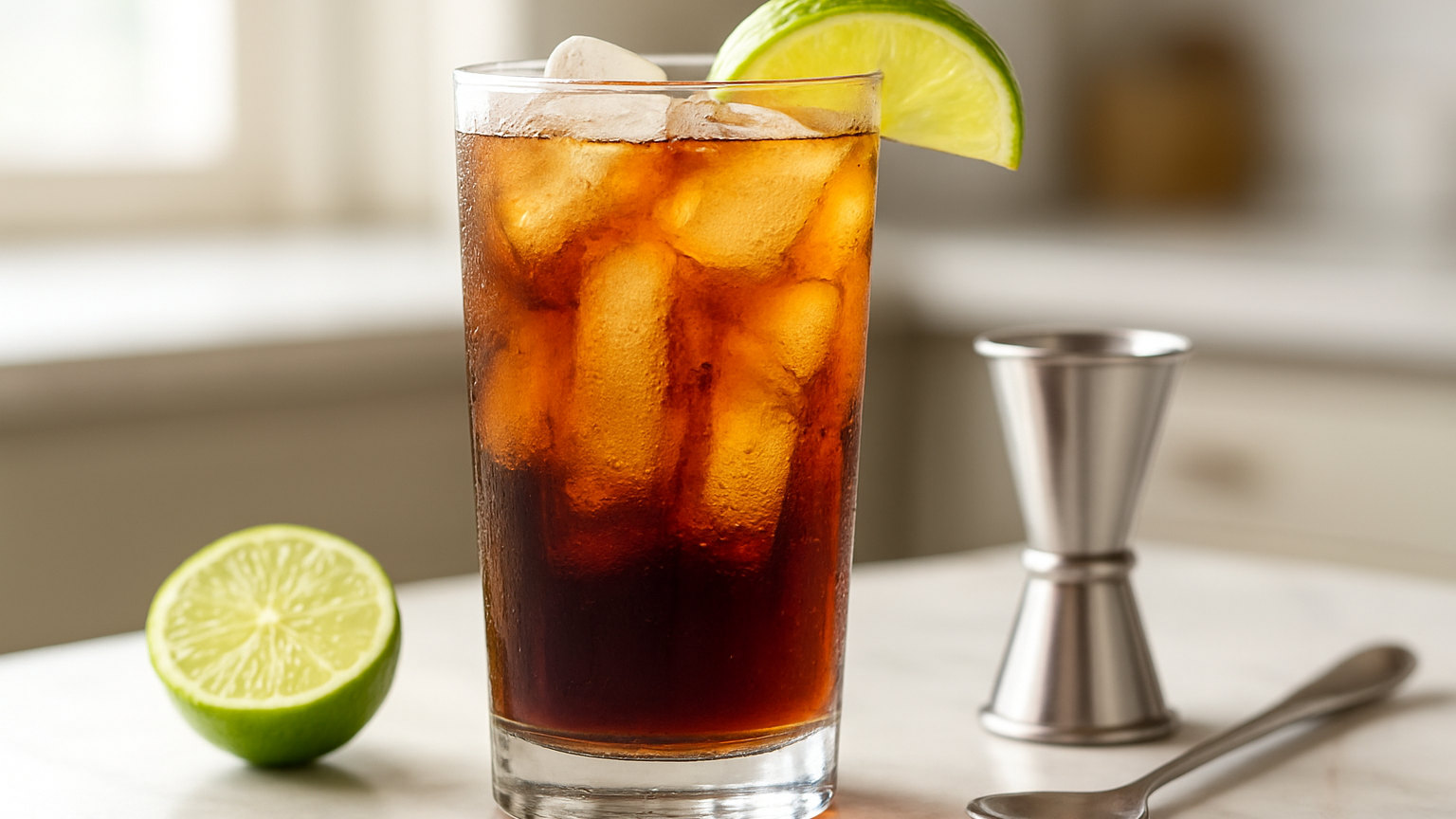
A Cuba libre is rum, cola and lime over ice. Rum and coke is rum and cola over ice. The difference is a squeeze of lime, and it changes the drink more than the description suggests.
Why the lime matters
Cola is sweet, and without acidity to balance it a rum and cola is a sugary drink with alcohol in it.
Lime juice cuts the sweetness, adds a fresh aromatic lift and gives the drink a shape it otherwise lacks. Cola already contains phosphoric and citric acids, and the fresh lime contributes something different: brightness and aroma rather than simply sourness.
Squeezing the wedge into the drink rather than perching it on the rim is the whole technique.
The recipe
Fill a tall glass completely with ice.
Add 50 millilitres of rum and 15 millilitres of fresh lime juice, roughly half a lime.
Top with 120 to 150 millilitres of cold cola, poured gently.
Stir once and garnish with a lime wedge.
Some recipes add a dash of aromatic bitters, which is not traditional and improves the drink noticeably.
The origin story
The usual account places it in Cuba around 1900, following American involvement in the Cuban war of independence, with the name taken from a slogan meaning free Cuba and the drink toasted with those words.
The timeline is plausible, since cola had become available in Cuba around that period. The documentary evidence is thin, as with most cocktail origins, and the earliest printed references come considerably later.
What is not in doubt is that the combination became strongly associated with Cuba and remains so.
Which rum
This is where the drink can be substantially improved.
A light white rum is traditional and gives a clean, straightforward drink.
An aged rum makes it considerably more interesting, contributing vanilla, oak and caramel that the cola picks up rather than buries. A three to five year old Spanish-style rum is an excellent choice and costs little more.
A dark or Jamaican rum with pot still character gives a heavier, funkier version that some people prefer and that stands up to cola well.
Overproof rum is worth measuring carefully rather than pouring by eye.
The cola question
Cola is more than half the drink, so it is worth some thought.
Versions made with cane sugar rather than corn syrup are widely reckoned to taste cleaner and less cloying, and Mexican-produced cola sold in glass bottles is the usual example cited.
Craft colas, made with less sugar and more spice, produce a drier and more complex drink and are worth trying.
Whatever you use, buy small bottles or cans and keep them cold, since flat cola makes a poor drink.
Making it well
Fill the glass with ice properly, since an under-iced highball dilutes fast and a diluted cola drink is unpleasant.
Chill everything beforehand.
Squeeze the lime rather than dropping it in, and drop the spent shell in afterwards for aroma.
Pour the cola gently to preserve the carbonation, and stir once at most.
The variations
Replace the rum with bourbon and you have a drink common in the American south.
Replace it with amaro for a lower-strength version with genuine bitterness, which works better than it sounds.
Add a dash of aromatic bitters and a longer measure of lime and the drink moves towards a rum sour lengthened with cola, which is arguably the best version of all.
The sugar question
A cola-based drink contains a substantial quantity of sugar, most of it from the mixer rather than the spirit.
Diet and zero-sugar versions work perfectly well in the drink and change the character, since much of cola's body comes from the sugar itself.
A craft cola with less sugar and more spice is the middle option and generally makes the best drink, though it costs more and is harder to find.
The name and the trademark
One curiosity worth knowing. The phrase Cuba libre is generic and anyone may use it, but several rum and mixer combinations elsewhere are protected: the dark and stormy, for instance, is a registered trademark tied to a specific Bermudian rum.
That is unusual in cocktails, where names are almost never owned and recipes never are. It explains why some bars list a dark and stormy and others describe the same drink by another name entirely.