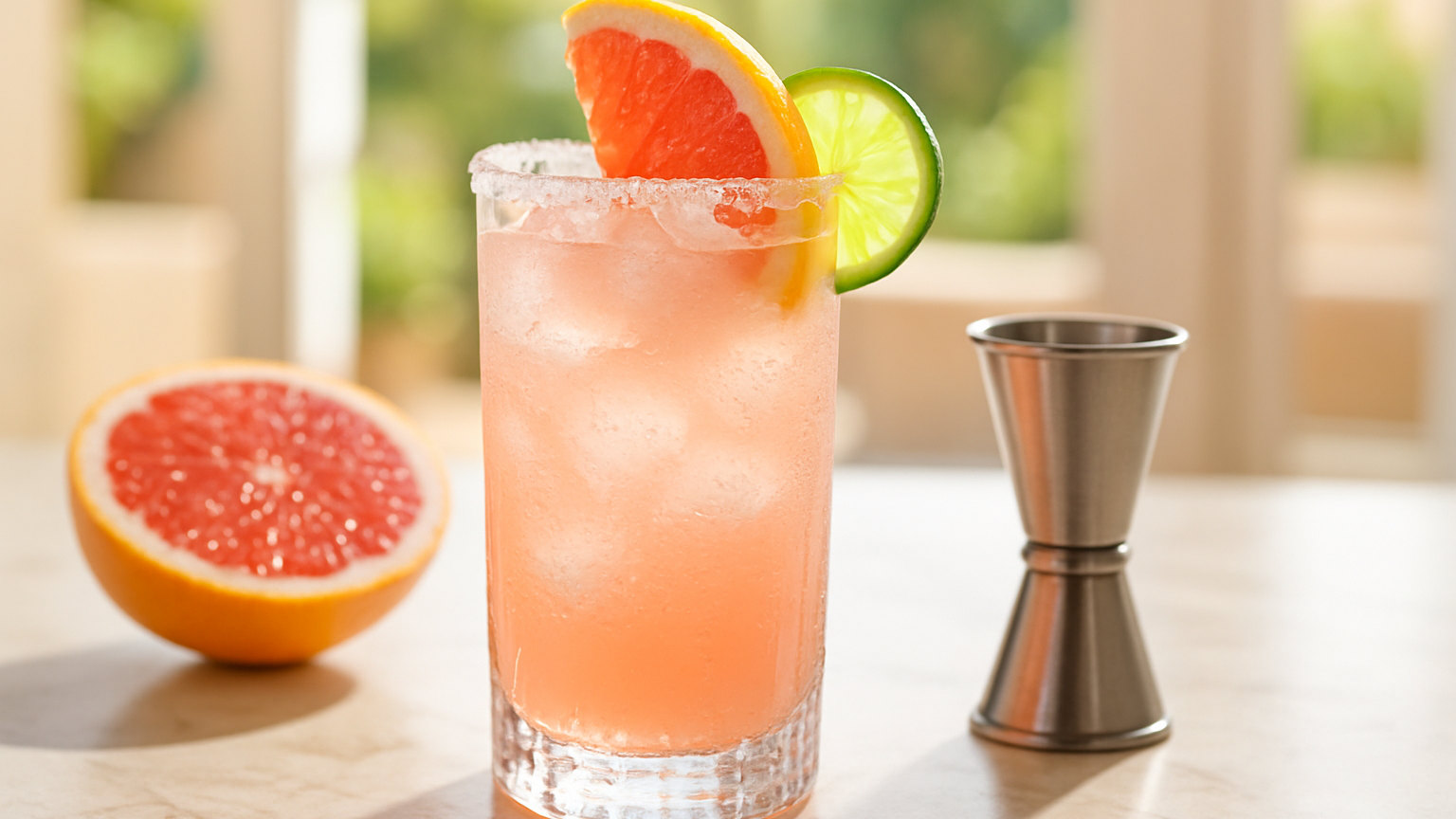
Ask what Mexico drinks with tequila and the answer is not the margarita. It is the paloma: tequila, grapefruit, lime and soda over ice, usually assembled in under a minute.
It is a long drink rather than a short one, which makes it considerably more suited to heat and to an afternoon.
The simple version
Salt the rim of a tall glass if you want to, and fill it completely with ice.
Add 50 millilitres of blanco tequila and 15 millilitres of fresh lime juice.
Top with cold grapefruit soda and stir once.
Garnish with a grapefruit or lime wedge.
This is how it is made across Mexico, and the grapefruit soda does most of the work.
The made-from-scratch version
Better and slightly more effort.
Combine 50 millilitres of blanco tequila, 60 millilitres of fresh pink grapefruit juice, 15 millilitres of fresh lime juice and 10 millilitres of agave syrup in an ice-filled glass.
Top with 60 to 90 millilitres of soda water and stir once.
Fresh grapefruit juice has an acidity and a bitterness that the soda version lacks, and it produces a drier, more adult drink.
A pinch of salt in the drink itself, rather than only on the rim, is worth trying: it suppresses bitterness and makes the grapefruit read as fuller.
Why grapefruit and tequila work
Blanco tequila is vegetal, peppery and citrus-forward, with a slightly savoury character from the agave.
Grapefruit carries both acidity and genuine bitterness, which is unusual among juices, and that bitterness meets the tequila's pepper rather than fighting it.
Salt does what salt does in cooking, amplifying the other flavours and suppressing bitterness enough to make the drink refreshing rather than austere.
The combination of sour, bitter, salty and slightly sweet is what makes a paloma satisfying in heat in a way that a sweeter drink is not.
How it compares with a margarita
A margarita is a sour: tequila, lime and orange liqueur, shaken and served short. It is a stronger, more concentrated drink, typically around two units in a small glass.
A paloma is a highball, longer, lower in strength and more refreshing. It contains around one and a half units in a much larger volume.
Neither is better in the abstract. The margarita is a drink to have one of and think about; the paloma is a drink to have with food on a hot day.
The practical point is that the paloma is easier to make well, since there is no ratio to balance precisely and no shaking involved.
The tequila
Blanco, unaged, is the right choice. It has the vegetal, peppery character the drink is built around, and ageing softens exactly those qualities.
Look for one made from one hundred per cent agave, which will be stated on the label. Products described as mixto contain a proportion of other sugars and are noticeably harsher.
Reposado works and gives a rounder, softer drink. Añejo is generally wasted here.
Mezcal in place of tequila makes an excellent smoky version, and a split base of the two is a good compromise.
The salt rim
Rub a cut lime around the outside of the rim only, then roll the outside in salt. Salting the inside means salt falls into the drink and it becomes progressively saltier.
Salting only half the rim is a courtesy, since it lets the drinker choose.
Flaked sea salt is better than fine table salt, and a mixture of salt with a little chilli powder is common in Mexico and worth trying.
A note on salt
Worth mentioning for anyone advised to watch their salt intake. A salted rim contributes a genuine amount, and a pinch added to the drink adds more.
Both are easy to leave out, and the drink works perfectly well without either, since the grapefruit and lime carry it. Asking for a paloma without salt is entirely normal and nobody will comment.