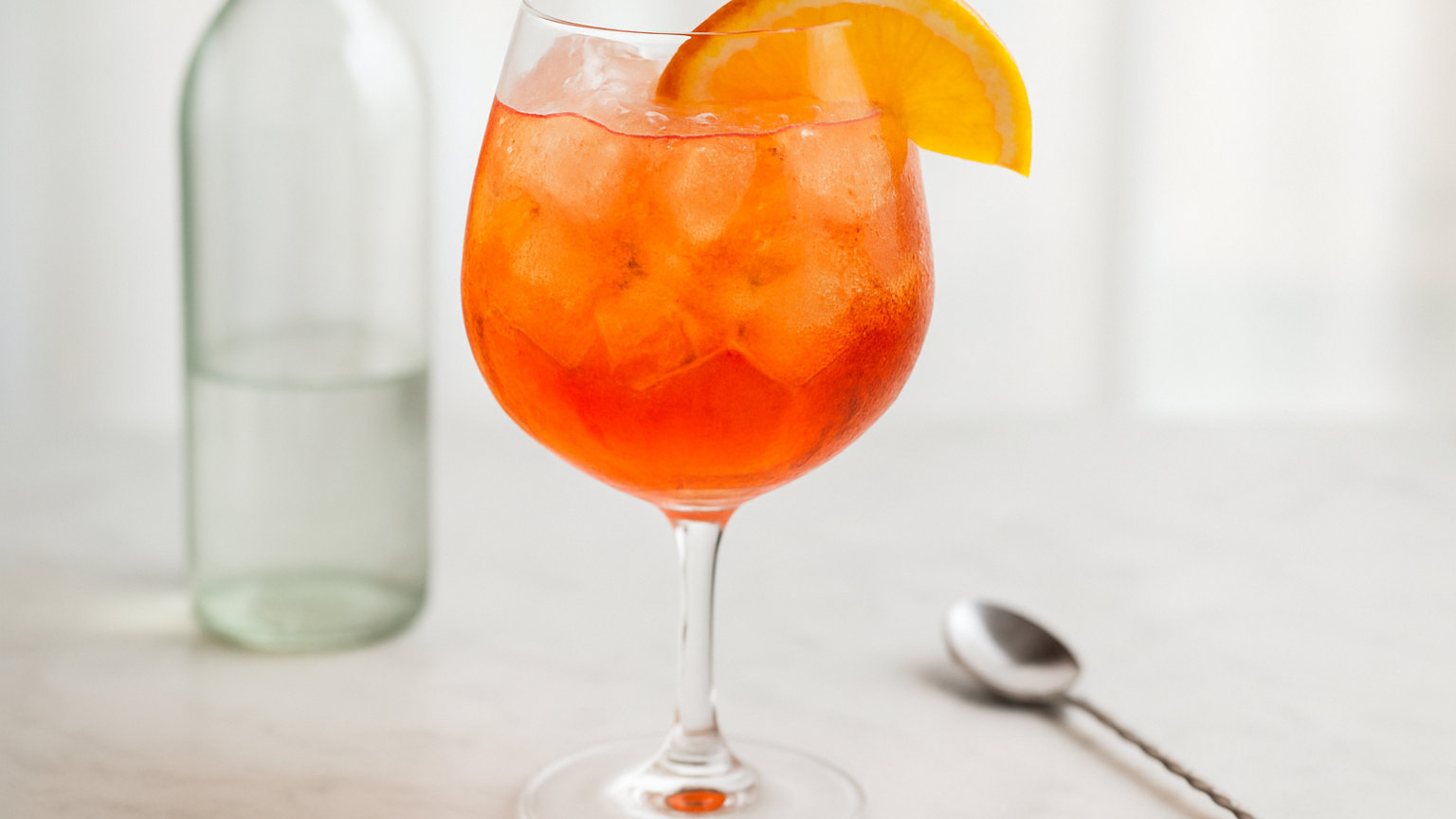
The spritz is sparkling wine, a bitter aperitivo and a splash of soda over ice. It is the drink of the Italian aperitivo hour, it sits at around eight to eleven per cent in the glass, and it is one of the few genuinely low-strength drinks that does not feel like a compromise.
The ratio
Three parts sparkling wine, two parts aperitivo, one part soda water.
In practice that means 90 millilitres of prosecco, 60 millilitres of aperitivo and 30 millilitres of soda, which fits a large wine glass with plenty of ice.
The proportions are worth respecting. More aperitivo makes it sweet and syrupy; more wine makes it thin and loses the bitterness that gives the drink its point.
The method
Fill a large wine glass completely with ice.
Add the prosecco first, then the aperitivo, then the soda.
The order matters. Adding the wine first means the denser aperitivo sinks through it and mixes on its own, so no stirring is needed. Pouring the aperitivo first and adding wine on top requires stirring, which drives off carbonation.
If it needs mixing, one gentle lift with a bar spoon is enough.
Garnish with a slice of orange, or an olive if you are using a more bitter aperitivo, which is the traditional Venetian approach.
Which aperitivo
This is the variable that changes the drink most.
The orange aperitivo most people know is the sweetest and least bitter, at around eleven per cent, and it makes the most approachable version.
A red bitter aperitivo at around twenty five per cent makes a considerably more bitter and stronger spritz, which is the version many Italians prefer.
Rhubarb-based and artichoke-based aperitivi both make excellent spritzes with quite different characters, the first sharper and the second more vegetal.
Working through three or four is an inexpensive way to find which style of bitterness suits you.
The wine
Prosecco is traditional and correct. It is fruity, lightly sweet and inexpensive, and the spritz was designed around it.
Use a dry or extra dry prosecco. The naming is confusing, since extra dry is actually sweeter than brut, and either works with a bitter aperitivo.
Champagne is a waste here, since the aperitivo's bitterness overwhelms anything subtle.
Still white wine can be used, which is closer to the original Venetian drink, and produces something lighter and less festive.
The soda
Easy to skip and worth including. It lengthens the drink, lightens the sweetness and adds a little extra carbonation.
It should be cold and added last, gently.
Why it works as a low-strength drink
The spritz demonstrates the principle that makes lower-strength drinking work: every ingredient is assertive.
The aperitivo brings pronounced bitterness and sweetness, the wine brings acidity and carbonation, and the ice keeps everything cold and long. Nothing in the glass is a filler.
The result is a drink of around one and a half units in a large glass, which is roughly a third of what a cocktail contains, and it does not taste like a reduced version of anything.
Common mistakes
Not enough ice, which is the usual one. The glass should be full, since a spritz warms fast in a wide glass.
Stirring vigorously, which flattens it.
Using warm prosecco, which loses its carbonation on contact with ice.
And too much aperitivo, which is the commonest error in bars and produces something closer to a soft drink than an aperitif.
The aperitivo hour
The spritz belongs to a specific habit rather than being simply a drink: the hour before dinner, taken with something salty to eat.
Olives, crisps, almonds or small savoury snacks are the point as much as the drink, and the combination of bitter, cold and salty is what makes the format work.
It is also why the strength is low. A spritz is meant to sharpen the appetite over an hour rather than to be the evening's drinking, which is a sensible model worth borrowing.