A martini was a gin drink for the first several decades of its existence. Vodka arrived later, took over for a period, and the two now coexist. They are not interchangeable.
What each contributes
Gin is a flavoured spirit. Juniper is the defining botanical, with citrus peel, coriander, angelica and others depending on the producer. In a martini, those botanicals interact with the vermouth's herbs, and the drink has a great deal happening.
Vodka is made to be neutral. In a martini it contributes strength, texture and a clean canvas, and the flavour comes almost entirely from the vermouth and the garnish.
The result is that a gin martini is a drink with a conversation between two components, and a vodka martini is a drink about temperature, texture and the garnish.
The case for gin
It is the original and the drink was constructed around it. The vermouth's botanicals were chosen to complement juniper.
It also gives you far more to work with. Changing the gin changes the drink substantially, so a London dry, a citrus-forward contemporary gin and a navy strength all produce recognisably different martinis from the same recipe.
And a gin martini rewards attention in a way a vodka one generally does not, which is why bars stir gin by default and why most bartenders drink it.
The case for vodka
Cleanliness and texture. A good vodka martini, properly cold, has a viscous, almost oily quality that is genuinely appealing and quite different from gin.
It is also the right choice if you dislike juniper, which a substantial number of people do, and there is no reason to drink something you do not enjoy in order to be correct.
For a dirty martini, vodka arguably works better, since the brine and the botanicals can fight each other.
How vermouth behaves with each
This is the practical difference that matters most.
With gin, vermouth is one voice among several, so a martini can be quite dry and still have plenty going on.
With vodka, vermouth is the only source of flavour. A very dry vodka martini is therefore close to nothing at all, which is why the extra dry fashion did more damage to vodka martinis than to gin ones.
If you drink vodka martinis, use more vermouth rather than less. Three to one or even two to one produces a considerably better drink than the barely-wet version.
Which gin
A juniper-forward London dry is the classic and the most reliable. At forty five per cent or above it stands up to dilution better than one at forty.
Contemporary gins with softer botanicals make gentler martinis and can be lost against an assertive vermouth.
Navy strength at fifty seven per cent produces something powerful, which needs more vermouth and more dilution to balance.
Which vodka
Since vodka is meant to be neutral, differences are subtle and real, mostly in texture and mouthfeel.
Rye and wheat-based vodkas tend to be smoother; potato vodka is fuller and slightly oilier, which suits a martini well.
Freezer storage suits vodka and produces a thicker texture, which is a legitimate approach for this drink specifically.
The middle option
The vesper uses both: gin, vodka and a quinine-forward aperitif wine, shaken in its original form.
It is a genuinely good drink and a reasonable answer for anyone who cannot decide, though the aperitif it originally called for was reformulated and modern versions differ from the original.
Trying both
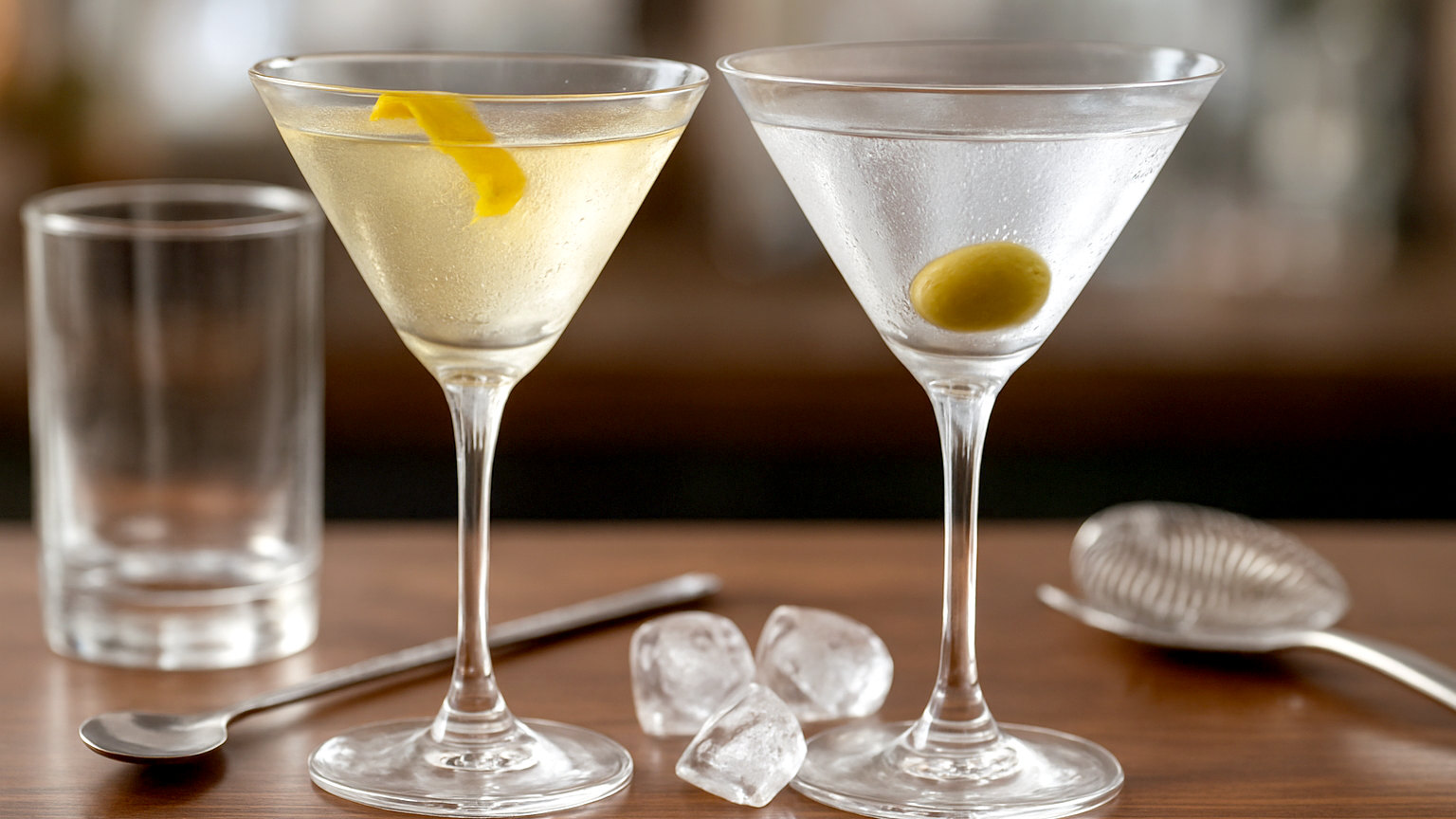
The comparison takes one evening. Make a gin martini and a vodka martini at the same ratio, in the same glasses, and taste them alongside each other in small measures.
The differences are larger than most people expect, and the vodka version in particular tends to reveal how much work the vermouth is doing, since there is nothing else contributing flavour.