Ordering a martini comes with a vocabulary that sounds like performance and is actually a compact way of specifying four or five variables. Each term changes one thing.
Dry and wet
These refer to the quantity of vermouth and nothing else.
A dry martini has less vermouth. A wet martini has more. The words describe the ratio rather than the taste in any general sense.
The confusion arises because dry vermouth is itself called dry, so a wet martini contains more dry vermouth. That is genuinely how it works and it catches people out constantly.
Extra dry means barely any vermouth. A fifty-fifty is equal parts, which is a wet martini by modern standards and was standard historically.
In and out, and naked
Both describe extremely dry preparations.
In and out means the vermouth is poured into the glass, swirled to coat it, and tipped away before the gin is added. It is the same technique as an absinthe rinse.
Naked, or a dry gin martini, means no vermouth at all: chilled gin with a garnish.
Both are legitimate orders and neither is really a cocktail, which is worth being honest about rather than pretending otherwise.
Perfect
The one that most often misleads. A perfect martini uses equal quantities of dry and sweet vermouth in place of dry alone.
The word refers to the split rather than to quality, and it produces a rounder, slightly sweeter, more herbal drink.
The same term applies to a perfect manhattan, where it means the same thing.
Dirty
Olive brine added to the drink, typically 10 to 15 millilitres, along with an olive garnish.
The result is savoury, saline and cloudy, and it divides opinion sharply. Filthy means more brine still.
Two practical points. Brine from a jar of good olives is far better than the thin salty liquid from cheap ones, and some bars now make their own.
And the salt content is worth knowing about for anyone advised to limit sodium, since a dirty martini contains a meaningful amount.
Twist, olive and Gibson
The garnish is part of the order and changes the drink genuinely.
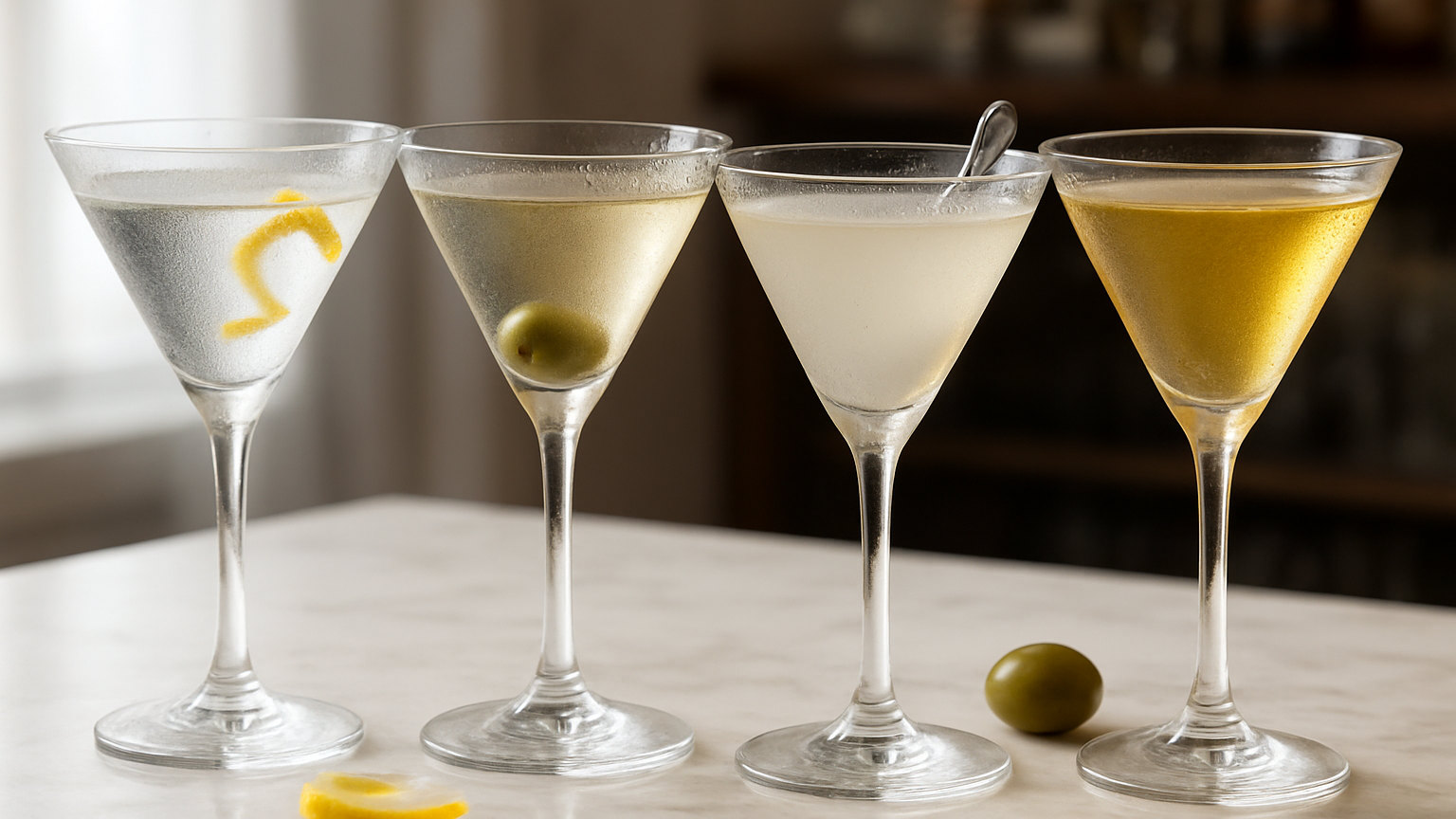
A twist means lemon peel expressed over the surface, contributing citrus oil that lifts the botanicals and brightens the whole drink.
An olive contributes salt and a savoury note even without brine, since it sits in the glass.
A Gibson is garnished with a pickled cocktail onion, which gives a distinct vinegary sharpness and is a genuinely different drink rather than a novelty.
Up, on the rocks and with a twist of everything
Up means served in a stemmed glass with no ice, which is the default.
On the rocks means over ice in a tumbler, which keeps it cold for longer and dilutes progressively. Unfashionable and entirely reasonable if you drink slowly.
Vodka or gin should be specified. The default assumption in most bars is gin unless you say otherwise, though this varies.
Putting an order together
The full form runs base, ratio, garnish. A gin martini, slightly wet, with a twist. Or a vodka martini, dirty, with olives.
None of this is compulsory. Asking for a martini and answering the bartender's questions works perfectly well, and any decent bar will ask.
Knowing the vocabulary simply means you can specify what you actually want rather than accepting a house default that may be considerably drier or wetter than you like.
Terms that mean nothing
Worth flagging so they can be ignored. The various instructions about waving the vermouth bottle at the glass, whispering the word vermouth over the gin, or pointing the bottle in the direction of Italy are jokes rather than techniques.
They describe a drink containing no vermouth at all, which is chilled gin. There is nothing wrong with chilled gin and it is worth being clear that it is what you are ordering.