Aromatic bitters are a useful ingredient in non-alcoholic drinks, contributing bitterness and aroma that are otherwise hard to achieve. They are also, in most cases, bottled at a strength comparable to a spirit, which raises a question worth answering directly rather than glossing over.
The arithmetic
Most traditional bitters sit somewhere between about thirty five and forty five per cent alcohol by volume.
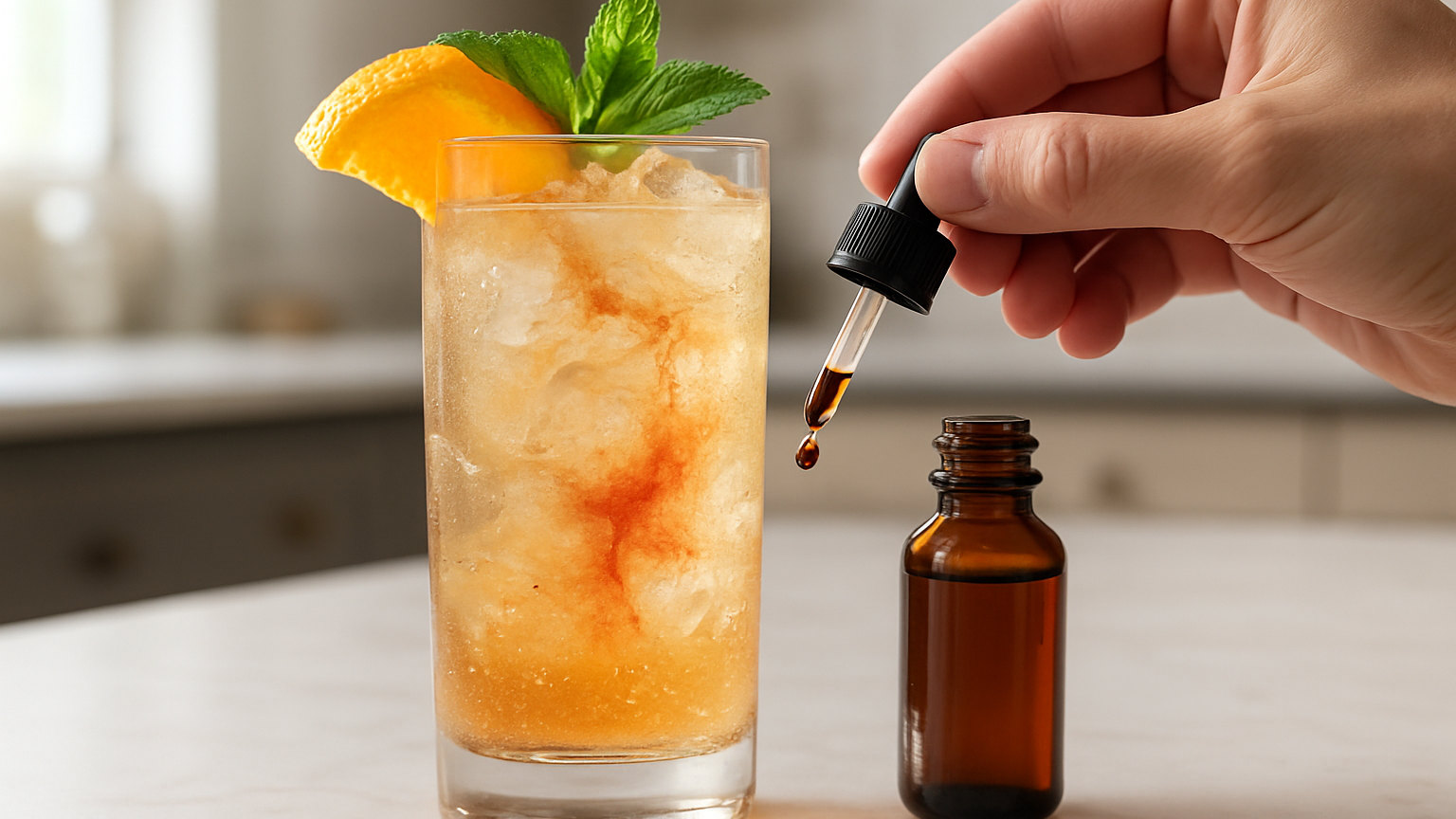
A dash from a standard bottle is roughly nought point eight of a millilitre. Two or three dashes therefore deliver somewhere in the region of two millilitres of liquid, of which under one millilitre is alcohol.
For comparison, a single measure of spirit contains around ten millilitres of pure alcohol. The bitters in a drink represent a tiny fraction of that, and the finished drink's overall strength remains a small fraction of one per cent.
Because of the quantities involved, bitters are often classified as a flavouring rather than a beverage in various jurisdictions.
Why the arithmetic is not the whole answer
This is the part that matters. Whether a negligible quantity of alcohol is acceptable depends entirely on why a person is avoiding it, and that is not a decision for whoever is making the drink.
Someone avoiding alcohol for religious reasons may regard any quantity as unacceptable regardless of the amount.
Someone in recovery may have been advised to avoid alcohol entirely, and for some people the taste or the knowledge matters as much as the quantity.
Someone taking a medication that interacts with alcohol should follow the advice they have been given rather than an estimate made by a bartender.
Someone who is pregnant may reasonably prefer to avoid it, given that current United Kingdom advice is that the safest approach is not to drink alcohol at all.
In every one of those cases the right response is the same: say what is in the drink and let the person decide.
The practical rule
Disclose, always, and without making it a conversation. Mentioning that a drink contains a couple of dashes of bitters, and that bitters are alcohol-based, takes three seconds and lets someone say no without having to ask.
Do not assume that a small quantity is fine. Do not ask why someone is not drinking. And do not add bitters to a drink for someone who has asked for something alcohol-free without telling them.
A good bar will do this as a matter of course, and it is worth asking if they do not.
Alcohol-free bitters
Products using glycerine or other bases instead of alcohol are widely available and solve the problem entirely.
They behave slightly differently, since alcohol is a better solvent for the aromatic compounds involved, so the flavour extraction and the way they disperse in a drink are not identical. The better ones are perfectly good.
Keeping a bottle alongside the traditional kind means you can make the same drink either way, which is the sensible arrangement for anyone who entertains.
Other ingredients with the same issue
Bitters are not the only place trace alcohol appears, and several catch people out.
Vanilla extract is typically alcohol-based. Many flavourings and food colourings are. Kombucha contains alcohol from fermentation, sometimes above the threshold for an alcohol-free label. Some fruit juices develop trace alcohol naturally.
De-alcoholised beers and wines labelled alcohol-free in Britain may still contain a small amount, depending on how they are described.
None of this is cause for alarm in ordinary circumstances. It is worth knowing so that anyone who needs to avoid alcohol completely can ask the right questions, and so that whoever is pouring can answer them honestly.
Making the substitution work
Alcohol-free bitters are not a straight swap in every recipe, since alcohol-based ones disperse more readily and carry aroma differently.
The practical adjustment is to use slightly more of the alcohol-free version and to add it late, so it sits nearer the surface where it will be smelled.
Where a recipe uses bitters as a garnish, dropped onto a foam, the alcohol-free version works particularly well, since the aroma reaches the nose directly rather than having to travel through the drink.