Making individual non-alcoholic drinks to order at a party does not work. They take as long as cocktails, they get made last, and the person waiting for one ends up with a glass of orange juice.
The solution is the same as for cocktails: make one good thing in quantity, in advance.
What batches well
Anything without carbonation, dairy or a foam.
Tea-based drinks are ideal. A strong brewed tea with citrus, syrup and aromatics can be made the day before and improves as it sits.
Shrub-based drinks batch perfectly, since vinegar is a preservative.
Infused syrups combined with juice and acid keep for a day or two refrigerated.
What does not batch is anything sparkling, which must be added at the moment of serving, and anything with fresh citrus intended to be at its brightest, which begins fading within a few hours.
The jug approach
Make the flavour base in advance and add the long element as you serve.
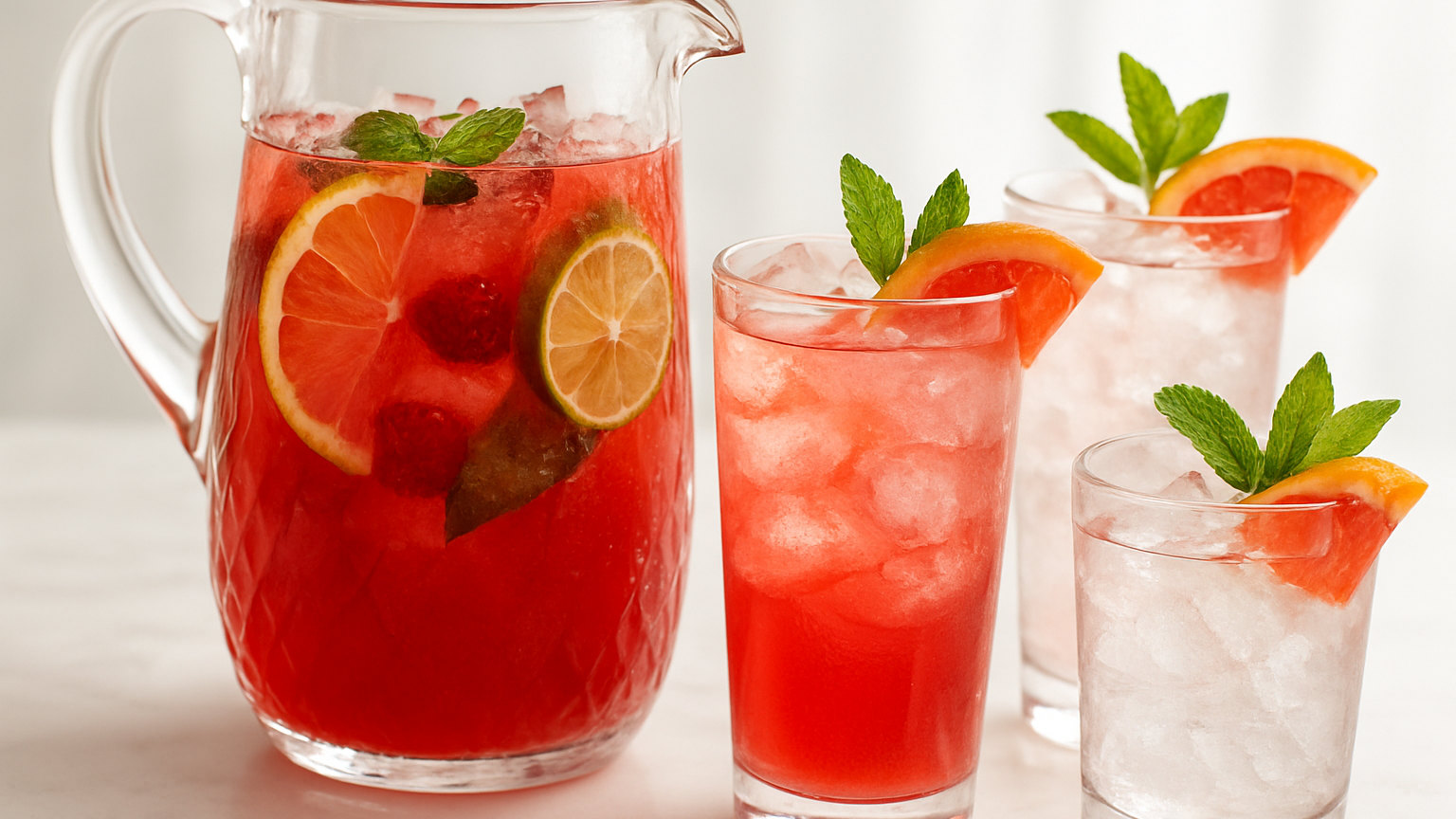
A workable structure is a concentrate of tea or infusion, citrus or shrub for acid, and syrup for sweetness, mixed and refrigerated. At the party, fill a jug with ice, add the concentrate, top with soda or tonic and stir once.
Refresh the jug rather than making one enormous batch that sits going flat and diluting.
Set out garnish separately so each glass gets a fresh one, since that is where the aroma comes from.
Quantities
Plan on similar numbers to alcoholic drinks: two to three per person in the first hour and one to two per hour after.
People who are not drinking alcohol frequently drink more glasses rather than fewer, since they are not pacing themselves, so do not under-cater.
Make more than the arithmetic suggests. A batch that runs out means the person who was not drinking is back to tap water.
Ice and glassware
Ice is the constraint at any party, and non-alcoholic drinks need as much as anything else. Plan on roughly a kilogram per person for a sustained evening, more in warm weather.
Use the same glassware as everyone else. A drink served in a proper glass with ice and a garnish reads as a drink; the same liquid in a plastic cup does not.
Chill everything beforehand, since a warm mix over ice dilutes fast and a diluted non-alcoholic drink has very little left.
Offer more than one thing
Two options make a considerable difference. One sweeter and fruitier, one dry and bitter, covers most preferences.
The dry option is the one usually missing. A bitter soda over ice with a citrus twist, or good sparkling water with a shrub, gives people something that is not sugary, which matters over a long evening.
Keep both alongside the alcoholic drinks rather than in a separate area, and offer them in the same breath.
Practical details
Label the jugs, particularly if some contain alcohol and some do not. A jug of punch that looks identical to a non-alcoholic one is a genuine problem, and mixing them up matters for anyone who cannot drink.
Say what is in them if asked, and be specific about cocktail bitters, kombucha or de-alcoholised products, all of which contain small amounts of alcohol.
Keep plain water available and visible throughout.
And make the non-alcoholic option the one you would be happy to drink yourself, which is the simplest test of whether you have taken it seriously.
A batch worth making
One reliable formula for a group: brew a litre of strong black tea, cool it, and combine with 200 millilitres of lemon juice, 200 millilitres of honey syrup and a handful of bruised mint.
Refrigerate overnight, then serve over ice topped with an equal quantity of soda water and a fresh mint sprig in each glass.
It costs very little, it improves as it sits, it is neither sweet nor austere, and it serves around fifteen. Adjusting the lemon and honey to taste before the party is the only work required.