Syrups are where non-alcoholic drinks are won or lost. A good one supplies sweetness, body, aroma and character at once, and making your own costs a fraction of buying anything comparable.
The basic syrup
Simple syrup is equal weights of sugar and water, stirred until dissolved. Warm water speeds it up and no heating is required.
Rich syrup is two parts sugar to one of water, which is thicker, sweeter and adds noticeably more body. A smaller measure achieves the same sweetness with less dilution, which is useful in drinks that are already long.
Demerara syrup, made the same way with unrefined sugar, brings molasses depth and suits spiced and darker drinks.
Honey syrup is honey thinned with warm water, usually three parts honey to one of water, which makes it pourable and measurable.
Infused syrups
The productive category. Add the flavouring to warm syrup, leave to infuse, then strain.
Ginger, sliced thinly, needs about thirty minutes and produces one of the most useful syrups there is. Combined with honey it makes the base for a great many drinks.
Spices such as cinnamon, cardamom, star anise and clove need thirty minutes to an hour and should be tasted, since they intensify quickly.
Herbs need considerably less. Rosemary and thyme take fifteen to twenty minutes; delicate herbs like mint and basil take five to ten and turn grassy beyond that.
Vanilla needs a longer infusion, and a split pod left in warm syrup for a few hours works well.
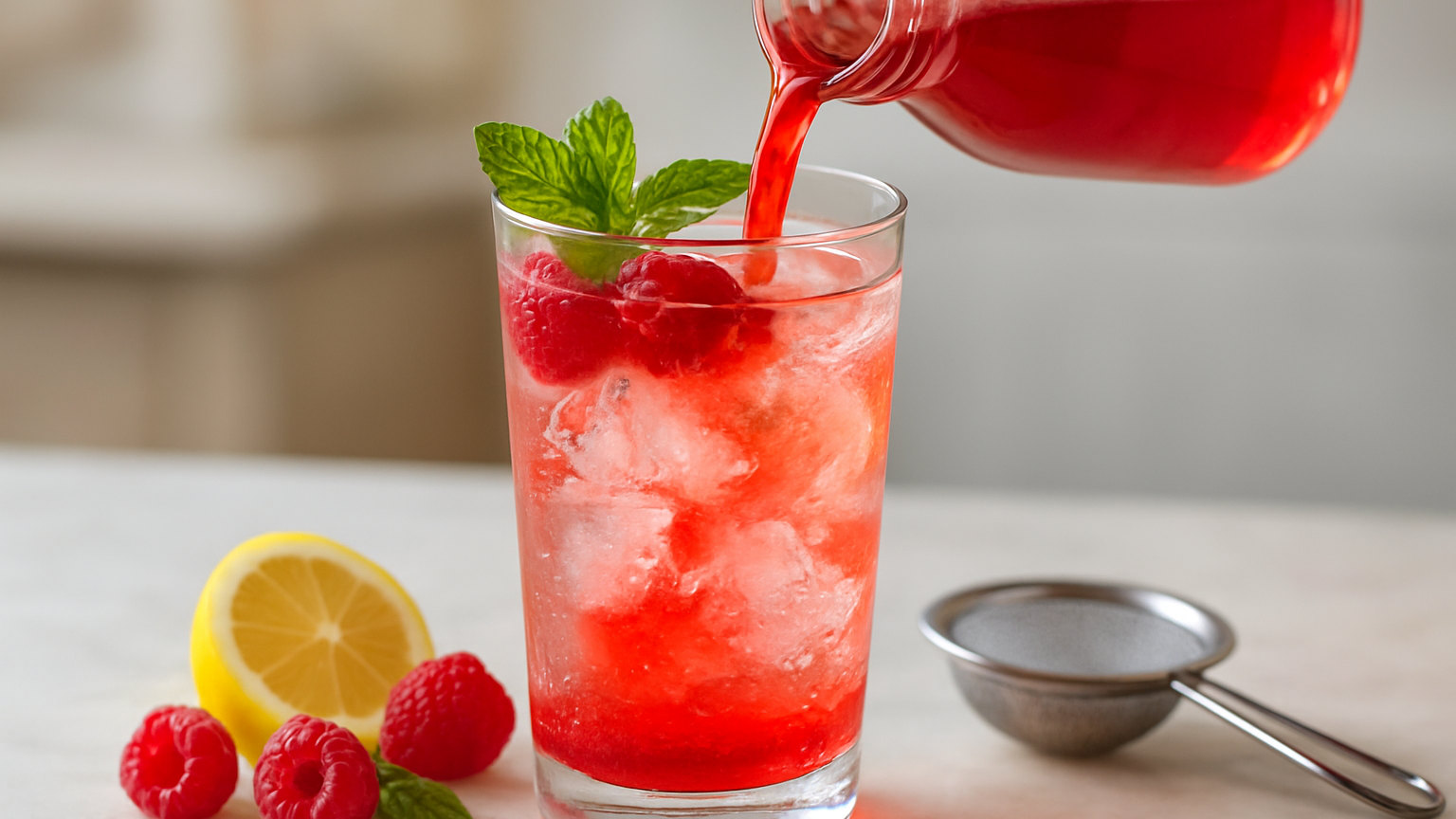
Hibiscus, dried, gives colour and a sharp cranberry-like acidity, which is unusually useful since it supplies sourness as well as sweetness.
Oleo saccharum
The technique worth learning. Combine strips of citrus peel, with as little pith as possible, with an equal weight of sugar. Stir, cover and leave for four to twelve hours.
The sugar draws the aromatic oil out of the peel, producing an intensely fragrant syrup. Strain out the peels, and add a little water if it is too thick.
It captures citrus aroma more completely than juice does, and it uses the part of the fruit that would otherwise be thrown away. In a non-alcoholic drink, where aroma is the scarcest resource, it is particularly valuable.
Acid-adjusted cordials
The modern bar approach to citrus. Combining fruit juice or peel infusion with citric and malic acid produces a cordial with the acidity of fresh citrus and a much longer life.
The acids are inexpensive and widely available. A common approach is around six grams of citric acid and two of malic per hundred millilitres of liquid, adjusted to taste.
It is not identical to fresh citrus and it is considerably better than bottled juice, and it keeps for weeks rather than hours.
Storage and safety
Sugar is a preservative and syrups are reasonably stable, and they are not indefinitely so.
Refrigerate everything. A simple syrup keeps for around a month, a rich syrup rather longer since the higher sugar concentration inhibits growth more effectively.
Syrups containing fresh fruit, herbs or dairy are more perishable and should be used within a week or two.
Use clean bottles, rinsed with boiling water and dried, and always strain the solids out rather than leaving them in.
Label with the contents and the date. Discard anything cloudy, fizzing or smelling of fermentation, since a syrup that has started fermenting is producing alcohol as well as spoiling.
What to make first
Honey-ginger syrup, an oleo saccharum from whatever citrus you have, and a spiced syrup for autumn. Between them they cover most of what a non-alcoholic drink needs, and all three take under half an hour of actual work.
Scaling and freezing
Syrups are worth making in quantity, since the effort is the same for a small jar or a large one.
Freezing solves the shelf life problem entirely. Syrup frozen in an ice cube tray and transferred to a bag gives measured portions that keep for months, and a cube dropped into a glass thaws within a minute.
This is particularly useful for seasonal ingredients. A batch of rhubarb or elderflower syrup made in spring and frozen will still be good in November, when nothing comparable is available fresh.