The most common criticism of non-alcoholic drinks is that they are sweet and one-dimensional, and the criticism is usually fair. The causes are specific and each has a straightforward fix.
Too much sugar
The commonest fault by a wide margin. Fruit juices are sweet, syrups are sweet, and a drink built from both with nothing pushing back becomes tiring within a few sips.
Sweetness is also immediately appealing, which is why commercial products lean on it, and it is the quality that palls fastest.
The fix is more acid and more bitterness, not less sugar in isolation. A drink with plenty of both can carry a good deal of sweetness and still taste balanced.
No bitterness at all
Bitterness gives a drink structure and length, and it is what separates a tonic water from a lemonade.
Almost every cocktail contains some, whether from a spirit, a bitter liqueur, citrus peel or a dash of bitters. Almost no home-made non-alcoholic drink contains any.
Strong brewed tea, chicory, grapefruit, bitter sodas and non-alcoholic aperitifs all supply it. Adding one changes a drink more than any other single adjustment.
Nothing providing body
Alcohol contributes viscosity, and a drink without it can feel thin and watery even when the flavour is right.
The remedies are a slightly richer syrup, a small quantity of purée, a foam from aquafaba, a splash of something with tannin, or a base with natural weight such as a nut milk or a reduced juice.
Ice matters too. A drink over a few small cubes dilutes rapidly and ends up watery, while a glass packed with ice stays cold and dilutes slowly.
The aroma problem
This is the structural one and it cannot be fully solved.
Ethanol is a solvent for a great many aromatic compounds that dissolve poorly in water, and it also evaporates readily, carrying those compounds to the nose. A water-based drink simply cannot deliver aroma the same way.
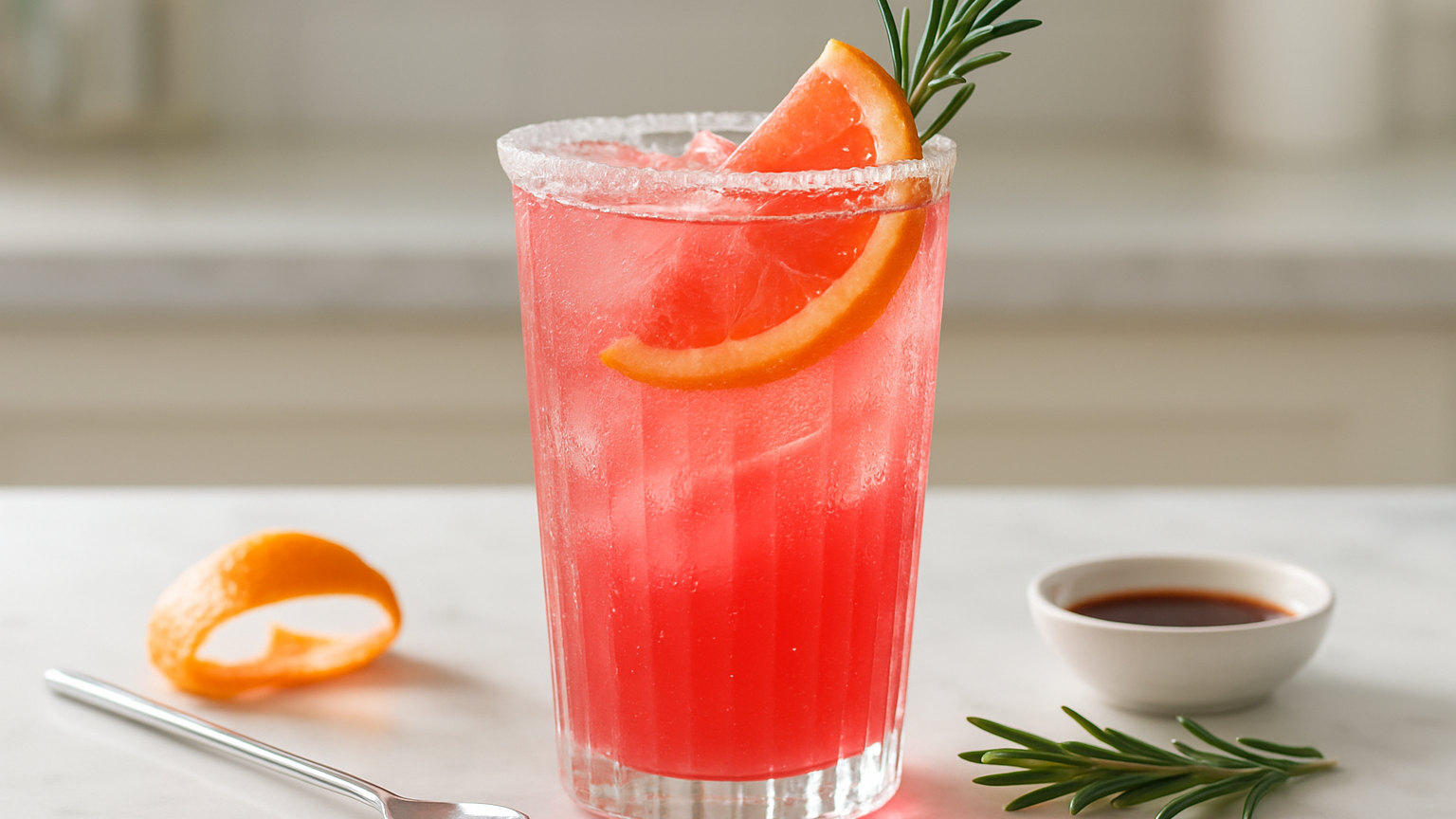
The workarounds are to use aromatics that work in water, and to put them where they will be smelled. Fresh herbs in the glass, expressed citrus peel on the surface, a spice-infused syrup and a generous garnish all deliver aroma directly rather than through the liquid.
This is why a mint sprig or a citrus twist matters more in a non-alcoholic drink than in a cocktail.
Warmth and length
Alcohol provides a warming sensation and a finish that lingers, and there is no direct substitute.
Partial approaches include ginger, which provides genuine heat, chilli in small quantities, black pepper, and the astringency of strong tea, which produces a drying finish that reads as length.
Salt in a tiny quantity is worth knowing about. A pinch amplifies other flavours and suppresses bitterness, which can rescue a drink that tastes hollow.
Fixing a flat drink
Taste it and work through in order. If it tastes sweet, add acid. If it tastes sharp but empty, add bitterness. If it tastes correct but thin, add body or reduce the dilution. If it smells of nothing, add a garnish that does.
Most disappointing non-alcoholic drinks need two of those four, and the whole diagnosis takes about a minute.
The general principle is that every ingredient must earn its place, since there is no alcohol filling in the gaps. That is a stricter discipline than making a cocktail, which is why the good ones are genuinely impressive.
Temperature and dilution
One further cause is worth naming, since it accounts for a good many disappointing drinks. A non-alcoholic drink that has warmed up tastes considerably sweeter and flatter than the same drink cold.
Chill every component beforehand rather than relying on ice to do the work, fill the glass properly, and serve promptly. A drink that was balanced when made and dull ten minutes later has usually been undone by temperature rather than by the recipe.
Tasting as you build
The habit that fixes most of this is simply tasting the drink before serving it, which people do routinely with cocktails and rarely with anything non-alcoholic.
Make it, taste it with a straw or a spoon, and adjust. Almost every flat drink can be rescued at that point with a squeeze more citrus or a dash of something bitter, and almost none can be rescued once it is in front of a guest.