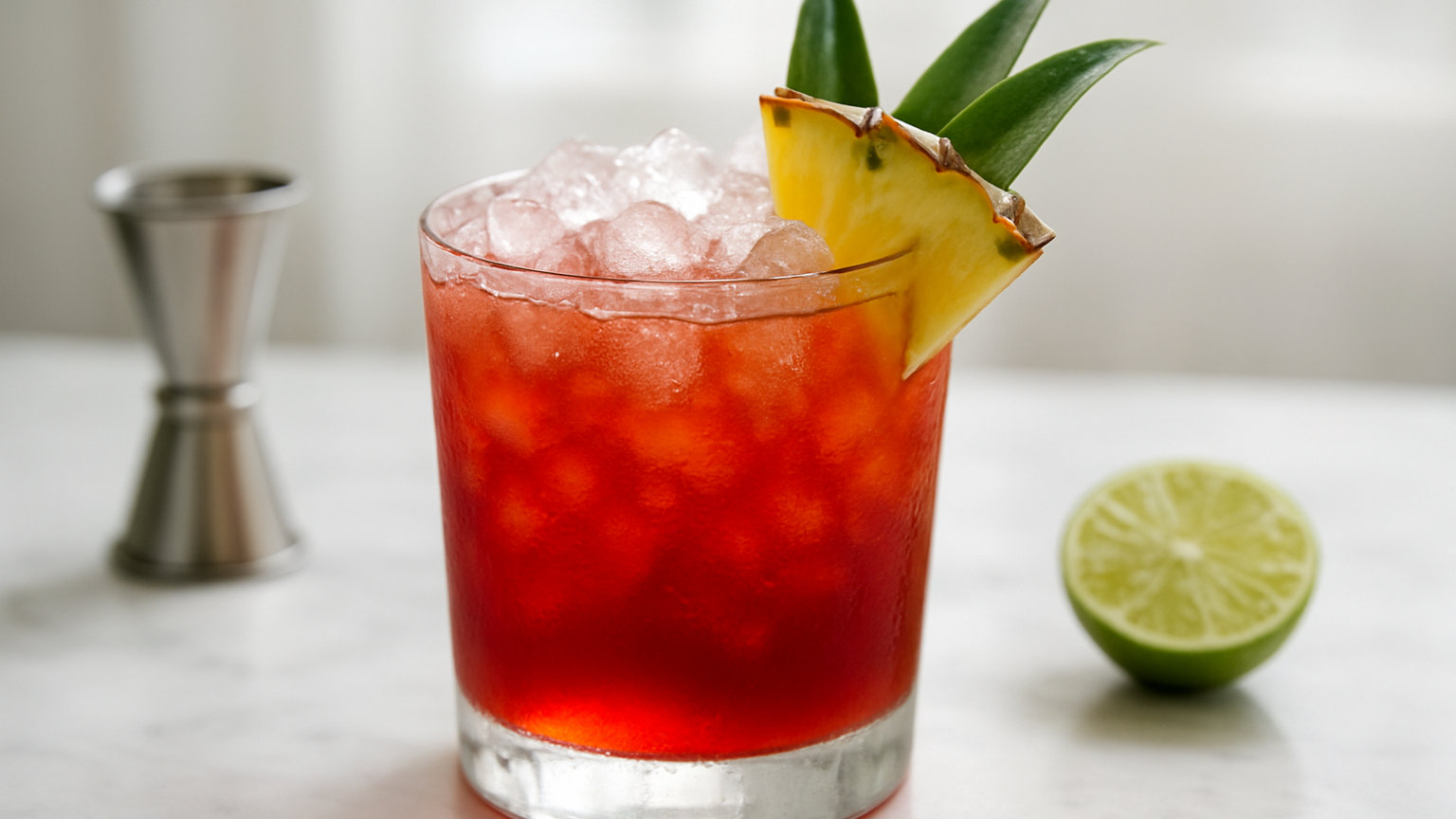
The jungle bird is dark rum, bitter red aperitivo, pineapple juice, lime and sugar. It was created at a hotel in Kuala Lumpur in the 1970s, appeared in a book, was ignored for thirty years and is now one of the most widely made tiki drinks in serious bars.
The recipe
Combine 45 millilitres of dark rum with 22 millilitres of red bitter aperitivo, 45 millilitres of pineapple juice, 15 millilitres of fresh lime juice and 15 millilitres of sugar syrup.
Shake hard with ice and strain over fresh ice, preferably crushed, in a rocks glass or a tiki mug.
Garnish with a pineapple wedge, or a leaf if you are feeling committed.
Why pineapple and bitterness work
The combination sounds unlikely and is the reason the drink is good.
Pineapple juice is sweet, acidic and full of tropical fruit character, and on its own it makes drinks cloying. Bitter aperitivo cuts directly through that sweetness while its orange character sits comfortably alongside the fruit.
The bitterness also gives the drink a dry finish, which is what distinguishes it from the sugary rum and pineapple drinks it superficially resembles.
Pineapple juice has another property worth knowing: it foams when shaken, producing a light head that gives the drink texture without any egg.
The rum
The original called for a dark Jamaican rum, and the choice matters considerably.
A blackstrap rum, very dark and heavy with molasses, gives the deepest and most distinctive version. A dark Jamaican rum with pot still character gives funk and fruit that echoes the pineapple.
A light or lightly aged rum produces a thinner drink that lacks the weight to stand against the aperitivo, and it is worth avoiding.
Splitting the base between an aged rum for body and a small measure of high-ester Jamaican rum for aroma is the approach many bars take.
The rediscovery
The drink appeared in a 1989 book and sat there. Its revival is generally credited to bartenders who worked through old tiki literature in the 2000s and recognised that a bitter tiki drink was an unusual and useful thing.
That pattern is common. A considerable proportion of the modern repertoire consists of drinks that existed, were recorded and were simply not made for decades, which is why old books are worth reading rather than only new ones.
The tiki correction
The jungle bird is a useful argument against the assumption that tiki drinks are sweet.
Most classic tiki cocktails are structurally conventional: a spirit, citrus, a syrup and sometimes a bitter or aromatic modifier, balanced carefully and frequently using several rums.
The elaborate presentation is theatre layered over sound construction, and the good ones are dry and strong. The sugary versions most people have encountered are cost-cut descendants rather than the originals.
Making it well
Fresh pineapple juice is noticeably better than the carton kind, which is frequently from concentrate and tastes cooked. If you have a juicer, use it; if not, choose a chilled fresh juice rather than a long-life one.
Shake hard, since the foam is part of what makes the drink work.
Adjust the syrup to the juice, since pineapple varies enormously in sweetness. Taste before serving and reduce the sugar if the juice is already sweet.
And serve it over crushed ice if you can, which keeps it cold and lengthens it as you drink, which is how tiki drinks are meant to behave.
Variations
The structure tolerates substitution well. Swapping the bitter aperitivo for a darker amaro produces something heavier and more herbal.
Replacing the pineapple with passionfruit gives a sharper drink that needs slightly more syrup, and a version with grapefruit juice is drier and works well in warm weather.
Splitting the rum between an aged one and a small measure of overproof produces a stronger version, which is worth measuring carefully rather than estimating.
Where it fits on a menu
The jungle bird is unusually useful as a bridge drink. Someone who finds negronis too bitter and daiquiris too plain will frequently take to it, since the pineapple softens the aperitivo without hiding it.
It also works as an introduction to bitter drinks generally, and a good many people who arrived at negronis and americanos did so by way of this one.