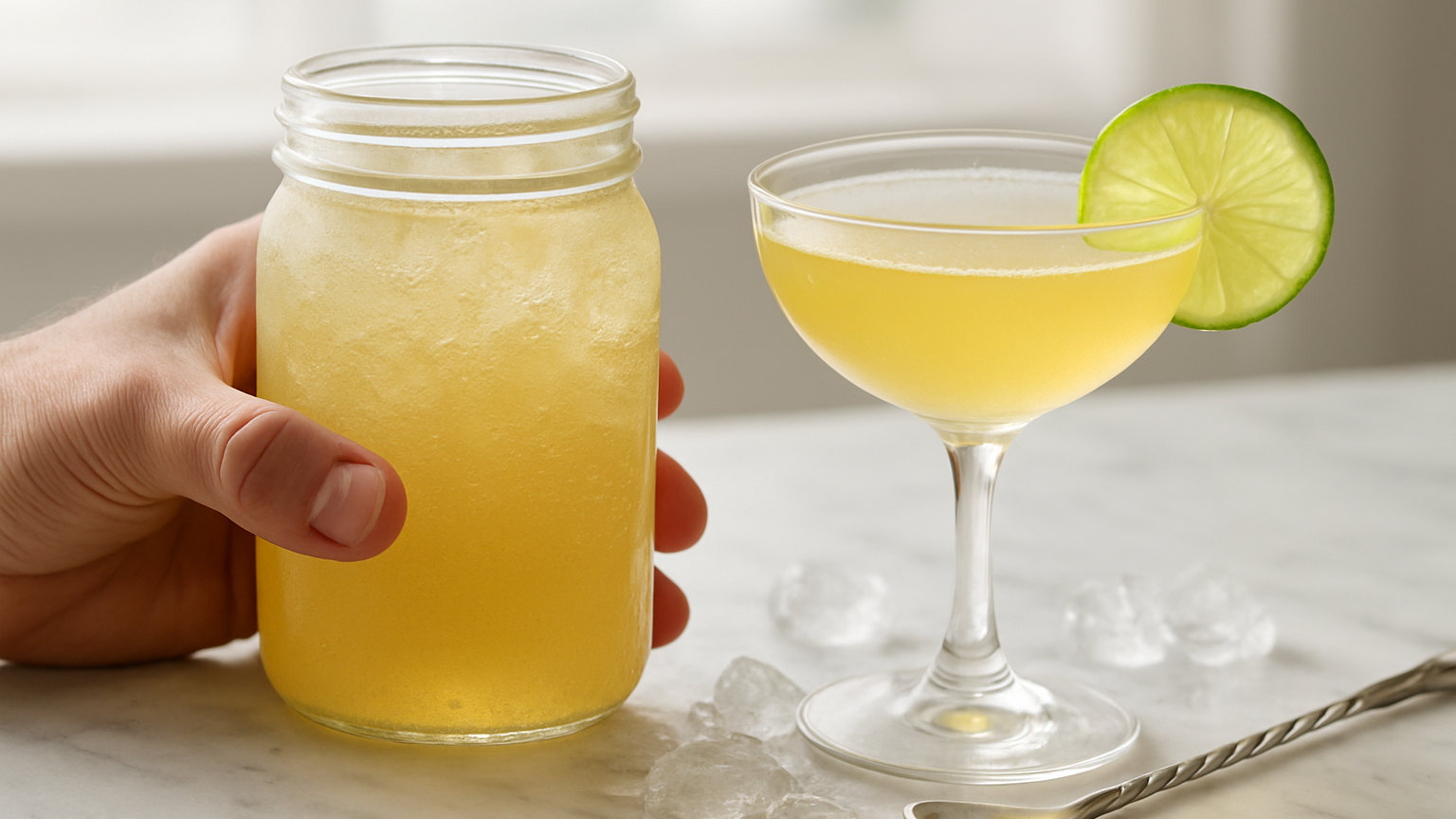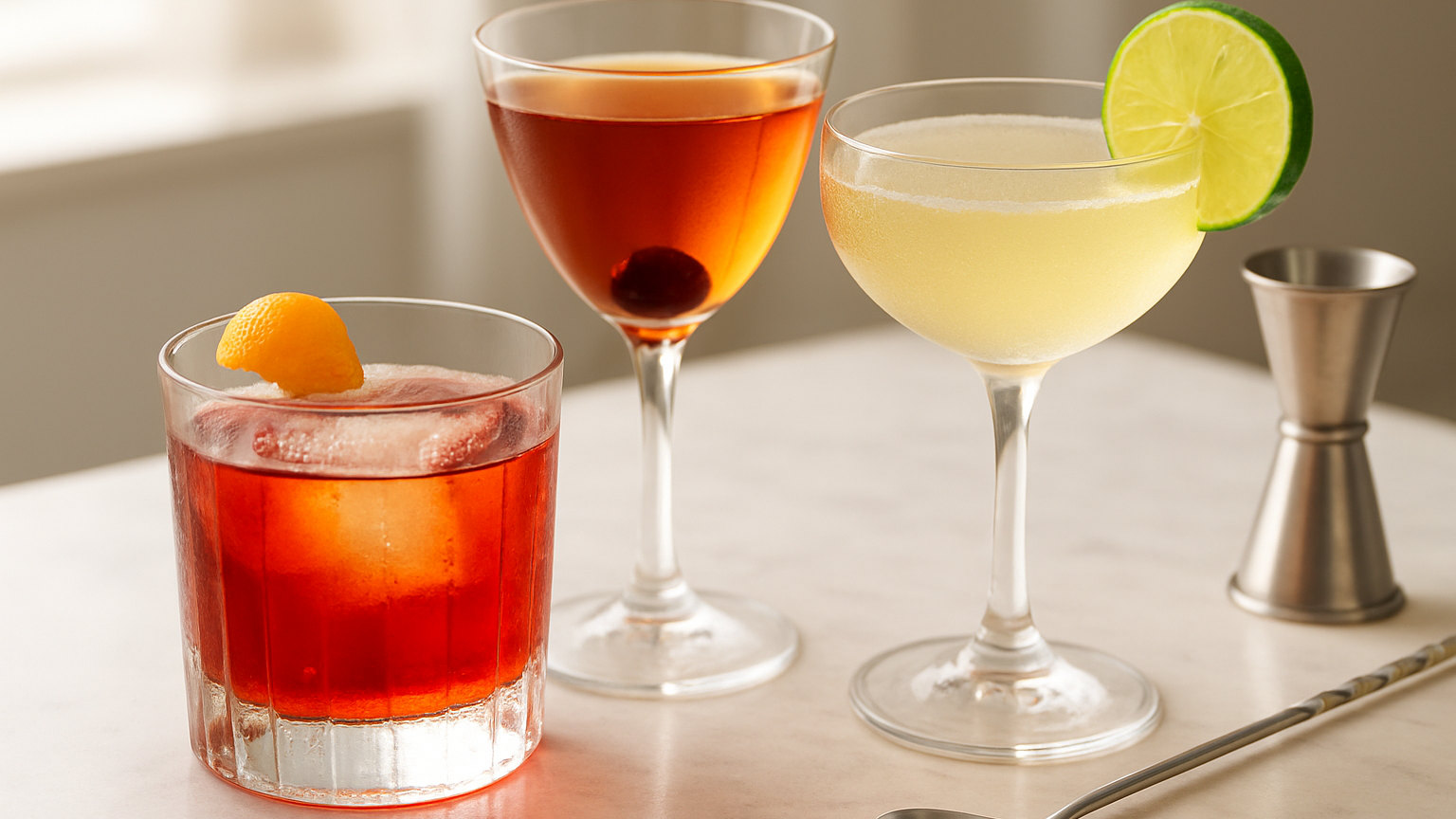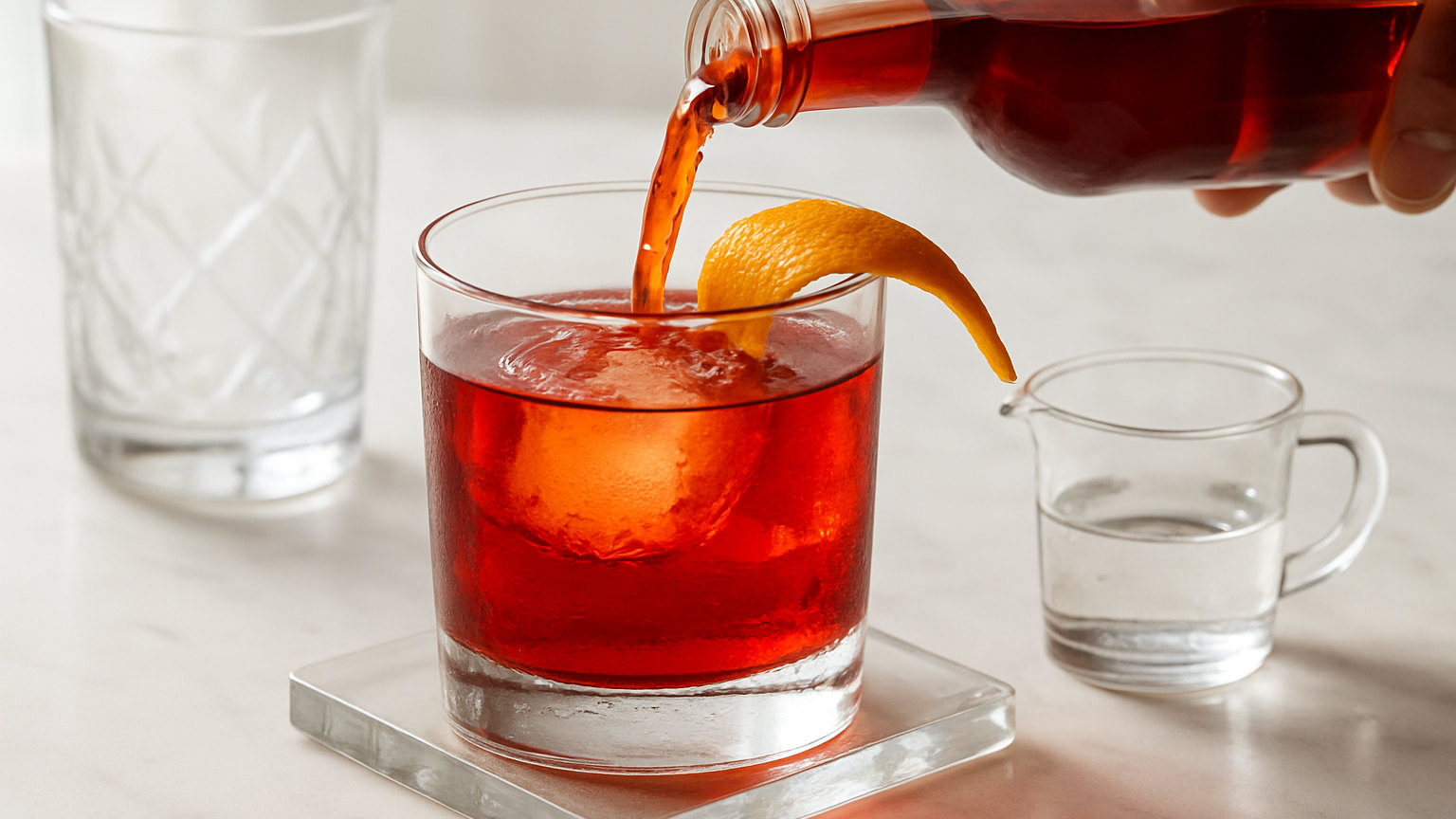
Batching means making a cocktail in advance in quantity, so serving is a matter of pouring. It is how bars manage volume and the most useful thing a host can learn.
Water is an ingredient
The point that determines whether a batch works.
A cocktail made to order gains water from the ice during shaking or stirring, and that water softens the alcohol, opens the aromatics and brings the drink to its intended strength.
A batch poured over ice will dilute eventually and unevenly, and it will be harsh in the first mouthful.
So add it in advance. As a working rule, twenty to twenty five per cent of the total volume as water for a stirred drink, and twenty five to thirty per cent for a shaken one.
Measure the ingredients, calculate the percentage, add filtered water, then taste and adjust. Write the figure down, since it varies slightly by drink.
What batches well
Spirit-forward stirred drinks are ideal. Negronis, manhattans, boulevardiers and old fashioneds all batch perfectly and several improve over a day or two as the components marry.
Anything made entirely of spirits, fortified wines, liqueurs and bitters is a candidate, and anything without citrus or dairy keeps for weeks refrigerated.
A batched negroni or martini kept in the freezer is poured straight from the bottle at temperature with no further dilution, which is the easiest service there is.
What does not
Fresh citrus is the limiting factor. Lemon and lime juice deteriorate within hours and taste flat by the following day.
For sours, batch everything except the citrus and add the juice within a few hours of serving. That keeps almost all the advantage.
Egg white and aquafaba need a hard shake per serving to build foam.
Anything carbonated needs its sparkling element added at the moment of pouring.
Testing before scaling
Make one drink first, note the exact measures, then multiply.
Scaling an untested recipe to twenty servings is how people end up with two litres of something not quite right and no straightforward way to correct it.
Taste the batch cold rather than at room temperature. Chilling flattens sweetness, so a batch that seemed balanced warm frequently needs adjusting once refrigerated.
Storing it
Bottles that seal properly, filled close to the neck, since air in the bottle oxidises the contents.
Refrigerate anything containing vermouth. Freezer storage suits high-strength batches.
Keep it dark, as with any spirit.
Label with the contents, the date and the strength per serving. The last of those is genuinely useful when the drink comes out of a bottle rather than being built in front of people.
Serving from a batch
Pour a measured amount into a chilled glass rather than filling it, since a batch makes it very easy to lose track of how much anyone has had.
Add bitters and garnish to order, since expressed citrus oil fades within minutes and bitters sit on the surface rather than in the mixture.
For a shaken drink, giving each serving a brief shake with ice takes five seconds and recovers most of the texture.
How much to make
Two to three drinks per person in the first hour, one to two per hour after, and slightly more than the arithmetic suggests.
One well made batched drink served properly beats three made badly under pressure, so choose something that suits the occasion and make enough of it.
And have a good non-alcoholic option batched alongside, kept with everything else rather than in a corner.
Equipment
A large jug or a food-grade container for mixing, bottles that seal, a funnel and a measuring jug.
Nothing specialised is required, and a kitchen scale is useful for calculating the water percentage accurately, since weighing is quicker than measuring several litres by volume.
Swing-top bottles are worth buying if you batch regularly, since they seal reliably and can go straight onto a table.
A note on measuring
For large batches, weighing is faster and more accurate than measuring by volume, and most ingredients can be weighed straight into the container.
Keep a note of the final recipe by weight, since it makes the batch reproducible without any further arithmetic.