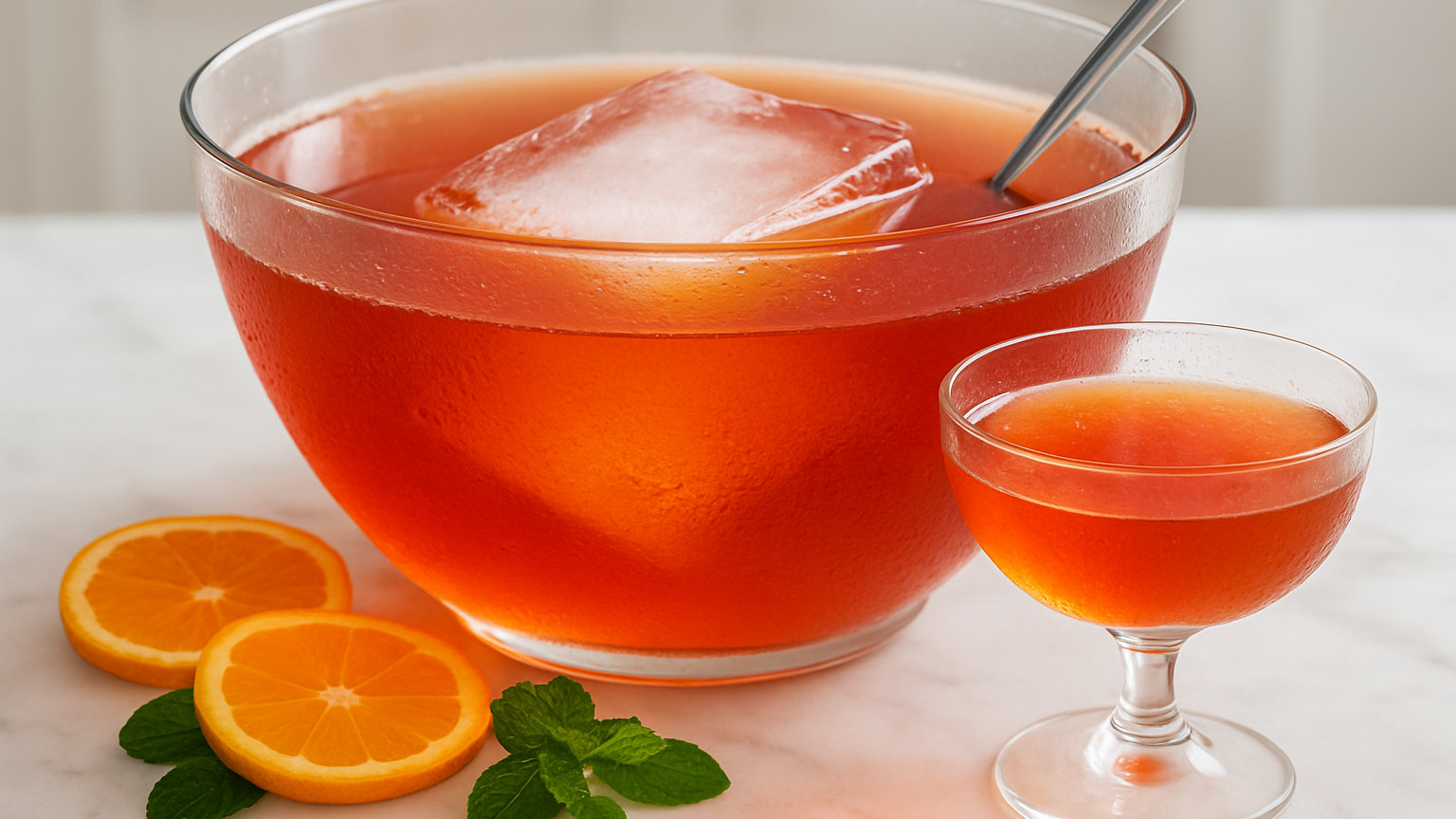
Punch sits out for hours, which makes temperature the central practical problem. A bowl of cubes will have melted into the drink within an hour, leaving something cold, thin and considerably weaker than intended.
Why a block works
Melting happens at the surface, so the relevant figure is the surface area relative to the volume of ice.
A kilogram of ice cubes has many times the surface area of a single kilogram block. The block therefore melts far more slowly while providing the same cooling, since the cooling comes from the ice absorbing heat as it melts.
The practical result is a punch that stays cold for an evening and dilutes only gradually, rather than one that is watery by nine o'clock.
Making one
Freeze water in any container that fits your bowl. A plastic food box, a cake tin, a loaf tin or a small mixing bowl all work.
A bundt tin produces a ring, which is the traditional shape and looks considerably better than a rectangle.
Allow at least twelve hours, and preferably twenty four for anything substantial.
To release it, dip the container briefly in warm water and it will slide out.
Making it look good
Since the block sits in the middle of the bowl, it is the most visible thing on the table.
Citrus wheels, berries, herb sprigs or edible flowers frozen into it look striking and cost nothing.
The trick is to freeze in layers. Fill the container a third full, add the decoration, freeze, then top up and freeze again. Adding everything at once means the decoration floats to the top and ends up on one face.
For clearer ice, boil the water and let it cool before freezing, which removes some dissolved air. Directional freezing, insulating the container so it freezes from the top down, gives a better result and takes longer.
Managing the dilution
Some dilution is intended. The traditional punch formula includes a weak element specifically because the drink needs water to be drinkable over an evening.
What you are avoiding is uncontrolled dilution, where the punch starts strong and ends watery.
The approach that works is to include most of the water in the recipe, so the ice is doing the cooling rather than the diluting.
Then top up the bowl during the evening from a reserve kept in the fridge, rather than letting the level fall and adding more ice.
Alternatives to a block
Chilling everything thoroughly before it goes in the bowl means the ice has far less work to do. This is the most underrated step.
Setting the bowl in a larger vessel of ice, so the cooling comes from outside, keeps the punch cold with no dilution at all. It is less attractive and entirely effective.
Freezing some of the punch itself into cubes means the ice dilutes with punch rather than water, though it changes the flavour as it melts.
Serving in smaller batches, keeping the remainder in the fridge and refilling the bowl, avoids the problem entirely and is what most experienced hosts do.
Hot punch
The opposite problem, and the answer is a slow cooker on a low setting.
Warm rather than boil. Somewhere around sixty to seventy degrees is right, and boiling drives off alcohol and the aromatics with it.
Add the citrus later than in a cold punch, since heat dulls it, and top up with warm water rather than letting it reduce.
The reserve approach
The method that solves everything is to keep most of the punch in the fridge and put out only what will be drunk in the next hour.
The bowl stays cold because it is refilled with cold punch rather than because it is full of melting ice, and the last serving of the evening is as good as the first.
It requires the host to top it up occasionally, which is a small price for a punch that does not deteriorate.