A punch bowl is a piece of equipment before it is a centrepiece. How it is set up determines whether the evening runs itself or whether you spend it refilling and answering questions.
The vessel
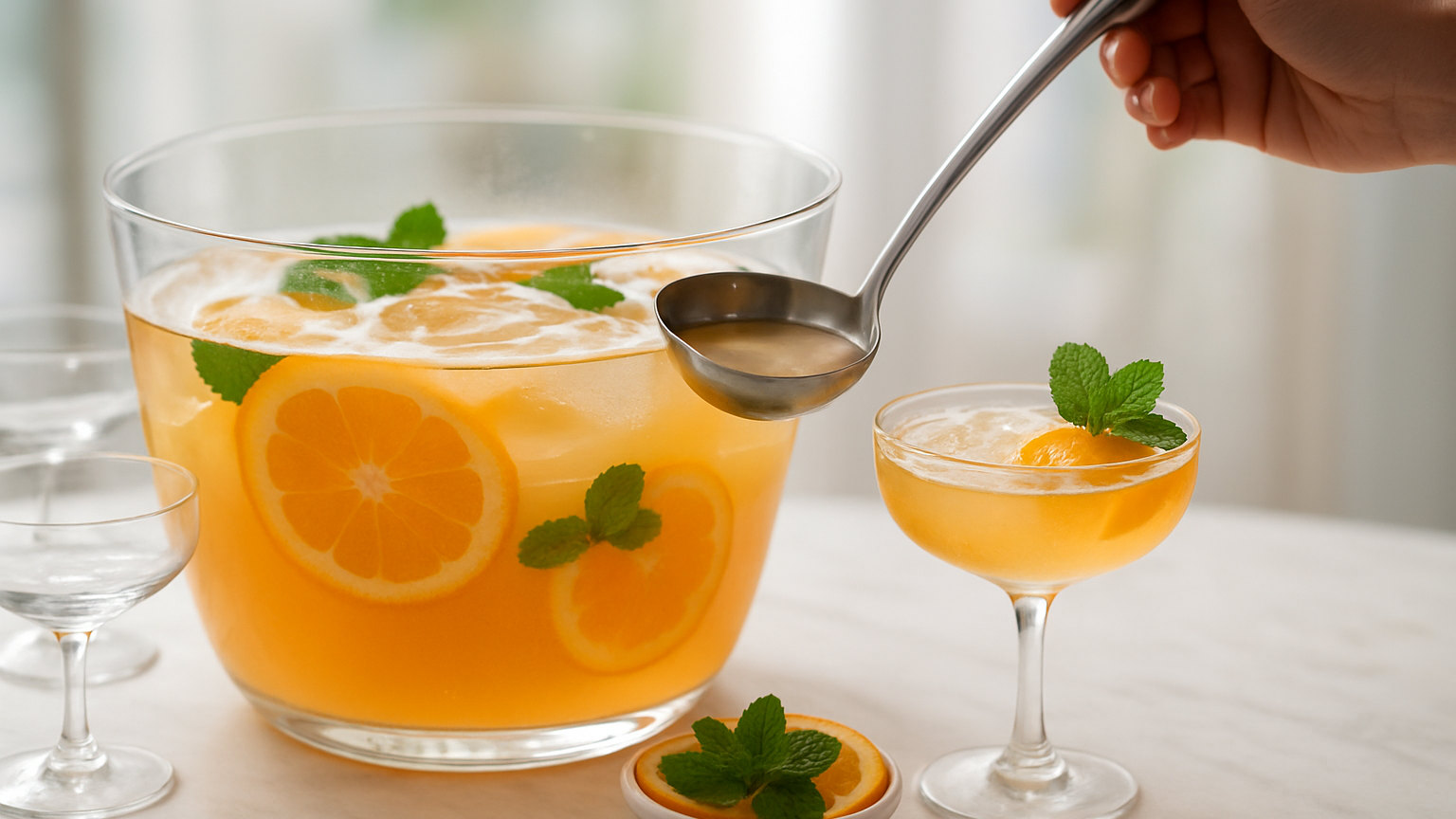
Anything that holds three or four litres and looks acceptable. A large mixing bowl, a stockpot, a drinks dispenser with a tap, or an actual punch bowl if you have one.
Glass is best, since people can see what they are drinking, which reduces questions and looks better.
A dispenser with a tap is the practical option for a large gathering, since it is easier to serve from and less prone to being knocked over. The drawback is that a large ice block will not fit through the opening.
The ladle and the cups
Use a ladle of a known volume, and know what it is. A ladle holding around 60 millilitres means two ladles is a serving, which gives you and everyone else a way to keep track.
Without one, people fill tumblers, and a tumbler of punch is three servings.
Small cups or glasses of around 150 to 200 millilitres are right. Anything larger encourages a larger pour.
Traditional punch cups are small for exactly this reason.
Setting it up
Put the bowl somewhere people can reach without crossing the room, which spreads the crowd and stops a queue forming.
Set out the cups, the ladle and a cloth next to it, since punch gets spilled.
Put a bin or a tray for used glasses nearby.
Keep a reserve of punch base in the fridge and top the bowl up during the evening rather than making one enormous batch that sits diluting.
Labelling
This matters more than it sounds. Write what is in it on a card next to the bowl: the spirits, any allergens, and roughly how strong it is.
Anyone avoiding a particular ingredient, avoiding alcohol, or driving needs that information without having to interrogate you across a room.
If you are serving a non-alcoholic version alongside, use a visibly different bowl and label both clearly. Two identical bowls of similar-looking liquid is a genuine problem, and someone getting the wrong one matters a great deal for a person who cannot drink.
Serving responsibly
Punch makes it unusually easy to lose track, since nobody counts ladles and the drink is diluted enough not to taste strong.
Say how strong it is when you put it out. A punch at twelve per cent means a 150 millilitre serving is around one and a half units, and people generally assume less.
Consider making it weaker than you might. A punch at eight to ten per cent suits a long evening better than one at fifteen, and the flavours carry it perfectly well.
Put out water and food alongside, visibly and from the start.
And keep an eye on the bowl rather than only on the guests. A bowl that empties fast is telling you something.
Through the evening
Top up from the fridge reserve rather than adding water and ice to a depleted bowl.
Replace the ice block if it has gone, or move to smaller batches served from the fridge.
Remove the bowl at the end rather than leaving it out, which is a small thing that prevents people continuing after everyone else has stopped.
Afterwards
Punch containing citrus keeps for a day or two refrigerated and is worth saving.
Punch that has had ice melting in it for four hours is diluted and generally not worth keeping, which is another argument for the block and the fridge reserve.
If you are not hosting
Bringing a punch to someone else's gathering is a genuinely good contribution, and it travels better than most drinks.
Bring the base in bottles and the ice block separately in a cool bag, and assemble on arrival. Bring the ladle and a card describing what is in it.
Ask the host first, since arriving with nine litres of anything is a commitment on their behalf as well as yours.
Clearing up
Rinse the bowl before anything dries, since sugar and citrus set hard.
A punch bowl that has held a spiced or fruited drink benefits from a proper wash rather than a rinse, or the next thing you put in it will taste of the last.