The most useful thing is one recipe you can make well and scale confidently. This one follows the traditional formula, teaches the technique and adapts easily.
The recipe
For around fifteen servings of 150 millilitres.
Peel six lemons and combine the peels with 300 grams of caster sugar. Muddle, cover and leave for at least four hours to make an oleo saccharum.
Juice the lemons, which should give around 300 millilitres.
Brew 500 millilitres of strong black tea and let it cool completely.
Combine the oleo saccharum with the lemon juice and stir until any remaining sugar dissolves. Strain out the peels.
Add 750 millilitres of aged rum, 250 millilitres of a funkier Jamaican rum, the cooled tea and 500 millilitres of water.
Add four dashes of aromatic bitters and a generous grating of nutmeg.
Refrigerate for at least four hours, and preferably overnight.
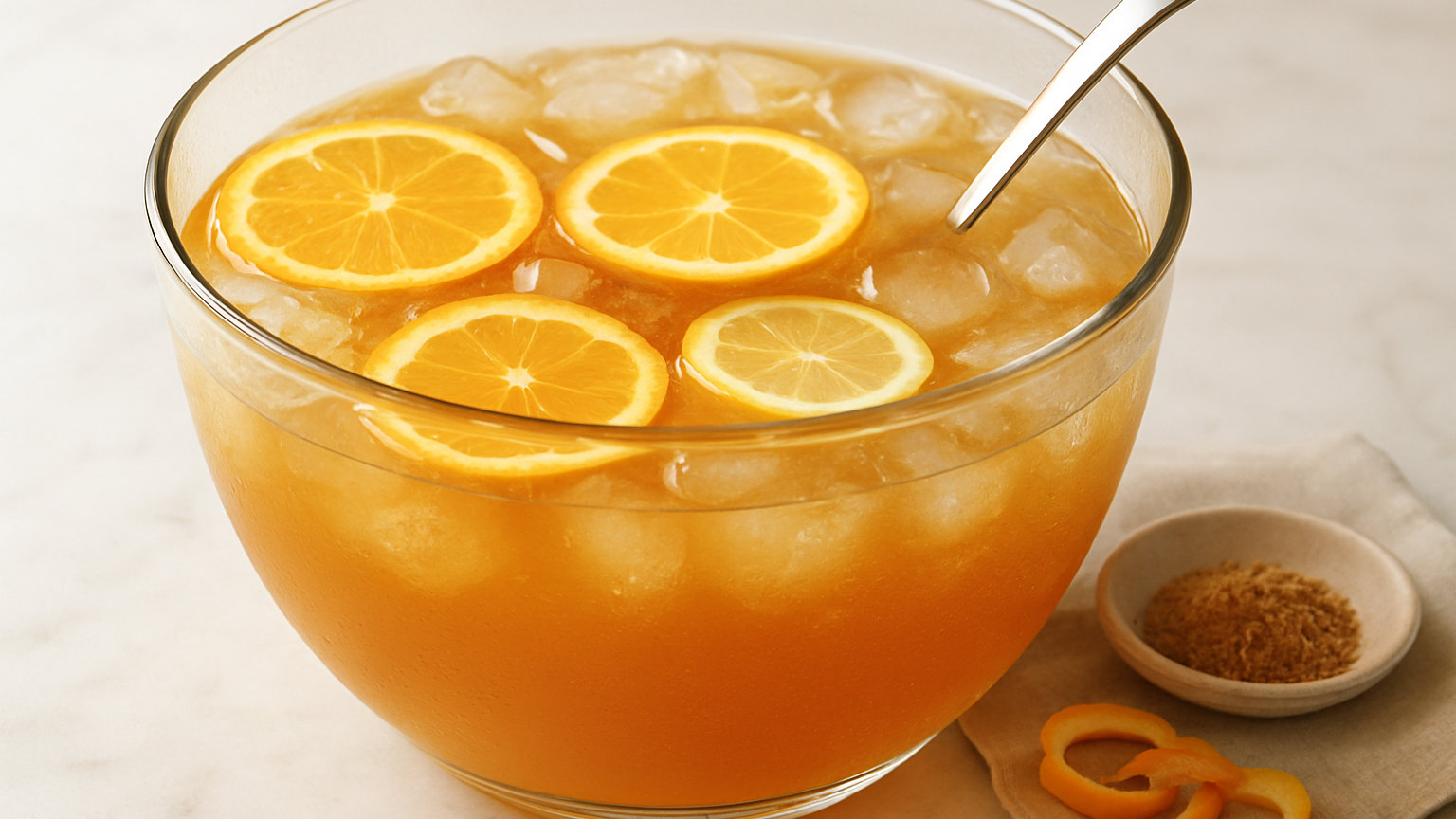
Serve over a large ice block, with lemon wheels and a further grating of nutmeg.
What each element is doing
The oleo saccharum supplies sweetness and the citrus aroma, which juice alone cannot provide.
The lemon juice supplies acidity.
The two rums supply the base, with the aged rum providing body and the Jamaican providing aroma and funk.
The tea supplies tannin and structure, which is what stops a punch tasting like sweetened juice. This is the element most often left out and the one that makes the largest difference.
The water is the dilution the drink needs to be drinkable over an evening.
The nutmeg is traditional and genuinely important, since the aroma sits above the bowl.
Adjusting it
Taste before serving and adjust. Lemons vary considerably, and the batch may need a little more sugar or a little more juice.
Do it cold rather than at room temperature, since chilling flattens sweetness.
The strength lands around thirteen to fourteen per cent, which means a 150 millilitre serving is close to two units. Increasing the water to 750 millilitres brings it down to around eleven per cent and makes it more suitable for a long evening.
Seasonal variations
For summer, replace half the rum with gin, use a lighter tea and add cucumber and mint.
For autumn, replace the rum with brandy and calvados, use a spiced tea, and add cinnamon and clove.
For winter, serve it warm in a slow cooker at around sixty to seventy degrees, using brandy and adding the citrus later.
For a lighter version, replace half the spirit with a fortified wine such as sherry or madeira.
For a sparkling version, hold back some of the water and add a bottle of dry sparkling wine at the moment of serving.
The non-alcoholic version
Worth making alongside, and it uses the same structure.
Make the oleo saccharum and juice as above, combine with a litre of strong cooled tea, 500 millilitres of water and a few dashes of alcohol-free bitters.
It is genuinely good rather than a consolation, since the tea, the citrus oil and the acidity are doing most of the work in the original anyway.
Making it ahead
The base keeps for two or three days refrigerated without ice.
Make the oleo saccharum the day before, assemble the base that evening, and do nothing on the day but add the ice block and the garnish.
The tea
Worth a note, since it is the ingredient most often left out and the one that gives a punch its structure.
Use a strong black tea, brewed for four or five minutes and cooled completely. Assam and Ceylon both work well.
Green tea is more delicate and turns bitter if over-brewed. Lapsang souchong adds smoke and suits whisky-based punches.
The tannin is what stops the drink tasting like sweetened juice, which is why period recipes call for it so consistently.
If you have no Jamaican rum
Use the full litre of aged rum instead. The punch will be rounder and less aromatic, and it will still be good.
A small measure of overproof rum, around fifty millilitres, adds some of the missing intensity if that is what you have.