Before the cocktail existed, there was punch. It arrived in Britain from the East in the seventeenth century, dominated social drinking for two hundred years, and then largely disappeared before being revived over the past two decades.
Where it came from
The word is generally traced to a Sanskrit or Hindi term meaning five, referring to the five components of the original drink, and it reached Britain with sailors and merchants trading in South Asia.
That etymology is widely repeated and not entirely settled, and an alternative derivation relates it to the puncheon, a large cask. Both explanations have been argued over for a long time.
What is clear is that punch was established in Britain by the mid seventeenth century, that it was made with arrack, brandy or rum, and that it became the dominant form of social drinking for generations.
The formula
The traditional rhyme sets out five parts: one of sour, two of sweet, three of strong, four of weak, and spice.
In practice that means one part citrus, two parts sugar or syrup, three parts spirit and four parts water or tea, with spices or aromatics.
Modern versions are generally less sweet, and reducing the sugar and increasing the citrus slightly produces something closer to contemporary taste.
The weak element is the one people skip and the one that matters most. Water or tea is not filler; it is the dilution that makes the drink drinkable over an evening, and a punch without it is a bowl of spirit.
Why it was communal
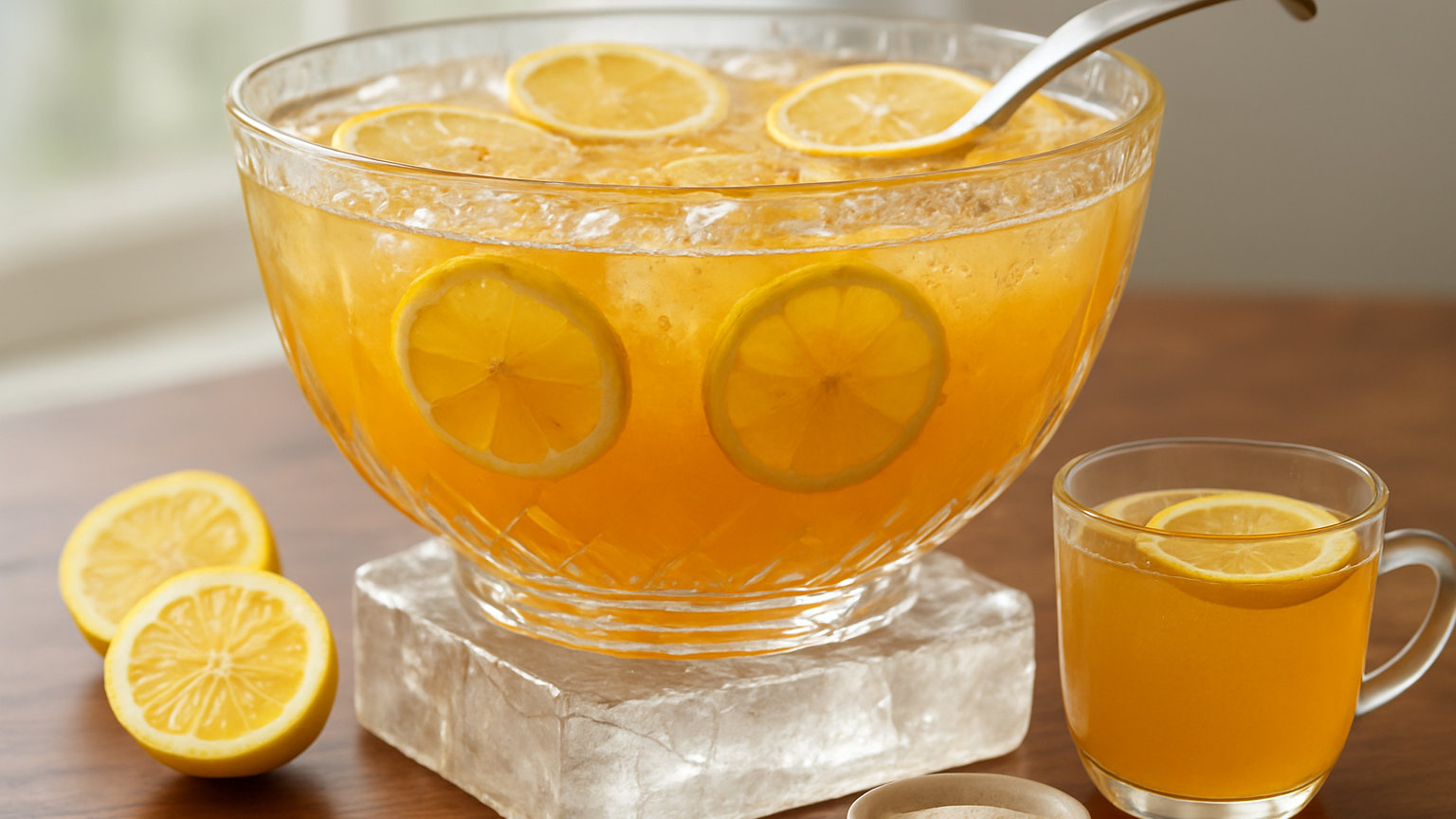
Punch was made in a bowl and shared, which reflected how people drank before the individual mixed drink existed.
The bowl sat on a table, was replenished during the evening, and the act of making it was part of the occasion. Elaborate silver punch bowls and ladles survive from the period, and they were display objects as much as vessels.
The shift to individual drinks came with the rise of the public bar and the professional bartender in the nineteenth century, and the cocktail is essentially punch scaled down to one glass.
Why it declined
Several things at once. The cocktail offered speed and consistency. Ice became widely available, which suited individual drinks better than a bowl. And the social settings that supported communal drinking changed.
By the twentieth century punch had become associated with weak, sugary party drinks made from whatever was available, which did the format's reputation considerable damage.
The revival
Interest returned alongside the wider cocktail revival, driven by historians and bartenders working from period sources.
What they found was that the historical recipes were dry, complex and carefully constructed rather than the sweet punch of the twentieth century, and that the techniques involved were genuinely sophisticated.
The oleo saccharum in particular, which extracts citrus oil using sugar, turned out to be a technique with no modern equivalent and no substitute.
Why it is worth making
Practically, it solves the problem of serving drinks to a group. One vessel replaces twenty individual cocktails, the work happens in advance, and the host is not stuck behind a shaker all evening.
It also improves on standing. A punch made a few hours ahead is better than one assembled at the moment of serving, which is true of very few drinks.
And it is genuinely sociable in a way that individual drinks are not, which was the point of it in the first place.
What the historical recipes assumed
Two things worth knowing when reading a period recipe. The spirits were different: arrack, rum and brandy of the time were considerably more variable and often funkier than modern equivalents.
And the sugar was different. Period recipes assume loaf sugar broken up rather than modern refined caster sugar, and the quantities frequently read as excessive to a modern palate.
Reducing the sugar and increasing the citrus slightly brings most historical punches into line with contemporary taste without changing what makes them work.