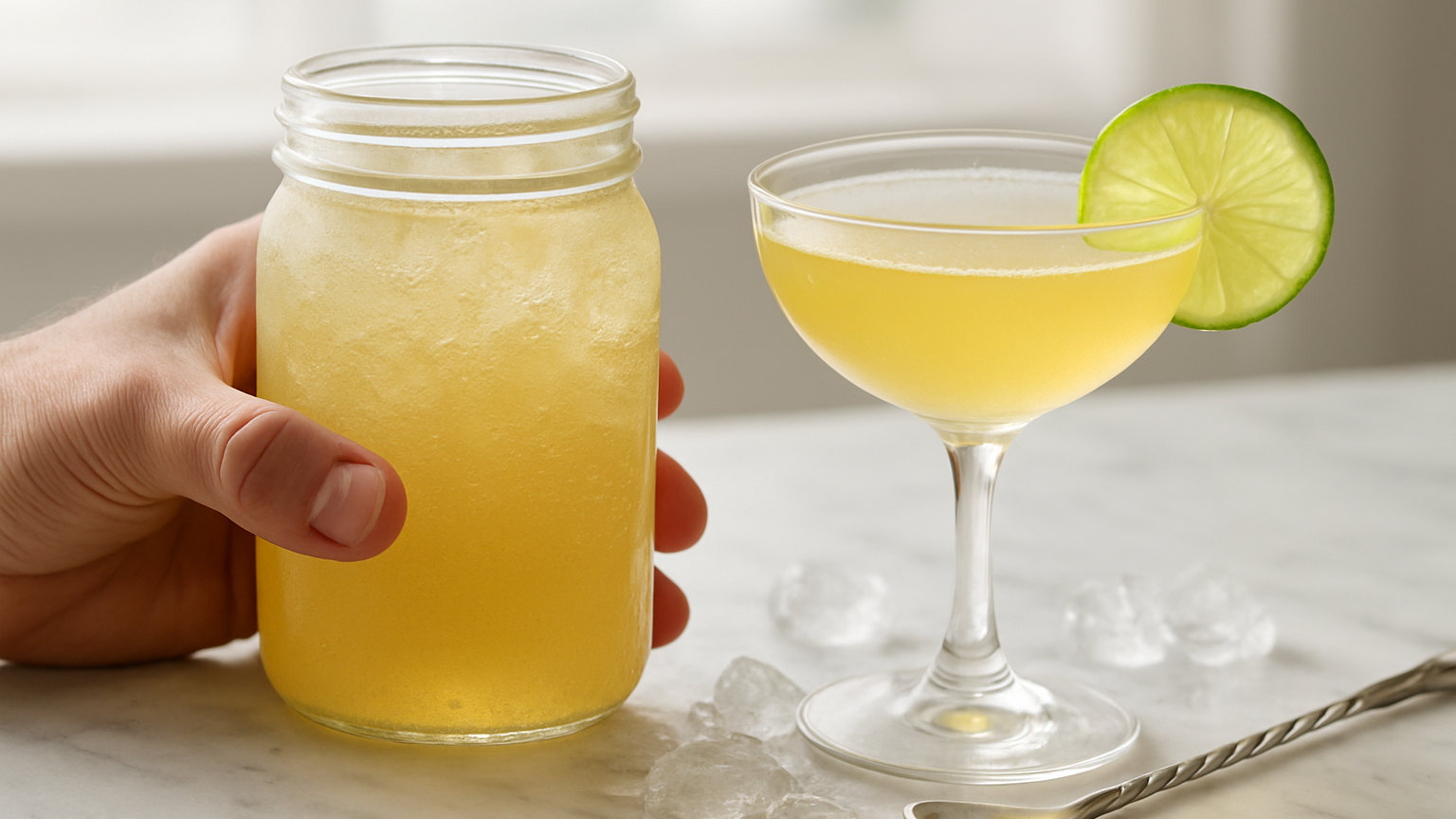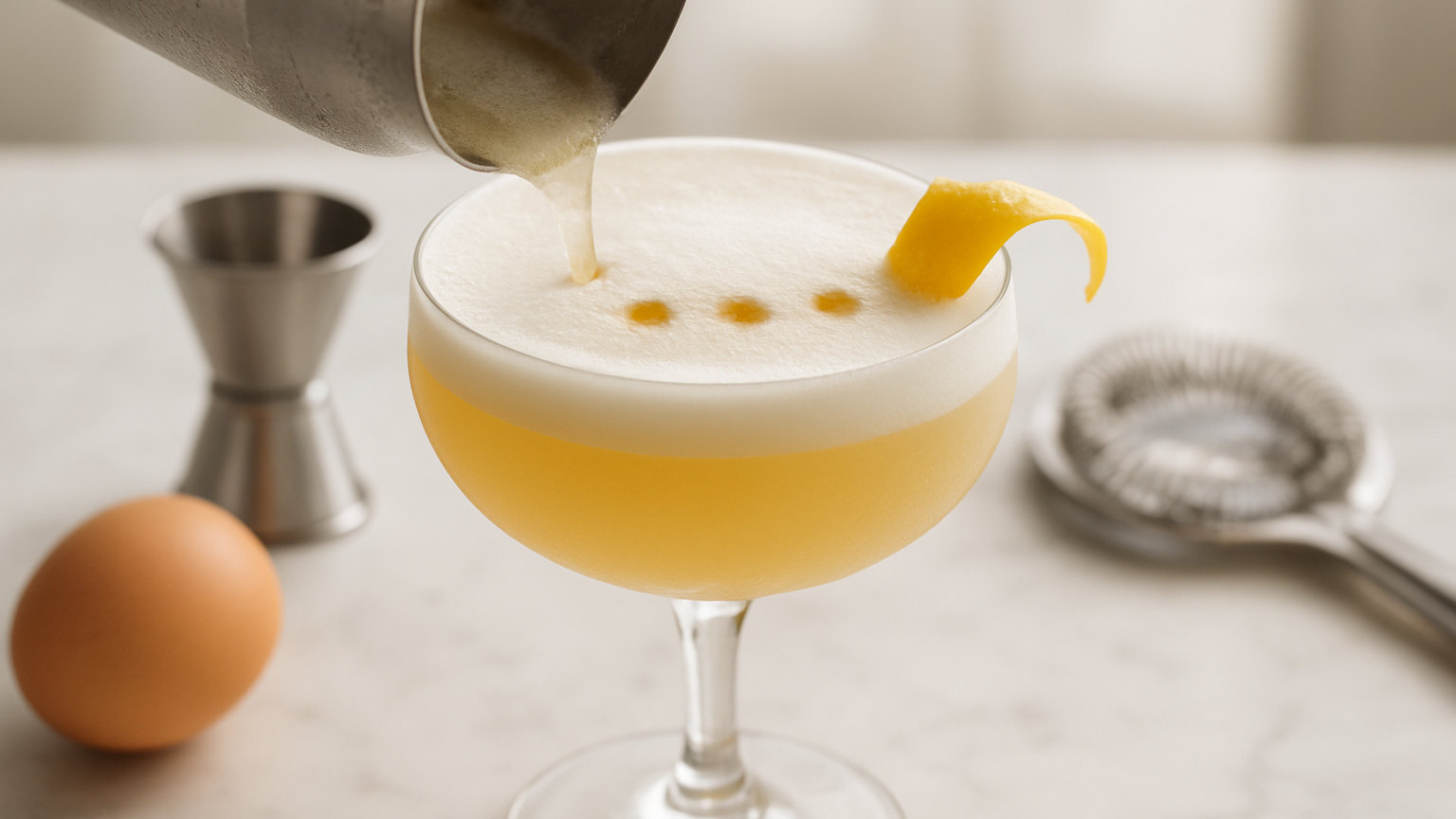
Egg white appears in a great many classic sours and puts people off unnecessarily. It contributes no discernible egg flavour, and what it does contribute is texture and a dense white foam that changes the drink considerably.
What it actually does
Egg white is largely protein, and shaking unfolds those proteins so they form a network around air bubbles, producing a stable foam.
In the drink itself it adds a silky, rounded mouthfeel and softens the perception of both acidity and alcohol, which is why a whiskey sour with egg tastes gentler than one without.
It also carries aromatics in the foam, which is why bitters dropped on the surface are so effective: the aroma sits directly under the nose.
What it does not do is add flavour. A properly made egg white cocktail tastes of nothing eggy at all.
The dry shake
The technique that most home attempts get wrong.
Combine all the ingredients including the egg white in the shaker with no ice, and shake hard for around fifteen seconds. This allows the proteins to form their structure without the cold interfering.
Then add ice and shake again for a further ten to twelve seconds to chill and dilute.
Skipping the dry shake produces a thin, patchy foam that collapses within a minute.
The reverse dry shake
An alternative that many bartenders prefer.
Shake with ice first, then strain the ice out and shake again without it. The theory is that chilling and diluting first and then building the foam produces a denser, more stable result.
Both methods work. The reverse involves an extra step and generally gives a slightly better foam.
Quantities and technique
One egg white per drink is standard, or around 20 to 25 millilitres if measuring from a carton. For two drinks, one and a half whites is usually enough rather than two.
Shake genuinely hard. This is the most common failure: a polite rattle produces bubbles rather than foam.
Double strain through a fine mesh so ice fragments do not break the surface.
Let the drink settle for twenty seconds before adding any garnish on top, so it sits rather than sinking.
Safety
Raw egg carries a small risk of salmonella. In Britain, eggs produced under a recognised assurance scheme carry a substantially reduced risk, and guidance has reflected that.
Pasteurised egg white sold in cartons removes the concern entirely and performs identically. For anyone serving guests, this is the straightforward answer.
Anyone pregnant, elderly, very young or with a compromised immune system is generally advised to avoid raw egg. Current guidance is worth checking rather than relying on a general statement.
Keep eggs refrigerated, use them well within date, and discard any with a damaged shell.
Aquafaba and other alternatives
Aquafaba, the liquid drained from a tin of chickpeas, is the standard vegan substitute and works remarkably well. Use roughly the same volume as an egg white and treat it identically, including the dry shake.
It carries a faint savoury character that disappears in most drinks and is occasionally detectable in very delicate ones.
Commercial foaming agents made from plant proteins are available and work well.
Whichever you use, say so when serving. Egg is a declarable allergen, and anyone avoiding it for dietary, religious or allergy reasons needs to know without having to ask.
Which drinks use it
The whiskey sour, in its Boston version. The pisco sour, where it is essential. The silver gin fizz. The clover club, with raspberry. The ramos gin fizz, which also contains cream.
Beyond the classics, almost any sour is improved by it if you want a softer, richer drink, and it is worth trying with a daiquiri or a margarita to see how much it changes them.
Cleaning up
One practical note. Egg protein sets on surfaces and becomes difficult to remove once dry, so rinse the shaker immediately with cold water rather than hot.
Hot water cooks the residue onto the metal. Cold water first, then hot with detergent, and the shaker comes clean in seconds rather than requiring scrubbing.
The same applies to strainers, where dried egg white in the mesh is the usual reason a fine strainer stops working properly.